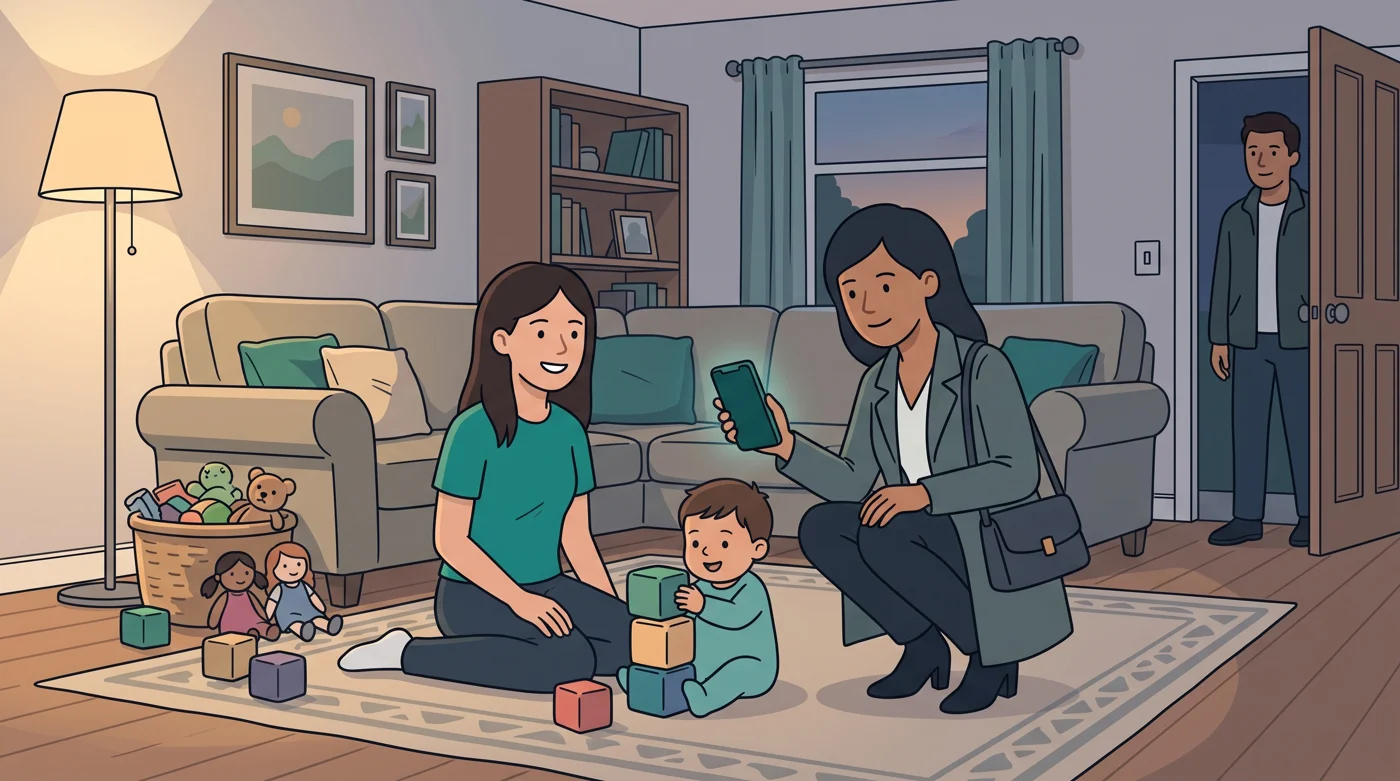
A missed reminder is rarely just a missed reminder. For a parent leaving notes for a babysitter, an adult child checking in on a relative, or two caregivers managing a sick child overnight, it can create uncertainty: Was the task completed? Is it too soon to log the next one? Who has the latest information? A useful medicine reminder comparison should look beyond alarm sounds and focus on whether a tool brings calm, clarity, and shared accountability to the household.
The best choice depends on what your family is coordinating. A single-person routine may need little more than a recurring prompt. A home with children, aging parents, rotating caregivers, or an active illness situation needs more context. The difference is not just convenience. It is having one trusted place where everyone can see the same plan.
A medicine reminder comparison starts with the household
Many reminder tools are built for one person and one schedule. They can be helpful when the need is straightforward: create an alert, acknowledge it, and move on. For family care, though, that model can leave important gaps. One person may set the reminder, another may handle the task, and a third may need to know what happened later.
When comparing options, begin with the number of people and routines you need to manage. Think about the real moments when coordination matters: the morning rush, an after-school handoff, a grandparent staying over, or a late-night fever check. The right system should make those moments easier to manage without forcing every caregiver to reconstruct the day from text messages, memory, and scattered notes.
A family-focused platform keeps each person’s information distinct while making authorised sharing practical. That matters because household care is rarely handled by one person forever. Parents trade shifts. Relatives help. Caregivers need visibility without confusion.
Four common reminder options
Basic phone alarms
A standard phone alarm is familiar, fast, and free. For a single recurring task, it can be enough. It works especially well when the same person is always responsible and there is no need to record completion or share status.
Its limitation is context. An alarm can tell someone that a time has arrived, but it usually cannot show whether another caregiver already handled the task. It also does not organise several family members, related health readings, or as-needed timing in one view. When alarms multiply, labels become harder to scan and notifications can begin to blend into the background.
Calendar reminders
Calendars offer more detail than a basic alarm. You can add notes, repeat events, and see reminders alongside work, school, and family commitments. For households that already live by a shared calendar, this can feel like a natural next step.
Still, calendar tools are designed around events, not care workflows. They may not clearly separate one family member’s routine from another’s, capture health observations alongside the schedule, or provide an easy way to confirm what has been completed. A calendar can organise time well, but it is not always the clearest record during a stressful illness episode.
Single-person medication apps
Dedicated medication apps often add useful structure, such as recurring schedules, adherence logs, and notification settings. They are generally more purpose-built than a calendar and can be a strong fit for an individual who wants a clearer daily routine.
The trade-off is that many are designed around one account holder. Families may end up using separate profiles, sharing passwords, or relying on messages to keep each other updated. That creates friction precisely when a caregiver needs quick, reliable confirmation. Before choosing one, check whether it supports multiple family members and active caregiver sharing in a way that feels simple for everyone involved.
Family health management platforms
A family health management platform is built around the reality that care is shared. Rather than treating reminders as isolated alerts, it can bring schedules, safety timers for as-needed medicines, health readings, symptoms, and caregiver activity into one organised system.
This approach is most useful when care involves more than one person or more than one type of routine. It may take a few minutes to set up profiles and routines at the beginning, but the payoff is less mental tracking later. A system such as Medication Timer is designed for this family-centred view, with support for multiple household members, shared care coordination, illness tracking, and privacy-forward organisation. It is free to start with no ads, and sharing between caregivers is part of Family Care, with the price shown in-store for your region.
Compare the details that prevent confusion
Features can look similar on a comparison chart, but the details determine whether a reminder system helps on a busy Tuesday night. Evaluate each option based on what happens before, during, and after the alert.
First, look at the reminder itself. Can you create recurring routines that match the way your household operates? Can the reminder clearly identify the family member and task, so there is no need to guess what the alert means? Clear labels reduce the risk of acting on incomplete information.
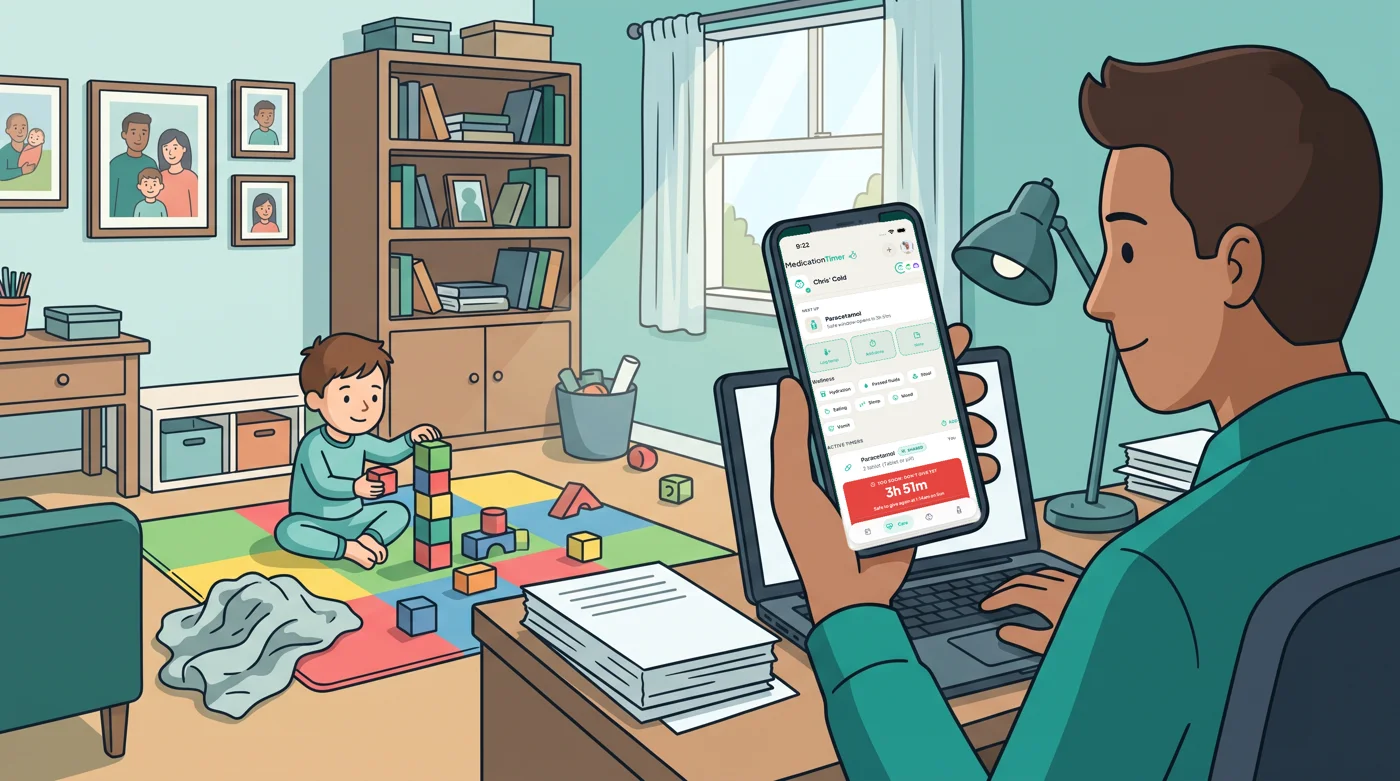
Next, consider confirmation and visibility. A notification is not the same as a shared record. In a coordinated household, caregivers benefit from being able to see whether a task was logged and when. This reduces duplicate effort and replaces the familiar question, “Did anyone take care of that?” with an answer everyone can access. In Medication Timer, shared dose and reading reminders can clear when another caregiver logs or skips that slot, so a leftover alert does not look like the dose was never done.
Then consider timing safeguards for as-needed routines. A simple reminder may tell you to do something at a particular time, but an as-needed timer counts down from the last logged dose, against the spacing your household entered from the label or your pharmacist. This is a practical distinction for households that need to track timing carefully while staying focused on the person in front of them, not a stack of handwritten notes.
Finally, consider whether related information can live in the same place. During an illness, families often track more than reminders. They may want to record temperatures, symptoms, notes, or other readings over time. Keeping that information alongside the care routine creates a more coherent household record and makes transitions between caregivers less stressful.
Privacy is part of the comparison
Family health information is personal. A reminder app may seem simple, but it can hold names, routines, observations, and sensitive household details. Privacy should be a decision factor, not fine print.
Look for plain language about how information is handled. Consider whether the service is ad-supported, whether it sells health data, and how sharing works between caregivers. A tool designed for family care should make it clear who can view household information and allow you to maintain appropriate boundaries.
The simplest option is not always the most protective one. A free app supported by advertising may meet a basic reminder need, while a privacy-focused family platform may better suit caregivers who want a dedicated space for their household’s health organisation. The right trade-off depends on your family’s needs and comfort level.
Choose for the hard days, not just the easy ones
A reminder system should work when life is calm, but its real value appears when routines are interrupted. Think about school mornings, travel, changing caregiver schedules, or a household illness that requires closer tracking. Can the system help a partner step in without a lengthy explanation? Can it keep separate family members from being mixed together? Can it provide a clear timeline without asking someone to search through old messages?
If your needs are limited to one simple personal routine, a phone alarm or calendar may be the right answer. There is no benefit in adding complexity that your household will not use. But if your family coordinates multiple people, multiple caregivers, or illness-related observations, a dedicated family system is often the clearer choice.
A good medicine reminder comparison is ultimately about reducing the mental load on the people who care for others. Choose the tool that gives your household the clearest next step, the most dependable shared record, and more room to focus on each other when care matters most.
Questions? Browse the help centre or contact support from Profile in the app.