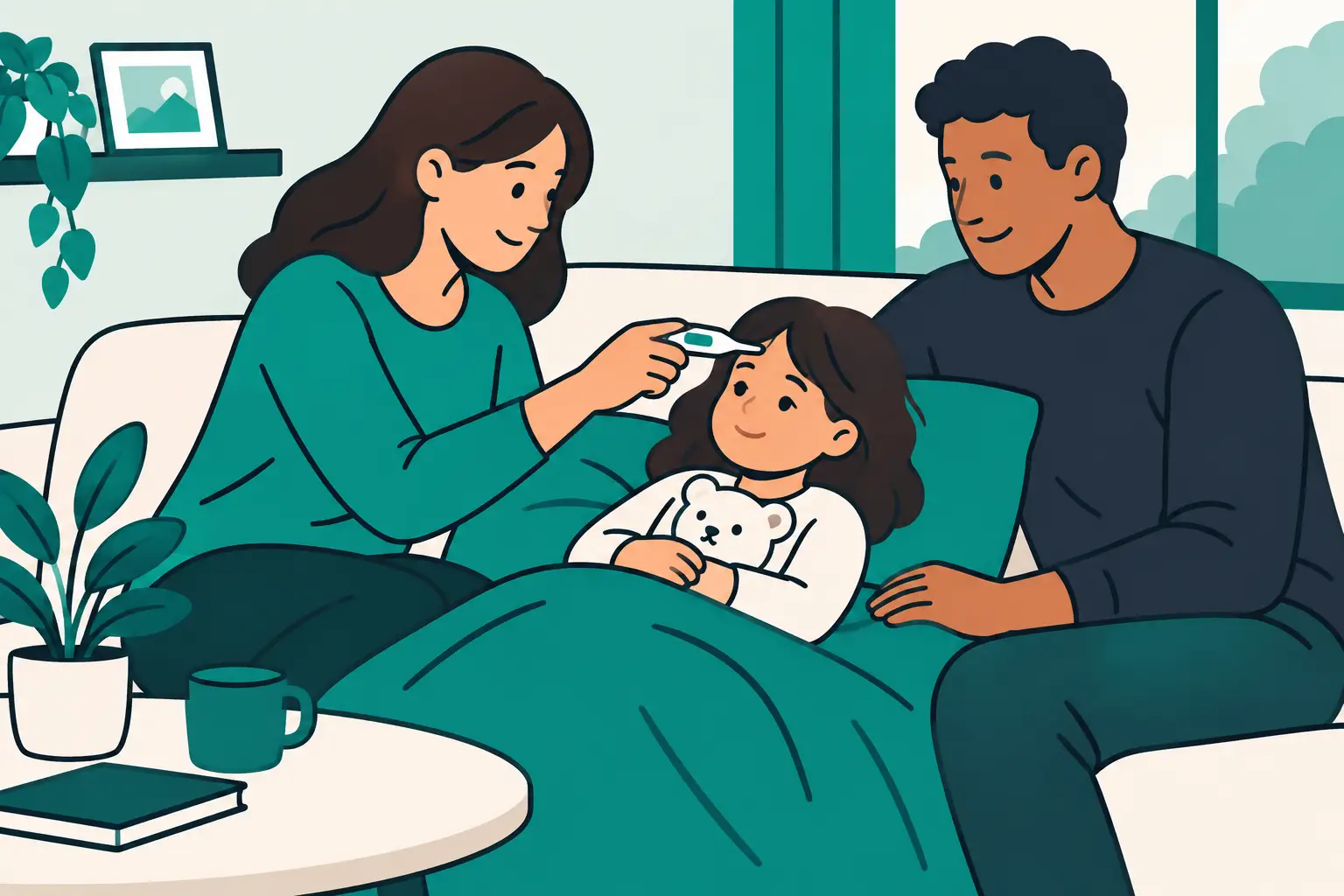
A child wakes in the night feeling warm. One caregiver takes a temperature, another gives comfort, and by morning someone is trying to remember what happened at 1:00 a.m. This is where the question, how do families track fever readings, becomes less about taking a number and more about keeping a clear, shared record when everyone is tired.
A dependable fever log gives a household one trusted place for the facts. It helps caregivers see the sequence of readings, note what was going on at the time, and avoid relying on memory or a string of scattered text messages. The goal is not to turn family care into a clinical process. It is to create calm, practical order when illness interrupts an already busy day.
How Do Families Track Fever Readings at Home?
The most useful approach is simple enough to maintain during a difficult night and structured enough that another caregiver can understand it instantly. Families can use paper, a shared note, or a family health-tracking tool. What matters most is consistency: record each reading in the same place, for the right family member, with the time clearly attached.
A single temperature number without context can create more questions than it answers. A complete entry usually includes the person’s name, the date and time, the reading, and the method or device used. Families may also add a brief observation, such as whether the person was resting, sleeping, eating, or had another symptom they wanted to remember. Keep notes factual and short. The record should reduce mental load, not become another task to manage.
For households caring for more than one person, separate profiles are essential. “Temperature 101” is not a useful record if no one knows whether it belonged to a toddler, a parent, or a grandparent. A clear name and profile prevent mix-ups, especially when several people are unwell at once.
Use one consistent time format
Time is often the detail that gets lost first. A reading recorded as “this morning” may be understandable for an hour, but not when the next caregiver takes over later in the day. Use a consistent format, such as 8:15 a.m. or 20:15, and let the tool record the date automatically whenever possible.
This creates a readable timeline rather than a collection of isolated numbers. It also saves caregivers from reconstructing the day from memory, screenshots, and message threads.
Keep the method visible
If your household uses different types of thermometers or measurement methods, note which one was used. This is not about judging a reading. It is about preserving context so the record remains clear when reviewed later by another caregiver or shared according to your family’s care plan.
A small label can prevent unnecessary uncertainty. It is especially helpful when someone grabs the nearest device during a busy moment and a different caregiver is reviewing the log afterward.
Make Fever Tracking a Shared Care Task
A fever log works best when it belongs to the household, not to one person’s phone or memory. In many families, care changes hands throughout the day. A parent may handle the morning, a partner may cover the evening, and a grandparent or other trusted caregiver may step in during work hours.
When each person keeps private notes, the family can end up with several incomplete versions of the same illness. One person knows the latest reading, another remembers the overnight details, and nobody has the full picture. Shared tracking replaces that confusion with a single source of truth.
Before illness strikes, decide who can add readings and who needs visibility into them. A simple agreement helps: everyone records a reading as soon as it is taken, uses the same family profile, and avoids deleting an entry just because a later reading is different. The timeline is more useful when it remains intact.
It also helps to agree on how caregivers will communicate around the log. A quick message such as “I added the latest reading” can be enough. The detailed information stays in the shared record, rather than being repeated across multiple conversations where details can be missed.
Choose a System You Will Actually Use
Paper can be reassuringly simple. A notebook on the kitchen counter needs no password, battery, or setup. But it can be misplaced, hard to read, and unavailable when a caregiver is away from home. It also does not naturally separate records for different family members.
A basic phone note is convenient, but shared access can be awkward. It may mix health information with grocery lists and work reminders, and it rarely provides a clear illness timeline. Group chats can keep people informed, yet messages quickly become difficult to scan when they include questions, photos, and updates from several people.
A family-focused tracking system is often the clearest option for households that want ongoing organization. It can keep readings, symptoms, routines, and caregiver updates together while preserving separate profiles for each family member. Medication Timer, for example, is designed to give families one private place for health readings and care coordination, so a caregiver does not have to search through texts to find the last recorded temperature.
The right system depends on your household. For a one-time situation, a simple log may be enough. For families coordinating care across parents, relatives, sitters, or multiple children, a shared digital record can offer greater continuity and peace of mind.
Build a Record That Is Easy to Read Under Stress
The best log is not the one with the most fields. It is the one a tired caregiver can understand in seconds. Keep the main view focused on the essentials: who, when, reading, method, and a short note when relevant.
Avoid vague entries such as “still warm” or “seems better” without a timestamp. Those thoughts may be meaningful in the moment, but they are hard for another person to interpret later. If you want to include observations, pair them with the time and keep the language straightforward.
For example, “Jordan, 7:40 p.m., reading recorded, resting on couch” gives a caregiver useful context without asking them to decode a long message. The same principle applies to symptoms or changes in routine. Record what you observed, when you observed it, and leave room for the next caregiver to add their own entry.
Consistency matters more than perfection. If you miss a note, do not spend the day trying to recreate every detail. Add the next accurate entry and continue from there. A log should support your family, not make anyone feel behind.
Protect Privacy While Keeping Caregivers Informed
Health information is personal, even within a close family. A shared fever record should be visible only to people who genuinely participate in care. This is particularly relevant in blended families, shared custody arrangements, multigenerational homes, and households with older children who may want more privacy.
Choose tools that make sharing intentional. Consider who needs edit access, who only needs to view updates, and when access should end. Avoid putting sensitive health details in widely shared calendars, public household displays, or group chats that include people outside the care circle.
Privacy is also a reason to avoid relying on screenshots. They create disconnected copies of information that may remain on devices long after the illness has passed. A centralized, privacy-forward record keeps the current information in one place and gives families more control over who sees it.
Keep the Log Connected to the Rest of Care
A fever reading is only one part of an illness record. Families often also need to coordinate comfort measures, rest, hydration reminders, school or work absences, medications already planned by a caregiver or care team, and general symptom observations. These details do not all need to appear in the same line, but they should be easy to find together.
An illness-specific tracking session can make this simpler. Rather than creating a permanent stream of unrelated notes, the family can keep one period of illness organized as a clear timeline. When the situation is over, the record remains available if needed without crowding everyday household routines.
This is where a family health system earns its place. It connects the practical details that tend to fragment under pressure: readings, schedules, notes, and caregiver handoffs. Every caregiver sees the same record, and no one has to wonder whether they are working from outdated information.
A well-kept fever log cannot remove the worry that comes with caring for someone you love. It can, however, replace scattered details with a calm record your family can trust. When the next caregiver asks, “What was the last reading, and when was it taken?” the answer is already there.