A digital medicine log review is not about turning your home into a clinic. It is about answering the small, urgent questions that come up when someone is tired, sick, or managing a busy routine: Was this logged already? Who handled it? What happened last time? For families caring for more than one person, a clear record can replace uncertainty with a calmer, shared view of the day.
Paper lists, text messages, and memory can work for a while. They become less reliable when multiple caregivers are involved, routines change, or an illness affects the household. A digital log gives every caregiver one trusted place to see what has been recorded, what still needs attention, and how a health routine is unfolding over time.
What a Digital Medicine Log Should Actually Do
A useful digital medicine log does more than store a list of medicines. It helps a household organise care around real life. That means supporting recurring routines, as-needed timing records, health readings, symptoms, and the context behind each entry.
The difference matters. A simple checklist may show that something was marked complete, but it may not show which family member it applied to, when it was recorded, or whether another caregiver has already seen the update. A family-focused log creates a clearer handover between people sharing care.
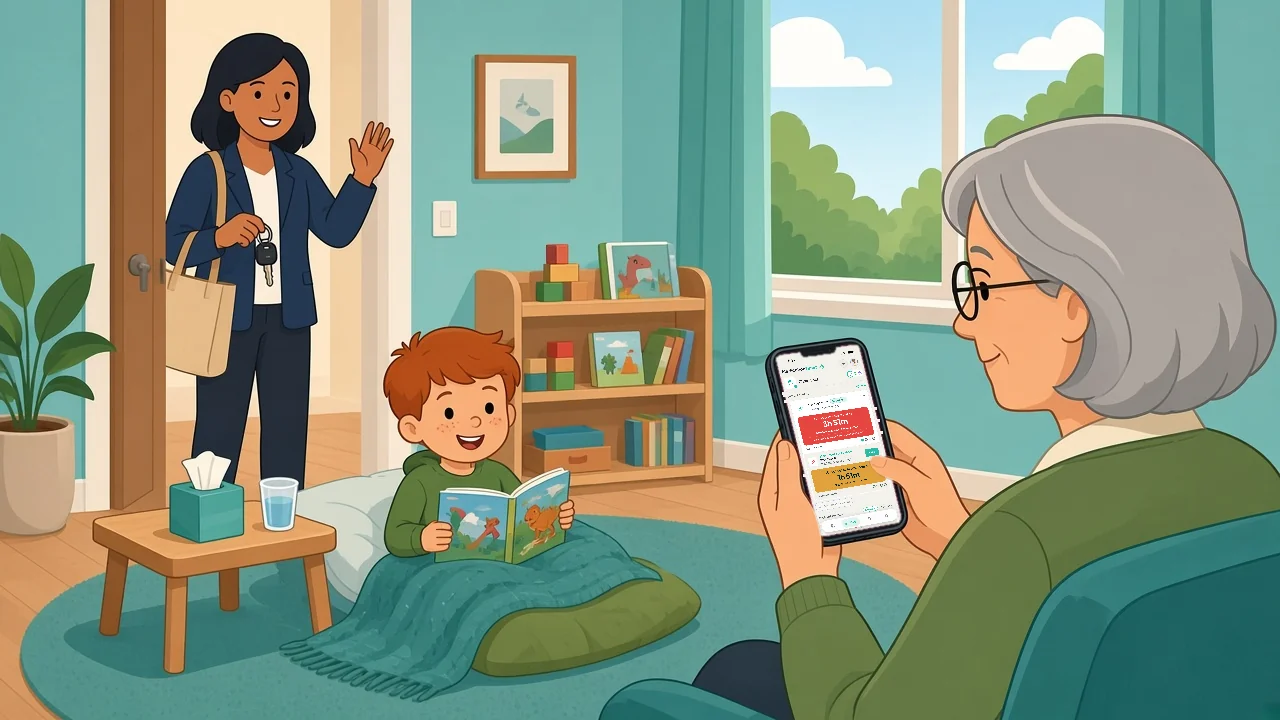
For example, a parent leaving for work can review the household record without searching through messages. A grandparent helping after school can see the established routine in the same place. A partner checking in from another room can confirm the latest update without interrupting someone who is settling a child or resting.
A Digital Medicine Log Review Starts With Daily Friction
The best way to evaluate a digital medicine log is to look at the moments when your current system breaks down. Those moments are often practical rather than dramatic: a bottle moved to another room, a reminder dismissed without a record, a fever reading written on a scrap of paper, or two caregivers assuming the other person completed a task.
Start by asking whether the tool reduces that friction for everyone in the household. A good system should make it easy to separate each family member’s information while still giving the people responsible for care a simple household view. It should not require you to build a complicated spreadsheet or remember an elaborate filing system before it becomes useful.
During a digital medicine log review, pay attention to three questions: Can you quickly record an event? Can another caregiver you have invited understand it later? Can you look back and recognise a pattern or timeline without assembling information from several places?
If the answer is no, the log may be adding work instead of reducing mental load.
Individual Profiles Prevent Household Mix-Ups
Families do not manage one generic schedule. They manage separate people, separate routines, and separate histories. When records are kept in a single shared list with no clear profiles, it is easy to lose the context that makes the information meaningful.
Look for a log that keeps each family member organised within their own profile. That creates a cleaner record while still letting caregivers coordinate from one shared household record. It is especially helpful when siblings have different routines, when an adult family member needs support, or when a caregiver is coordinating care across generations.
In Medication Timer, each person has their own family member profile, and their scheduled routines, doses and health readings come together on Today, one day at a time (Free + more with Family Care). The free plan shows full detail for the last three days, and Family Care adds full calendar history when you want to look further back.
The goal is not more data. It is fewer avoidable questions at the moment someone needs an answer.
Timers Should Support Clearer Coordination
For as-needed routines, timing is often the detail people are most likely to second-guess. A clear timer and a visible record can help caregivers see when something was last logged and avoid relying on rushed memory or fragmented conversations.
The right setup depends on the household. Some families need simple recurring reminders for predictable routines. Others need a way to record occasional events and keep the timing visible to everyone who shares care. Many need both.
A practical log should make these tasks easy without forcing every family into the same workflow. Flexibility matters because caregiving rarely follows a perfectly identical day.
Health Readings Need Context, Not Clutter
When illness strikes, a family’s record can grow quickly. Temperatures, symptoms, sleep patterns, hydration observations, and day-to-day changes may all matter to the person providing care. The challenge is recording enough context to be useful without creating a confusing archive.
A digital log works best when readings and their context can live alongside the related routine, rather than in separate apps, notebooks, or message threads. Seeing a timeline in one place helps caregivers understand what was recorded during a particular illness period and share a more complete history if they need to speak with a healthcare professional.
Keep entries factual and simple. Record the reading, the time, the family member, and any brief context your household needs to remember. Consistency is more valuable than long entries written under pressure.
Illness-specific tracking sessions can be particularly useful for this reason. They give a household a temporary, focused space for the details surrounding one illness episode, without mixing every detail into the everyday routine forever.
In Medication Timer, that focused space is Care. Start a care session for the family member who is unwell, and the as-needed timers, temperature readings and symptom checklist for that illness sit together on one Activity timeline (Free + more with Family Care). Care, as-needed timers and temperature logging work without a subscription. Family Care adds optional wellness check-ins such as hydration and sleep, plus family reports, which you can print or save as a PDF from the web if you want a copy for an appointment.

Sharing Is Part of Care, Not Just a Convenience
A log that only one person can access may still be better than paper, but it does not solve the coordination problem for shared caregivers. Families often divide responsibility across parents, guardians, relatives, or trusted helpers. Each person needs a clear way to see updates without needing a separate explanation every time.
Shared access should be purposeful. The people you invite see the same current routines and recent logs, and the household decides who is included. This creates continuity when one caregiver is unavailable, working late, travelling, or simply taking a needed break.
It also reduces the emotional burden of being the one person who has to remember everything. Family care is more sustainable when knowledge is shared, not held in one caregiver’s head.
Before choosing a tool, consider how it handles updates. Can caregivers see a record in real time? Is it obvious who entered an item? Can a family member be added without exposing household information more broadly than necessary? Clear sharing settings are part of clear care.
In Medication Timer, household sharing is part of Family Care. You invite each caregiver from Sharing & Access in Profile, everyone signs in with their own account, and you can revoke access from the same screen if arrangements change. On shared timers, a quiet line shows who logged the last dose and when, so the parent coming home from a late shift can check the record instead of waking anyone to ask.
Privacy Belongs in Every Review
Health information is personal, even when the records seem routine. A digital medicine log review should include a close look at how the platform treats that information.
Families should know whether the service uses ads, whether health data is sold, and how account sharing is controlled. A privacy-forward tool should make its approach understandable in plain language, not bury the essentials behind vague promises.
This is especially relevant for household care. You may be recording information about children, an ageing parent, or a partner who trusts you with sensitive details. Choosing a system designed to protect that trust supports the confidence families need to use it consistently.
Medication Timer is built around that family-first need: every dose, every family member, one trusted place. It brings together medication routines, as-needed timers, health readings, Care sessions for illness, and caregiver sharing, with no ads, and your family’s health data is never sold. The privacy policy sets out how that data is handled in plain language.
How to Build a Log Your Family Will Keep Using
The most organised system is only helpful if it fits into a real day. Start small. Set up the family members you actively care for, add the routines you need to track, and invite the caregivers who need visibility. You can add more detail as it becomes useful.
Try to make recording part of the action itself, rather than a task saved for later. A log entered immediately is usually more reliable than one reconstructed at the end of a long day. When circumstances are busy, a short, accurate entry is enough.
It also helps to agree on a shared household habit. One caregiver may record the event, while another checks the log before taking over. The specific routine is less important than having a routine everyone understands.
Review the record at natural transition points: before school, at the end of a shift, when one caregiver leaves the house, or before bedtime. These brief check-ins create a clearer handover without requiring a formal meeting.

A good digital medicine log should fade into the background when life is calm and become easy to trust when the day is not. That quiet reliability is what gives families more room to focus on each other.
Questions? Browse the help centre or contact support from Profile in the app.