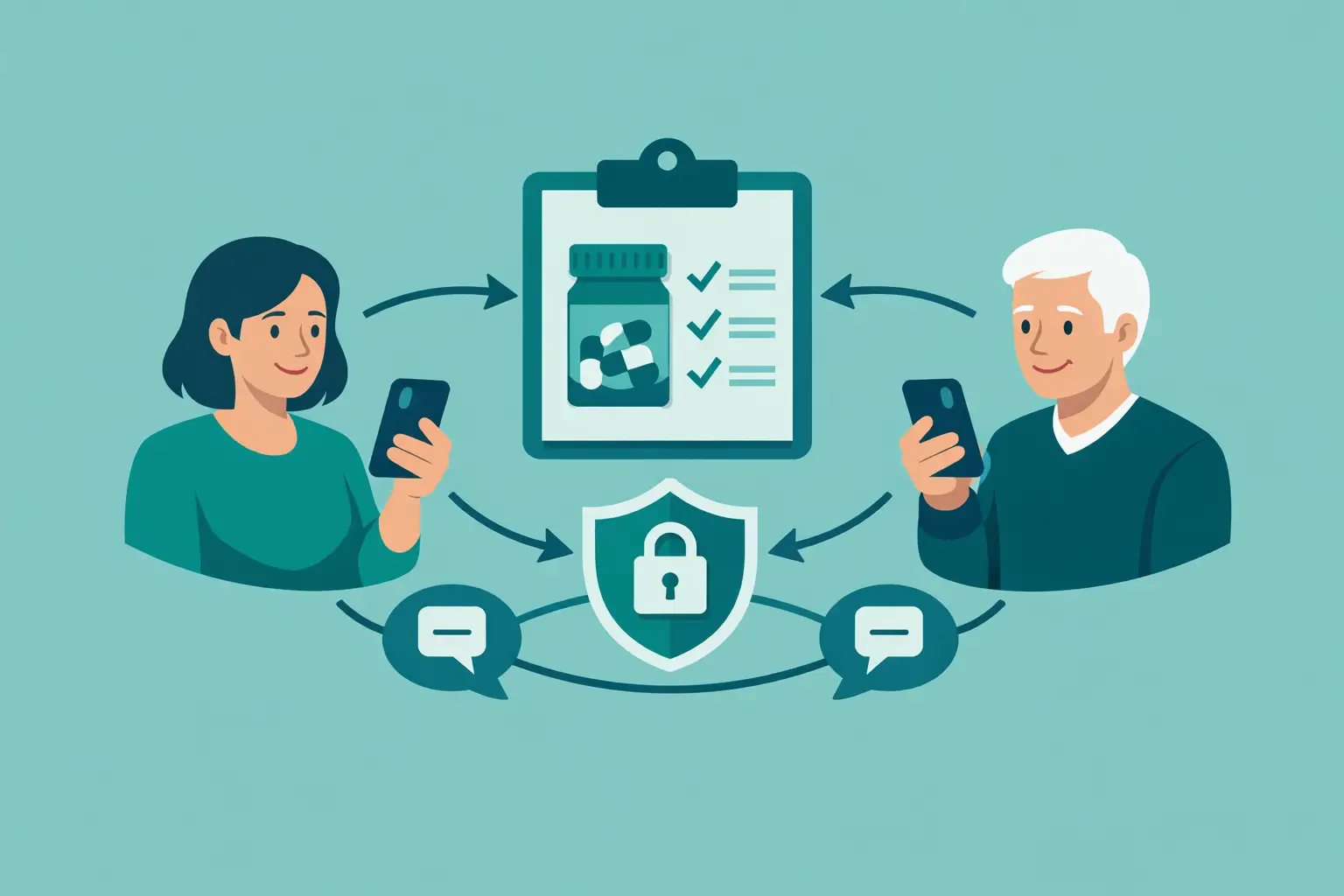
A child wakes up feeling unwell while one parent is already at work. A grandparent is staying over. Another caregiver handles the evening routine. In moments like these, can caregivers share medication updates clearly enough that everyone understands what has happened, what is scheduled next, and who is responsible? They can - but only when the household has one reliable way to document and communicate care.
Texts, sticky notes, and memory may work for a day or two. They become much less dependable when several people are caring for the same family member, schedules change, or an illness interrupts normal routines. Shared medication updates are not about adding more messages. They are about creating a clear, current record that helps caregivers act with confidence.
Can Caregivers Share Medication Updates?
Yes. Families can share medication updates among trusted caregivers, provided they choose a system that protects privacy, keeps information current, and makes responsibilities easy to see. The goal is not to turn family care into a clinical process. It is to reduce the everyday uncertainty that can lead to duplicate work, missed routines, and stressful check-in calls.
A useful shared record answers practical questions at a glance: Has the scheduled task been logged? Was an as-needed dose recorded? Did someone note a temperature or symptom update? Who is watching the routine while another caregiver is away? When all of that information lives in one trusted place, each caregiver is working from the same version of events.
This matters most when care changes hands. A parent may handle the morning routine, a school pickup caregiver may be responsible in the afternoon, and a partner may take over at bedtime. Without shared visibility, every handoff requires someone to reconstruct the day from memory. With it, the handoff becomes calmer: review the record, confirm what is next, and continue care.
Why Messages Alone Can Create Confusion
Family group chats are useful for quick coordination, but they are not designed to be a care record. A message can be missed in a busy thread. A caregiver may see an update but not know whether it reflects a completed task or a plan for later. An older message can remain visible long after circumstances change.
Paper notes have similar limits. They can be misplaced, left at home, or difficult to interpret when more than one person writes on them. A note also cannot notify a caregiver that a routine is coming up, or show a traveling parent that another trusted adult has already logged an update.
The problem is not that families are careless. Caregiving creates a high volume of small, time-sensitive details, often during workdays, school mornings, travel, or nights with little sleep. A shared system reduces the need to remember who said what and when. It gives the family a single reference point instead of a scattered trail of information.
What Safe Caregiver Sharing Looks Like
Safe sharing begins with access. Only the people actively involved in care should be able to view or update a family member's information. That may include parents, guardians, an adult child supporting an older relative, or a trusted babysitter during a specific period. It does not mean adding every relative to a broad group just because they want updates.
It also helps to set expectations before an urgent moment arrives. Decide which caregivers can log completed tasks, who can add health readings, and who should be contacted if something looks unclear. Families do not need a complicated chain of command. They need enough clarity that no one assumes another person is handling a responsibility.
A shared record should also show timing and context. Rather than a vague message such as “handled,” a clear update identifies the family member, the tracked item, the time it was logged, and any relevant note. This creates a history caregivers can review during a handoff, without relying on interpretations of shorthand.
Privacy deserves the same attention as convenience. Health information is personal, even within a close family. Look for family care tools that are designed for private sharing and are clear about how information is handled. A platform built around family coordination, rather than advertising or selling health data, supports the trust families need when they are documenting sensitive information.
Keep Roles Simple and Visible
Many households do best with a small number of practical roles. One person may maintain the recurring schedules. Another may log updates during the day. A third person may only need viewing access to stay informed while caring for the family member occasionally.
The details depend on your family. What matters is that roles match real life and can change when routines change. During a work trip, for example, the parent who usually manages a schedule may need visibility while a partner or grandparent takes over the day-to-day logging.
Avoid making one person the permanent keeper of every detail. That setup may feel organized until that person is unavailable, exhausted, or simply needs support. Shared care works best when the record belongs to the household, with appropriate access for each trusted caregiver.
Use One Source of Truth During Illness
When illness strikes, the number of updates can rise quickly. Caregivers may be tracking comfort measures, recurring routines, temperatures, symptoms, rest, and changes throughout the day. The more places those details are written down, the harder it is to understand the full picture.
An illness-specific tracking session can bring those updates together. Instead of searching a text thread for the last reading or asking whether someone already logged an event, caregivers can see a single timeline. This is especially helpful when parents trade overnight shifts or when one caregiver needs to brief another before leaving the house.
Medication Timer is designed around this kind of household coordination. Families can track multiple family members, create routines, log health readings, set safety timers for as-needed medication tracking, and share active updates with caregivers in one private place. The value is not more information for its own sake. It is a clearer view of the information your family already needs to manage.
A Practical Setup for Shared Updates
Start by gathering the information your household currently keeps in separate places. This could include recurring routines, family member profiles, as-needed tracking needs, and health readings you want to record during illness. Bringing these details together creates a baseline that every caregiver can understand.
Next, invite only the people who need access. Explain how your family will use the shared record: log an update when it happens, check the record before taking over, and add a note when a handoff needs context. A brief conversation now can prevent a lot of uncertainty later.
Then, agree on language. Consistent labels make a record easier to scan. If one caregiver writes “done,” another writes “taken,” and a third uses an emoji, the household may still have to stop and interpret each entry. Simple, consistent entries make coordination faster, especially when someone is tired or rushed.
Finally, make checking the record part of the handoff. Before leaving for work, beginning an overnight shift, or passing care to a relative, take a moment to review the latest updates together. This is not about hovering over another caregiver. It is about making shared responsibility visible.
When Sharing Needs Extra Boundaries
Not every caregiving arrangement needs the same level of access. A co-parent who shares daily responsibility may need full visibility. A babysitter helping for one evening may need a narrower view. An adult family member living far away may only need occasional updates.
The right approach depends on the family relationship, the caregiving role, and the sensitivity of the information involved. Review access as circumstances change. If someone is no longer actively helping, remove access rather than leaving personal health information available by default.
It is also wise to separate organization from medical decision-making. A shared care platform can help families record, communicate, and stay organized, but it does not replace guidance from a qualified healthcare professional. If a situation raises health concerns, caregivers should follow their established care plan and contact an appropriate professional or emergency service when needed.
The best caregiver update system is the one your household will actually use on an ordinary Tuesday and during a difficult night. Keep it private, keep it current, and keep it simple enough that every trusted caregiver knows where to look. When the details are organized in one place, families have more room for what matters most: being present for one another.