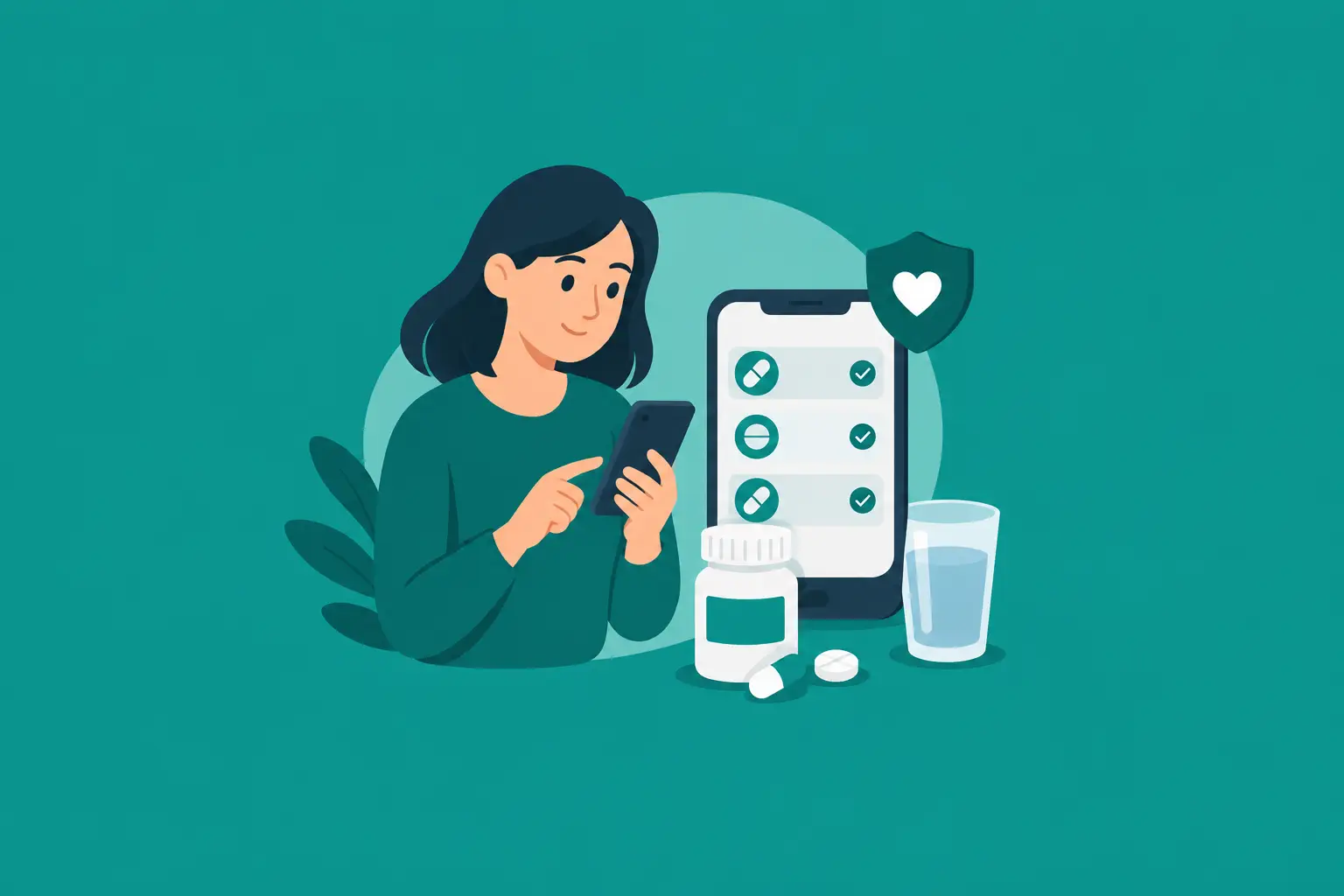
A short course of medicine can create a surprisingly long list of questions at home: Was that dose already given? Which family member took it? What time is the next one due? Did anyone write down the temperature? When more than one caregiver is helping, memory alone is not a safe system. Learning how to track short course medicine means creating one clear record that everyone can trust.
The goal is not to turn your home into a clinic. It is to reduce avoidable confusion when a child is home from school, a spouse is resting, an older relative needs support, or several people in the household are sick at once. A simple tracking routine gives caregivers a shared view of what has happened and what still needs attention.
Start one record for each person and course
A short course is easier to follow when it has its own dedicated record. Avoid placing details in a text thread, on a loose note, and in someone else's phone calendar at the same time. Those systems can conflict, especially when a caregiver is tired or away from home.
Create a record for the individual family member, then capture the information exactly as it appears in the instructions provided with the medicine. Include the medicine name, the start date, the planned schedule, and the intended final day. If your household is managing more than one short course, separate records prevent one person's timeline from being mistaken for another's.
Before the first dose is logged, make sure the people who may provide care know where the record lives. One trusted place is more useful than several partial updates.
Build a short course medicine tracker around time
The most valuable detail in a medicine log is often the actual time something was given, not simply a checked box. A checkmark can show that a task was completed, but a timestamp helps the next caregiver understand the current situation without guessing.
For every event, record these details in the same place:
- The family member's name
- The medicine and the form being used
- The scheduled time shown in the instructions
- The actual time it was given
- The caregiver who logged it
- Any relevant household observation or note
This level of detail may feel unnecessary on the first day. By the third day, it can be the difference between a calm handoff and a flurry of messages asking who did what. It also creates a clean history if a caregiver needs to review the course later.
Use the written instructions that came with the medicine as your source of truth for timing and duration. Your tracker should reflect those instructions, not replace them. If the written information is unclear, pause the household workflow and seek clarification from the appropriate source before adding assumptions to the schedule.
Set reminders that fit real household routines
A reminder is most helpful when it reaches the person who can act on it. A vague alarm on one caregiver's phone may fail when that person is commuting, in a meeting, or asleep after a difficult night.
For predictable schedules, set recurring reminders during the course and make completion a deliberate action. The reminder should not disappear just because someone saw it. It should remain a prompt until a caregiver can verify and log what happened.
Households with shared care should also decide who owns each part of the day. That does not mean one person must handle every dose. It means everyone knows who is expected to check the tracker first. A simple morning, afternoon, and evening division can reduce duplicate effort without requiring constant conversation.
Make caregiver handoffs visible
Most tracking gaps happen during transitions: a parent leaves for work, grandparents take over for an afternoon, a babysitter arrives, or one caregiver falls asleep while another steps in. A verbal update can help, but it is easy to misremember when the day is busy.
Use a shared record that shows the latest logged event, upcoming reminders, and notes in one view. When a caregiver takes over, their first step should be checking that record rather than relying on a message sent hours earlier.
A useful handoff note is brief and factual. For example: “Last entry logged at 2:15 p.m.; next reminder is set; temperature was recorded at 1:45 p.m.” It gives the next person a starting point without creating a long, hard-to-scan conversation.
Privacy matters here, too. Health details should stay within the circle of people actively involved in care. A family health tool built for shared caregiving can provide that visibility without scattering sensitive information across group chats, personal notes, and multiple apps.
Track the illness context without creating more work
Short-course medicine tracking often happens alongside an illness routine. A family may be checking temperatures, noting symptoms, monitoring rest, or documenting other health readings. These details are most useful when they are time-stamped and connected to the correct family member.
Keep the log practical. Record what your household is already observing, when it was observed, and who entered it. Avoid writing lengthy narratives in the moment. A few clear entries over several days are easier to review than a page of rushed notes.
If your family is managing an illness-specific tracking session, organize entries chronologically. This creates a single household timeline: medicine events, reminders, readings, and caregiver notes appear together instead of being spread across separate tools. During a stressful week, that order brings clarity quickly.
Watch for the common tracking failures
Even organized families can run into predictable problems. The issue is rarely a lack of care. More often, the system asks too much of people who are already managing work, school, sleep disruption, and a sick family member.
One common failure is logging later. A caregiver plans to enter the time after handling a child, answering a call, or cleaning up, then cannot remember the exact details. Whenever possible, log the event at the moment it happens.
Another is treating a reminder as proof. An alarm only signals that it is time to check the schedule. It does not confirm that the medicine was given. Keep reminders and completion records separate in your mind and in your tracking system.
A third is mixing family members in one generic note. This is especially risky when two people have similar routines or when several children are sick. Individual profiles and clearly labeled histories protect against crossed information.
Finally, avoid relying on a single caregiver's memory. Shared access is a safety feature, not an extra. It lets another trusted adult verify the record when the primary caregiver is unavailable.
Choose a system your household will actually use
Paper charts can work for a single caregiver in one location. A calendar may work for a simple routine. But both can become difficult when care is shared, when you need actual timestamps, or when health observations need to stay connected to the medicine record.
A family-focused digital tracker can reduce those gaps by keeping unlimited family member profiles, medication routines, safety timers, illness sessions, and health readings in one private place. Medication Timer is designed for this kind of everyday coordination, with shared visibility that helps caregivers stay aligned without selling family health data or placing ads around sensitive information.
The best system is the one that remains easy to open at 6 a.m., during a rushed school pickup, and in the middle of the night. It should make the next step obvious: check the record, log the event, and let the next caregiver see the same information.
A short course may only last days, but the calm that comes from a clear household record can last much longer. Every logged event is one less detail a tired caregiver has to carry alone.