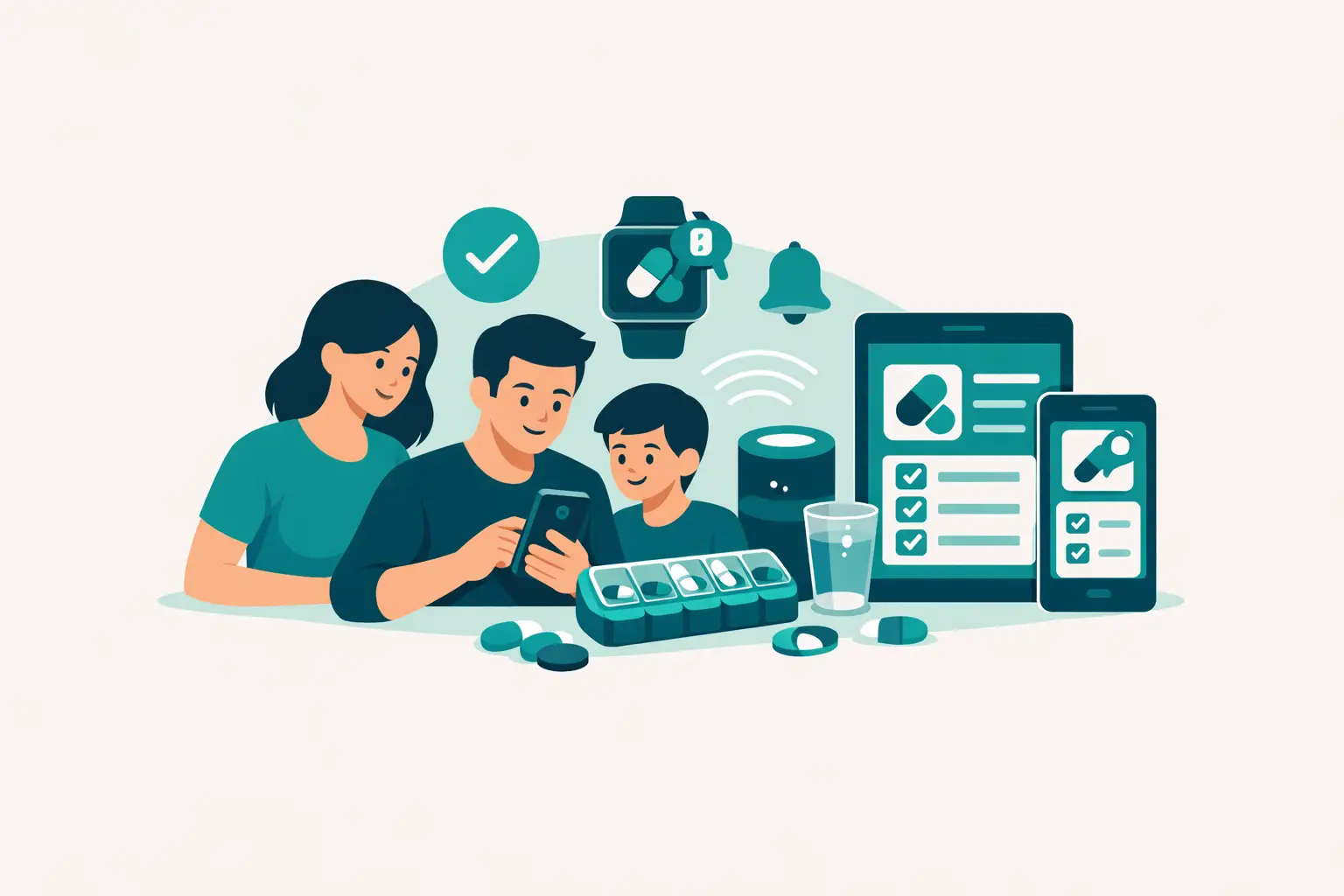
A missed reminder is one problem. A caregiver not knowing whether someone else already logged a dose is another. For families managing care across children, adults, and aging relatives, medication adherence technology trends are moving beyond simple alarms toward something more useful: a shared, organized record that reduces uncertainty when life gets busy.
The most meaningful changes are not necessarily the flashiest. Families need tools that make daily routines easier to follow, provide clear visibility during illness days, and protect sensitive information. The goal is not to turn a household into a clinic. It is to create one trusted place where every caregiver can see what happened, what is scheduled, and what still needs attention.
Medication Adherence Technology Trends Shaping Family Care
From individual reminders to shared household coordination
Early medication reminder tools were built around one person and one phone. That model can work for an individual routine, but it breaks down when multiple people share care. A parent may handle a morning routine, a grandparent may help in the afternoon, and a partner may take over at night. Without a shared record, everyone is left asking the same stressful question: “Was that already done?”
Family-centered technology is responding with shared access, activity logs, and profiles for multiple household members. Instead of keeping separate notes, text messages, and calendar events, caregivers can work from the same current information. That visibility supports better handoffs between people, especially during school days, travel, work shifts, or an unexpected illness.
This trend matters because adherence is often a coordination challenge, not a memory problem. A clear shared record can reduce duplicate effort, missed communication, and the mental load of trying to remember details for everyone.
Reminders that reflect real routines
A reminder only helps if it arrives at a useful moment and is easy to act on. Technology is becoming more flexible about recurring schedules, allowing households to build routines around the way their days actually work. That may mean different timing patterns on weekdays and weekends, separate schedules for different family members, or reminders that remain visible until someone records an action.
The most family-friendly tools also avoid treating every alert as equally urgent. Too many generic notifications can create alert fatigue, where people begin to ignore the very prompts meant to help them. Better systems let caregivers organize routines clearly and focus attention on what is relevant now.
For a busy household, the value is not more notifications. It is fewer unanswered questions. A well-designed routine should feel like a quiet safety net, not another source of noise.
Safety timers for as-needed medication tracking
As-needed medications create a different kind of tracking challenge. The central issue is often not a recurring schedule but knowing the timing of the last recorded dose and keeping caregivers aligned. Families may be managing a sick child overnight, alternating caregiving responsibilities, or trying to remember details after a long day.
Safety timers are becoming a practical feature in family health tools because they place timing information beside the medication record. Rather than relying on memory or scattered messages, caregivers can see the last logged time in one place. This is especially useful when more than one trusted adult is involved.
Technology can organize and display information, but it should not replace directions from a healthcare professional, medication labeling, or a family’s established care plan. The right tool supports careful recordkeeping and communication without presenting itself as medical advice.
Illness tracking is becoming part of adherence support
Medication routines rarely exist in isolation. When illness strikes, families may also be tracking temperatures, symptoms, fluids, rest, appointments, and notes from different caregivers. Switching among paper notes, phone alarms, and text threads can make an already difficult day feel less manageable.
A growing trend is the move toward illness-specific tracking sessions. These give a household one temporary, focused space for what is happening right now. Medication records, health readings, and caregiver notes can stay connected instead of becoming scattered across multiple apps.
This approach recognizes a simple reality: routine care and illness care have different needs. A routine may benefit from recurring reminders, while an illness episode may call for clearer documentation and easier sharing. One system can support both without forcing families to rebuild their process every time circumstances change.
Better records, not more data for its own sake
Wearables, connected devices, and health apps can generate an enormous amount of information. Some of it may be helpful. Much of it can become another burden if it is hard to understand, disconnected from the family’s day-to-day needs, or visible only to one person.
The more useful direction is purposeful data capture. Families benefit when they can log a reading, add a brief note, and see a time-stamped history without wrestling with a complicated dashboard. A simple record can make it easier to communicate clearly with another caregiver or prepare for a conversation with a healthcare professional.
Not every household needs connected devices or advanced automation. For many, a reliable schedule, shared medication log, and place to record basic health information will provide far more value than a collection of features they never use. The best choice depends on the size of the household, how many caregivers participate, and how often routines change.
Privacy is becoming a deciding feature
Family health information is personal. Yet many free consumer apps are built around advertising models, broad data collection, or unclear sharing practices. As households become more aware of how digital services use their information, privacy-forward design is moving from a nice extra to a core expectation.
For family care tools, that means clear controls over who can access each profile, straightforward caregiver sharing, and plain language about how health information is handled. A trusted system should help families coordinate without making them feel that their private moments are being turned into marketing data.
Privacy also supports adoption. A caregiver is more likely to use a tool consistently when it feels safe enough to hold the details that matter: routines, notes, readings, and the everyday context behind a family member’s care.
Artificial intelligence will be most useful when it stays in its lane
AI features are beginning to appear across health technology, from summarizing records to identifying gaps in documentation. For family care, the most responsible role for AI is administrative support. It may help organize a timeline, surface an incomplete log, or make a long record easier to review.
There is a meaningful boundary here. Families need clarity, not automated clinical judgment. Tools should avoid creating false confidence or suggesting that software can make care decisions. A calm, transparent system that helps people keep better records is more valuable than one that overreaches.
What Families Should Look for Now
When comparing medication adherence tools, start with the moments that cause the most confusion in your own household. Is it the morning rush? A rotating group of caregivers? Overnight illness tracking? The answer should shape the features you prioritize.
Look for support for multiple family members, clear medication histories, recurring routines, as-needed safety timers, and controlled caregiver sharing. Consider whether the system can hold related health readings and notes when illness disrupts normal routines. Just as important, make sure it is simple enough that every caregiver will actually use it.
Medication Timer reflects this family-first direction by bringing medication schedules, safety timers, health readings, and caregiver coordination into one privacy-conscious place. The point is not to add another task to a caregiver’s day. It is to replace scattered systems with a clearer routine everyone can trust.
The strongest technology trend is not a new gadget or a louder alert. It is the steady shift toward tools that respect how families really provide care together. When the next handoff is clear, the last recorded action is easy to find, and private information stays protected, a household gains something valuable: a little more calm when it needs it most.