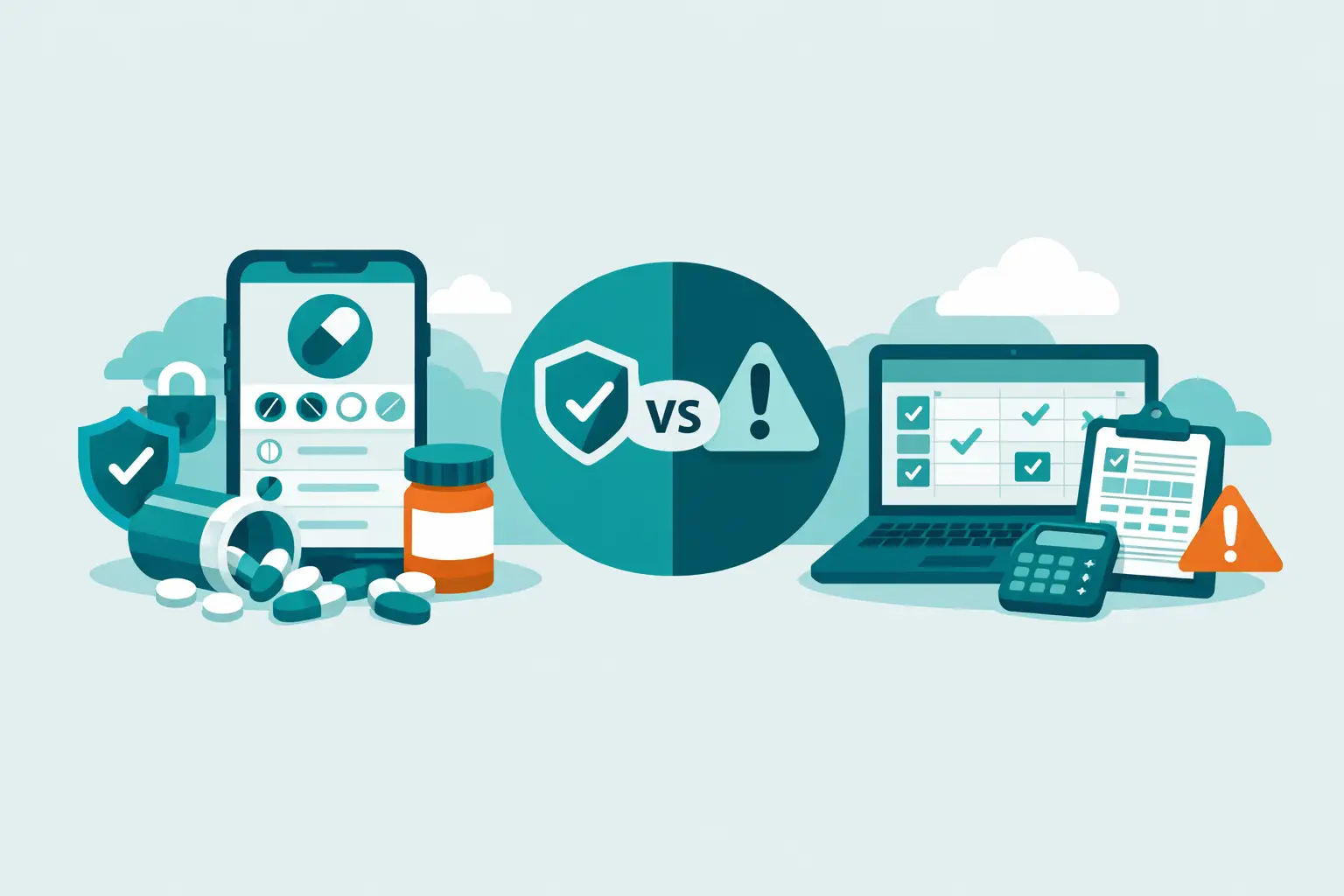
A medication app vs spreadsheet comparison usually begins with a busy moment: one caregiver gave a dose, another is on the way home, a child is resting, and no one is fully sure what was logged last. The question is not whether a spreadsheet can hold the information. It can. The real question is whether everyone who needs that information can find, understand, and act on it with confidence.
For a single person tracking one simple routine, a spreadsheet may be enough. For a household coordinating recurring medications, as-needed timing, temperatures, symptoms, and more than one caregiver, the limits can show up quickly. The right tool should reduce uncertainty, not create another task to manage.
Medication App vs Spreadsheet: The Everyday Difference
A spreadsheet is flexible. You can create columns for names, schedules, notes, readings, refill dates, or anything else your household wants to record. Many families already know how to use one, and it can be a useful starting point for getting scattered paper notes into one file.
That flexibility comes with responsibility. Someone has to build the layout, decide what each field means, keep the file current, and make sure every caregiver uses it the same way. If a column is renamed, a row is skipped, or the latest version is not shared, the system can become unclear when clarity matters most.
A medication app is designed around the repeated questions caregivers face: Who is this for? What is due? Was it logged? When was the last entry? What should another caregiver see before they take over? Instead of asking a family to build a tracking process from scratch, the app provides a structured place for the routine.
The difference is less about digital versus manual. Both are digital tools. It is about whether the tool was built to support family care in real time.
Where Spreadsheets Work Well
Spreadsheets still have a place in household organization. They are inexpensive, familiar, and highly customizable. A caregiver who likes planning may appreciate creating a broad household inventory, a historical record, or a simple overview of recurring routines.
They can also work well when one person is responsible for entering and reviewing information, the schedule rarely changes, and the file is checked at a predictable time each day. In that setting, a carefully maintained spreadsheet can provide useful visibility.
But a spreadsheet does not naturally guide the next action. It shows data, often in a grid that requires reading across rows and interpreting timestamps. It may not distinguish clearly between a planned entry and a completed one. It also depends on users remembering to open the right file, locate the correct tab, and enter information consistently.
Those are manageable trade-offs when life is calm. They are harder when illness interrupts sleep, caregivers are switching shifts, or several family members have separate routines.
The Risks of a Shared File During Busy Care
The biggest spreadsheet challenge is not the formula. It is coordination.
A shared file can have delayed updates, multiple versions, accidental edits, or unclear ownership. One caregiver may type an update into a downloaded copy while another checks an older version. A note like “given this morning” can be understandable to the person who wrote it but less useful to someone checking it later in the day.
Spreadsheets also tend to put the burden of memory back on the family. You may create color coding, conditional formatting, and formulas, but someone still needs to interpret what the colors mean and notice what changed. A detailed tracker can become harder to scan than a simpler one, especially on a phone.
Privacy deserves consideration, too. A household health file may contain sensitive notes and personal details. Families using a spreadsheet should understand where it is stored, who can access it, and whether it might be forwarded, downloaded, or left open on a shared device.
What a Family Medication App Adds
A family-focused medication app provides structure that a generic spreadsheet does not. Each person can have a separate profile, so their routines and health logs are organized in context instead of mixed into one large table. That matters in homes where parents, children, and older relatives all need support.
Reminders can bring a routine forward at the right time rather than requiring a caregiver to remember to check a document. Logging can create a clear record of what was entered and when. For as-needed medications, safety timers can help caregivers see timing information without doing mental math under pressure.
A strong app also supports shared care. When multiple caregivers have access to the same current information, handoffs become less dependent on text messages, sticky notes, or verbal updates. One trusted place helps reduce the familiar question: “Did anyone already log that?”
During an illness, the benefit can extend beyond medication routines. A centralized system for temperatures, symptoms, notes, and related readings can help a family keep a clear timeline without turning the kitchen counter into a stack of paper. This is organization, not medical guidance, but organized records can make household communication much easier.
Medication Timer is built around this family reality: every dose, every family member, one trusted place. Its family-centered setup supports multiple people, active caregiver sharing, recurring routines, as-needed safety timers, and illness tracking in a privacy-forward environment with no ads and no sale of health data.
Choosing the Right Tool for Your Household
There is no single answer for every family. A spreadsheet may be a reasonable fit if one caregiver manages a simple routine and prefers complete control over the layout. It can be especially useful for high-level planning or information that does not need frequent, shared updates.
An app is usually the stronger choice when the household needs timely reminders, clear status updates, separate family member records, or coordinated access across caregivers. It is also a better fit when the goal is to lower the mental load of tracking rather than build and maintain a custom system.
Ask a few practical questions:
- Can another caregiver quickly tell what has already been logged?
- Can each family member's information stay separate and easy to review?
- Does the system help with recurring routines and time-sensitive entries?
- Can you check the latest information from a phone without sorting through tabs?
- Do you feel comfortable with how household health information is stored and shared?
If the answer to several of these is no, the issue may not be that your spreadsheet is poorly made. It may simply be doing a job it was not designed to do.
Moving From a Spreadsheet Without Losing Useful History
Families do not need to abandon every existing record overnight. A practical transition is to keep essential historical information available while starting new routine tracking in the app. That avoids the pressure of recreating months of notes before the new system can be useful.
Start with the people who need tracking now, then set up the routines your household uses most often. Invite the caregivers who need visibility, and agree on one simple habit: log information in the shared system as it happens. Consistency matters more than creating a perfect archive.
Keep descriptions clear and avoid relying on personal shorthand that only one person understands. A system should work when the usual caregiver is tired, unavailable, or out of the house. The best household process is the one another trusted adult can follow without a long explanation.
A Clearer Record Creates More Peace of Mind
A spreadsheet can store a great deal of information. But during everyday family care, information only helps when it is current, understandable, and available to the people sharing responsibility.
For simple, individual tracking, a spreadsheet may remain perfectly practical. For coordinated household care, a purpose-built medication app can provide a clearer path: timely reminders, separate profiles, shared visibility, and an organized record when illness strikes. The goal is not more technology. It is fewer unanswered questions when your family needs calm, confident coordination.