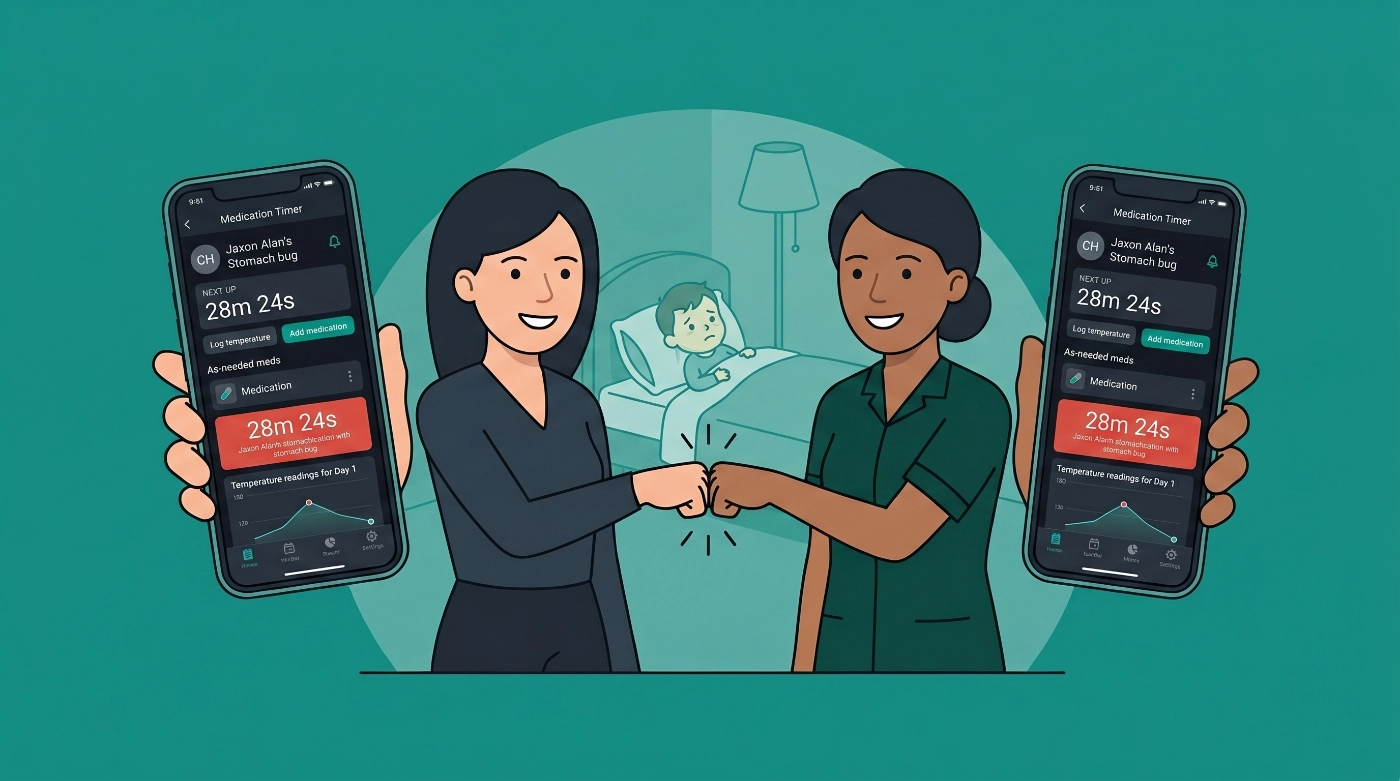
Ensuring a sick child receives timely and accurate medication can be a source of significant stress for parents, especially when sharing care responsibilities with an in-home caregiver or nanny. The key to preventing medication mix-ups and reducing confusion during care transitions lies in moving beyond informal verbal instructions to a clear, shared digital protocol. Utilizing a dedicated platform like Medication Timer allows both parents and caregivers or nannies to stay perfectly aligned, ensuring the child’s well-being remains the top priority without the added chaos.
The Hidden Risks of Relying on Verbal Handoffs
In the whirlwind of a busy morning, a parent rushing to work might offer a quick, verbal rundown of a child’s medication schedule to a nanny: “Give Lily her Panadol at noon, and don’t forget her cough syrup before her nap.” While well-intentioned, these fleeting exchanges are prime failure points for medication management. The brain, under pressure, often skips details, misremembers times, or forgets specific instructions.
Consider a common scenario: a parent recalls saying “5ml,” but the nanny hears “5 mg” or assumes a standard kitchen spoon is fine. Or perhaps the parent mentioned the last dose was given at 7 AM, but in the morning rush, the nanny misremembers it as 8 AM.
These seemingly small discrepancies can lead to significant problems:
- Accidental double-dosing: Giving a second dose too soon because the previous one wasn't recorded.
- Missed doses: Extending the gaps between doses, causing a spike in fever or pain.
- Administering the wrong medicine: Confusing bottles or schedules in a multi-child household.
The lack of a single, synchronized source of truth means there’s no reliable record to refer back to. This leads to guesswork, anxiety, and potentially compromises the child’s recovery.
Implementing Mandatory Digital Protocols with Medication Timer
To eliminate the risks of verbal miscommunication, parents and nannies should establish a mandatory digital logging protocol using medicationtimer.com. Instead of fragmented notes on sticky pads or text messages easily lost in casual conversation threads, this dedicated platform centralizes all essential data in real-time.
Why a dedicated timer matters: Many medications, like acetaminophen or ibuprofen, require strict spacing to prevent toxicity. Medication Timer acts as a shared, live countdown, showing everyone exactly how much time must pass before the next safe dose can be administered.
When a nanny or parent gives a child medication, they log it instantly on the site. The platform instantly updates for all connected users, offering a suite of critical features:
- Real-Time Synchronization: Both the parent at work and the nanny at home see the exact same dashboard simultaneously.
- Visual Countdown Timers: Eliminates the mental math of calculating when the next dose is due.
- Comprehensive Dose History: A clear audit trail of what was given, how much, and by whom.
This digital record offers immediate transparency and peace of mind. Parents can quickly verify if their child received their scheduled dose of antibiotics without needing to interrupt the nanny with a text or phone call.
Adopting the “Rule of Three” for Medication Verification
In clinical settings, healthcare professionals use a “Rule of Three” to ensure medication safety. This principle can be effortlessly adapted for home care by pairing it with your digital timer dashboard:
- At Pickup: When retrieving the medication, confirm it is the correct bottle for the right child. Check the name on the bottle against your medicationtimer.com log details.
- At Preparation: As the dose is being prepared, verify the correct dosage amount (e.g., 5ml, not “a teaspoon”) and any specific instructions (e.g., “with food”). Check the app's countdown timer to ensure it is actually safe to give the dose now.
- At Delivery: Just before administering the medication, quickly confirm the child's identity and the medication once more. After administration, immediately log the dose in the app to reset the countdown timer for the next caregiver.
Establishing Definitive Dosing Parameters Before Delegation
Before delegating any medication administration authority to a nanny, parents must ensure they provide definitive, clear pediatric dosing parameters from a qualified healthcare professional. This information can be explicitly detailed within your shared tracking protocol.
| Parameter | What to Include |
| Exact Medication Name | Clearly distinguish between similar-sounding brands or concentrations. |
| Precise Dose Amount | Always in specific units (e.g., 2.5 ml, 1 tablet), never vague terms. |
| Frequency & Limits | How often it can be given and the absolute maximum daily limit within 24 hours. |
| Administration Notes | Specific instructions like “shake well before use” or “take with food.” |
By combining these clear boundaries with the automated safeguards of a digital timer, parents empower their nannies to provide safe and effective care within strictly defined, non-negotiable limits.
Beyond the Dose: Fostering Comprehensive Coordination
While medication timing and dosage are paramount, utilizing an organized approach to track a child's illness creates a holistic picture of their recovery. When parents return home or check in from work, they can immediately see trends, such as whether the time between necessary fever reducers is widening, indicating that the child is successfully fighting off the illness.
This level of coordinated care reduces the overall stress of managing a sick child, transforming potential points of household friction into opportunities for clear, shared understanding and consistent care.
Download Medication Timer now rest assured that your family will not have any medication incidents.
Remember, always consult your doctor, pharmacist, or other qualified healthcare professional for any medical advice, diagnoses, or treatment decisions.