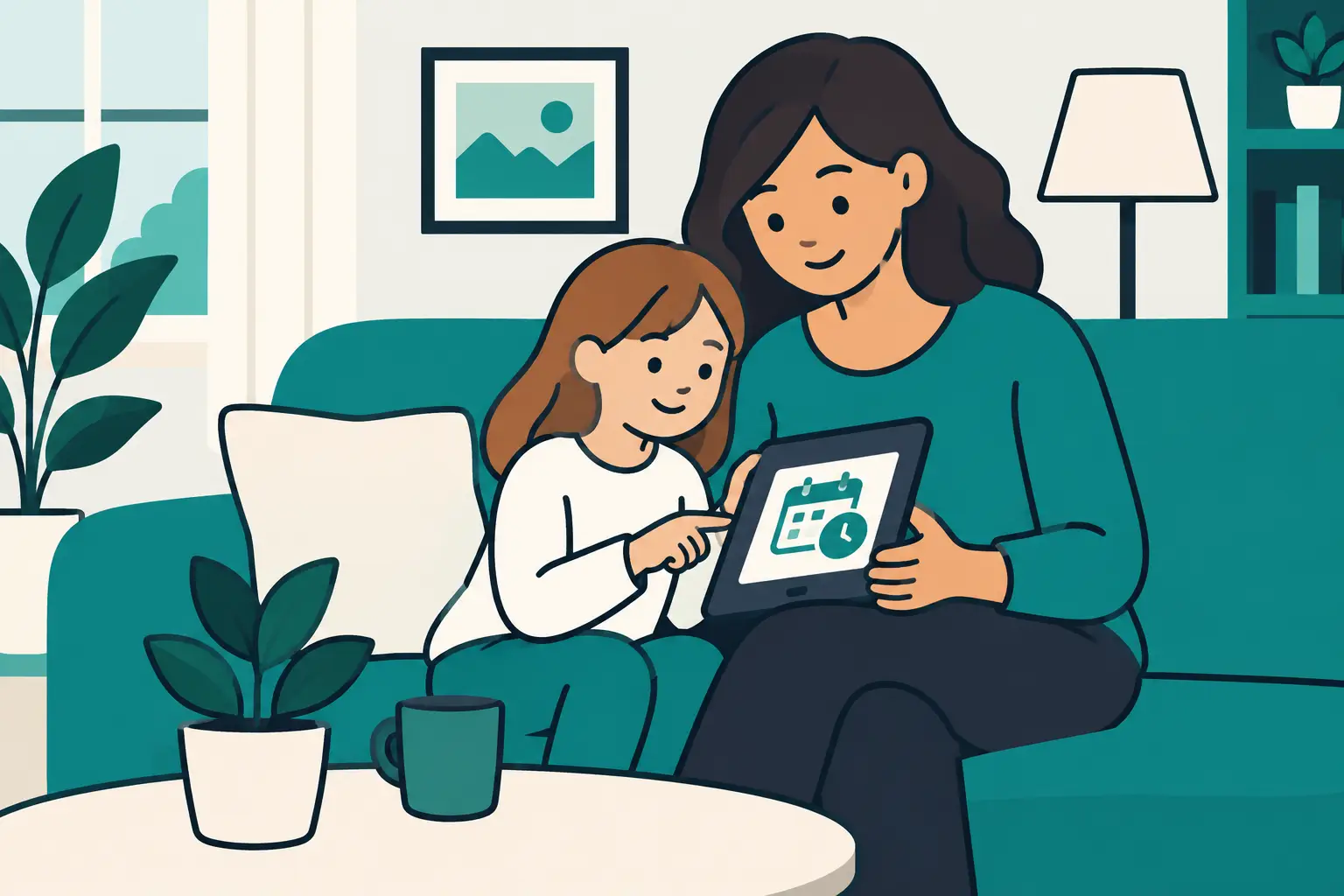
When a child wakes up uncomfortable at 2 am, or a parent is recovering while several people are helping at home, the hardest question is often not what is in the medicine cabinet. It is: when was the last dose given? That is where a dose timer can bring order to an otherwise stressful moment.
What Is a Dose Timer?
A dose timer is a tool that records when a medication dose was given and counts the time that has passed since then. Depending on the tool, it may also show when the next dose can be considered based on the schedule or timing instructions a caregiver has entered.
At its most useful, a dose timer replaces guesswork with a clear timestamp. Instead of relying on memory, a sticky note, a half-read text message, or a vague recollection that someone handled it earlier, caregivers can see a shared record of the last logged dose.
A dose timer does not decide what someone should take, how much they should take, or whether a dose is appropriate. It is an organisation and tracking tool. Families should always use the directions provided with the medication and contact an appropriate healthcare professional or pharmacist when they have questions about medication use.
For households, that distinction matters. The timer supports the care plan already in place by helping everyone stay aligned on timing.
Why Dose Timing Gets Confusing at Home
Medication tracking sounds simple until real family life gets involved. Children may be cared for by two parents, grandparents, sitters, or other trusted adults. One person may give a dose before leaving for work, while another takes over later that evening. During an illness, sleep is interrupted, routines change, and conversations happen quickly.
A paper log can help, but it is only useful when it is nearby, current, and readable. A note on the fridge does not automatically travel with a caregiver. A group text may show that someone gave a dose, but it can become difficult to find later among all the other messages.
The challenge grows when a household is tracking more than one person. One family member may have a recurring routine, while another has temporary needs during an illness. Similar-looking bottles, multiple names, and overlapping schedules can make it easy to lose the details that matter.
A dose timer gives each event a place: who received it, what was logged, and when it happened. That clarity can reduce the mental load for the person carrying most of the caregiving responsibility.
How a Dose Timer Works
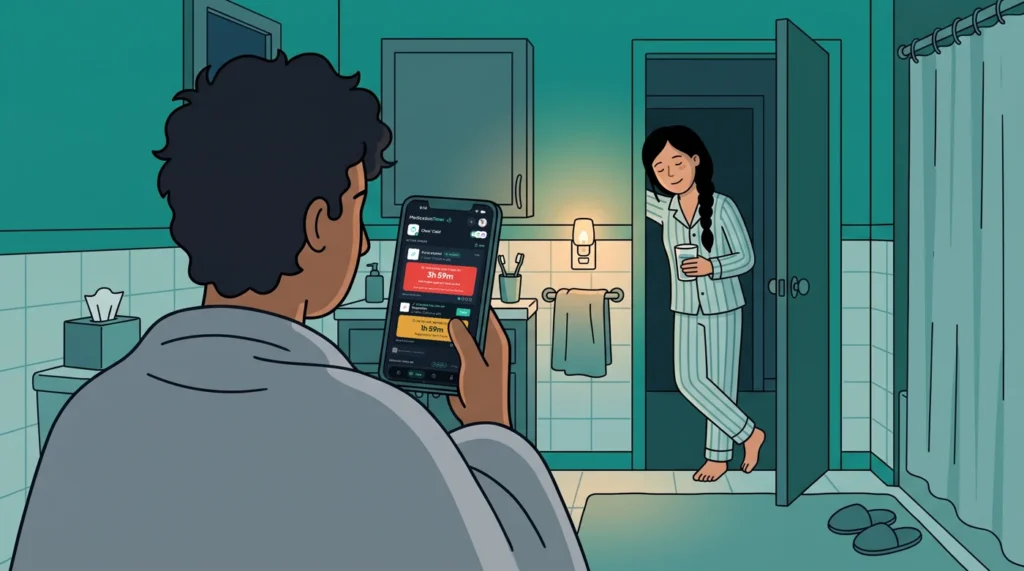
The basic process is straightforward. A caregiver logs a dose when it is given, and the timer begins counting from that time. The record remains available so the household can check the most recent entry before another caregiver steps in.
Some dose timers are simple one-person countdown tools. Others are designed for family coordination and can keep separate records for multiple people, recurring routines, and as-needed medications. The right setup depends on the household.
Logging creates a reliable reference point
The most valuable moment is the log itself. A clear entry creates a reference point that is more dependable than memory, especially after a long day or a restless night. If a caregiver needs to leave, another caregiver can review the record rather than start from scratch.
For a family with shared responsibilities, visibility matters as much as the timer. A timer that only lives on one person's phone can still leave others asking for confirmation. A shared system helps make the current record available to the people responsible for care.
The timer shows elapsed time
After a dose is logged, the timer displays how much time has passed. This is especially helpful for medications that are used only when needed, where the central question tends to be about the last time a dose was recorded.
The goal is not to turn family care into a complicated clinical process. It is to make a key piece of information easy to find when the household needs it most.
In Medication Timer, each timer remembers the interval your household set from the label or your pharmacist's directions. After you tap to log a dose, the timer card counts down to the end of that interval, shown as time remaining or as a clock time, whichever you prefer. If you have set a daily maximum for the medicine, the card also shows how many doses have been logged in the last 24 hours (Free).
Reminders support routines
Many tools also offer reminders for recurring medication routines. A reminder is different from a dose timer, though the two often work well together. A reminder prompts a caregiver about a scheduled task. A dose timer records a completed event and tracks time from that point.
For example, a reminder can help a family remember a regular routine. A dose timer can help them confirm that the routine was actually logged and see the time since it happened. Using both creates a clearer daily record without requiring anyone to keep the whole schedule in their head.
Dose Timer vs Alarm, Reminder and Paper Log
These tools can overlap, but they solve different problems.
An alarm makes noise at a specific time. It is useful for getting attention, but it does not necessarily show whether anyone completed the task. A reminder may prompt an action and allow it to be checked off, which is helpful for planned routines.
A dose timer starts with the actual logged time. Its main job is to answer, “How long has it been since the last recorded dose?” That makes it particularly useful when timing depends on when something was given rather than simply what time appears on the clock.
A paper log can capture similar information, and some families prefer it. The trade-off is convenience and shared access. Paper can be perfectly practical for one caregiver in one location. Digital tracking may be easier when care changes hands, family members are in different places, or the household is also recording symptoms, temperatures, and other health observations.
No single approach is right for every family. The best system is the one caregivers can use consistently, understand quickly, and trust during busy moments.
What Families Should Look For in a Dose Timer
A basic timer may be enough for an individual. Family care often calls for more context. When evaluating a dose-timing tool, look for features that support the way care actually happens at home.
First, it should allow separate profiles for each family member. Mixing entries in one timeline can create confusion, particularly when multiple people have different routines. Clear names and individual histories make it easier to verify the right record.
Second, consider caregiver sharing. If more than one adult helps with care, everyone should be able to see the same current information. Shared access can reduce repetitive texts and help prevent the uncertainty that happens during shift changes, school pick-up, travel, or overnight care.
In Medication Timer, each caregiver you invite signs in with their own login, and you can revoke access when a helper no longer needs it (Family Care). Once your household is shared, timer cards show who logged the last dose and when, so nobody has to ask “did you already give it?” in the group chat.
Third, look for a usable history. A timer is most helpful when it does not disappear after one alert. A record of prior logs gives caregivers context, helps them communicate clearly, and provides a more organised account of what happened during an illness episode.
Finally, privacy deserves attention. Health information is personal, even within a household. It’s worth choosing a service that’s built around protecting your family’s data rather than using it for advertising.

Using a Dose Timer During Illness at Home
When illness strikes, family routines can become fragmented quickly. Someone may be checking a temperature, another person may be handling meals and rest, and a third caregiver may be sending updates from another location. A dose timer cannot remove the stress of those moments, but it can remove one source of uncertainty.
It works best as part of one organised household record. In Medication Timer, families can pair dose timing with medication routines, illness-specific Care sessions and logged health readings, all organised by family member. When someone is unwell, you start a Care session for that person, and their as-needed timers, temperatures and symptoms sit together on one timeline. When they are feeling better, you can close and archive the session so the record stays tidy (Free). That means a caregiver does not need to search across notes, texts, and separate apps to understand what has been recorded.
The value is practical: every caregiver can begin with the same information. Rather than asking whether something was already handled, they can check the shared timeline and focus on the next task in front of them.
Simple Habits That Make a Dose Timer More Useful
A timer only helps when the record is accurate, so consistency is more valuable than complexity. Log the dose at the time it is given, not later when details may be less clear. Use a distinct profile for each person, and make sure all active caregivers know where the shared record lives.
It also helps to agree on one household rule: if it is not logged, treat the timing as unconfirmed and verify it before acting. This is not about blaming anyone for a missed entry. It is about creating a calmer process when memory is tired and several people are trying to help.
Review the timer setup whenever routines change, such as when a caregiver is travelling, a child begins staying with another family member, or a temporary illness-tracking period ends. A few minutes of organisation before a difficult day can make shared care feel much more manageable.
A good dose timer does not ask families to become medical experts. It gives them one trusted place to record the moments that are easy to forget, so care can stay coordinated when it matters most.
Questions? Browse the help centre or contact support from Profile in the app.