


A paper chart on the fridge can feel perfectly adequate until a child is home sick, Grandma has arrived to help for the afternoon, and two adults are trying to remember whether this morning’s dose was already ticked off. That is when the medication calendar versus paper chart question stops being about screens or handwriting. It becomes a question of how your household keeps one clear record when the day is anything but calm.
Paper charts remain useful in many homes. They are familiar, visible and easy to start. A digital medication calendar can bring schedules, reminders, health readings and what each carer has logged into one place. Neither option is automatically right for every family. The better choice depends on how many people are involved, how often routines change and whether everyone can see the same information when it matters.
A quick word on terms: in this guide, a medication calendar means a digital schedule in an app, such as Medication Timer.
Medication calendar versus paper chart at home
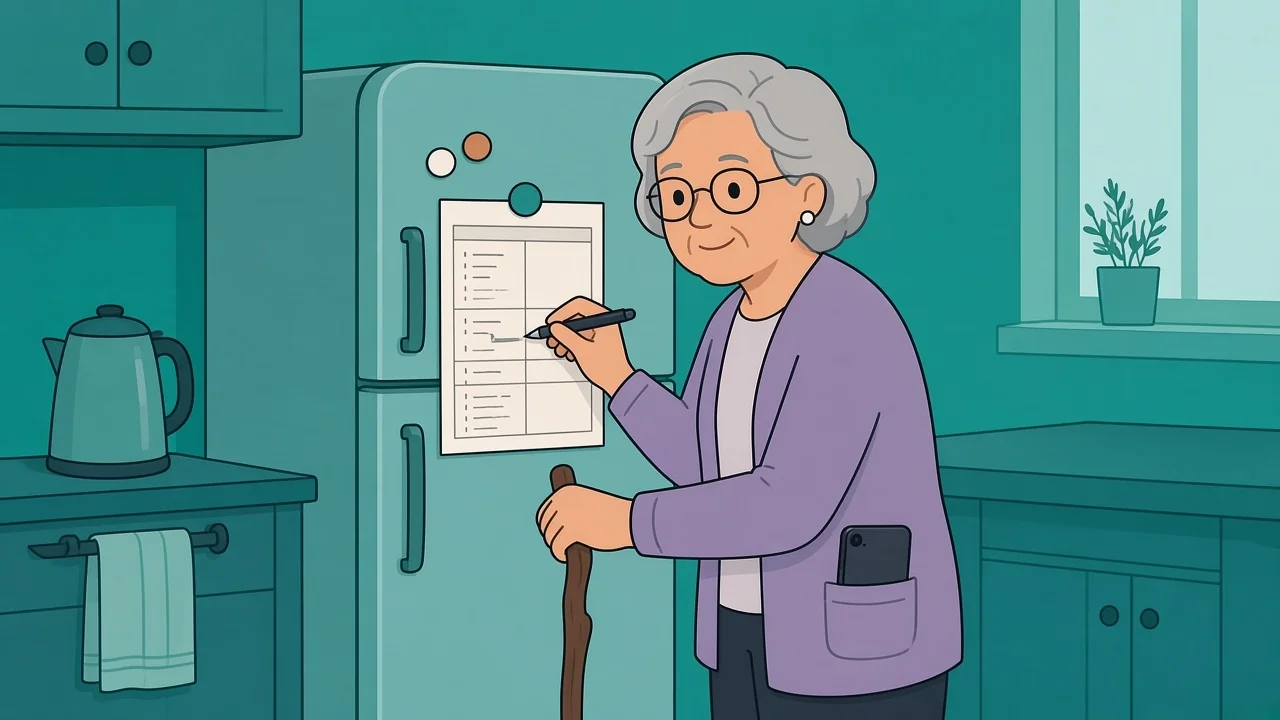
A paper chart is a physical record, often stuck on the fridge, kept in a binder or tucked into a bag. It may show names, times, checkboxes and handwriting. For one person with a simple, predictable routine, that visibility can be genuinely helpful. Anyone walking past can see what is planned for the day.
A medication calendar organises the same routines on a phone or other connected device. The difference is not just that it sends reminders. A well-designed calendar can keep each family member separate, preserve a time-stamped history, repeat recurring routines and let every carer see what has been recorded.
The practical question is not whether paper is old-fashioned or digital is better. It is whether the system keeps working when life gets busy, someone is away from the kitchen or more than one carer is involved.
Where paper charts work well
Paper has a low barrier to entry. You can make a chart in minutes, jot a quick reminder and put it somewhere prominent. It does not need charging or an internet connection. For some older relatives, a large-print paper schedule may also feel more comfortable than another app to learn.
It can be especially effective for a short, temporary household task when one person is clearly responsible for updating it. A simple visual checklist reduces the need to hold every detail in your head.
But paper depends on something family care does not always offer: everyone being in the same place. A chart on the fridge cannot reach a carer at work, help a co-parent confirm an update from another home or stop two people relying on different copies. Handwriting can be hard to read, ticks can lack context and an updated schedule may not make it onto every version in circulation.
Where digital calendars earn their place
Digital medication calendars are most useful when coordination matters as much as the schedule itself. Instead of asking “Did anyone write that down?”, carers can look at the same current record. That lowers the mental load on rushed mornings, travel days, overnight care or an illness that changes the household routine.
A calendar also gives structure to information that otherwise ends up scattered across texts, scraps of paper and memory. In Medication Timer, you can add every family member to one account, see them together on the Today screen and keep scheduled routines, as-needed timers and health readings side by side (Free + more with Family Care). The goal is not to make home care feel clinical. It is to make the next step easier to see.
Digital tools do have trade-offs. A carer needs a device, the household needs to agree on how updates are recorded and reminders need to be set up thoughtfully. A calendar that is too complicated becomes another job. The most useful system is the one your family will actually open, understand and keep current.
What to compare when the routine gets interrupted
The strongest choice often becomes clear when you compare how each format handles the moments that cause confusion. Think less about features in the abstract and more about what happens when the day does not go to plan.
Shared visibility and handoffs
Paper is visible only where it is posted. That can be enough for one carer in one home. It becomes less dependable when a partner is travelling, a grandparent is helping or care passes between adults during the day.
A shared digital calendar lets everyone start from the same record instead of a photo of a chart or a message thread. With Family Care sharing, each carer signs in with their own account and sees the same timers, routines and readings, including who gave the last dose (Family Care). The next carer can see what was logged rather than rebuilding the day from half-remembered scraps.
Reminders versus visual cues
A paper chart is a visual cue only when someone happens to see it. Its strength is passive visibility in a fixed spot. Its weakness is that it cannot reach you anywhere else.
Medication Timer can send reminders for the routines you set up on iPhone and Android, with Taken and Snooze buttons so you can log from the notification (Free). Reminders are a mobile feature, so the web app does not send the same push alerts. Even so, reminders support the household’s organisation rather than replace attention, so it helps to decide who owns each routine and keep reminders meaningful enough that nobody learns to ignore them.
Recordkeeping and clarity
A handwritten chart can capture a lot, but it is only as clear as the handwriting and the person updating it. If a page is misplaced or replaced, the record may be incomplete. There is also little room to tell a planned dose from one that was taken, changed or skipped unless everyone uses the same marks.
A digital record keeps a clearer history, especially across recurring routines and several people. On Today, scheduled doses show as taken, missed or upcoming, and you can move along the date strip to look back at earlier days. Free accounts see full detail for the last three calendar days, and Family Care keeps unlimited history (Free + more with Family Care). When someone is sick, Care keeps doses, temperatures and symptoms on one timeline for that illness, so you are not searching through separate papers and messages (Free).
Before an appointment, Family Care can also turn a family member’s logged doses and readings for a date range you choose into a family report that shows which scheduled doses were taken or missed (Family Care). A report reflects what was logged, so it is only as complete as the record behind it.
Privacy and your household’s information
A paper chart stays private only as long as it stays in a private place. A chart on the fridge is convenient, but it is also visible to visitors, tradies and anyone passing through the kitchen.
Digital tools bring a different responsibility: choosing a service that treats your family’s health information with care. It is worth looking for an app that keeps family health records free of advertising, as covered in our guide to an ad-free health tracking app. Convenience should not mean giving up control of sensitive household information.
A practical way to choose
Start with the complexity of your household rather than the appeal of the tool. If one adult manages one simple routine and wants a large, visible reminder, a paper chart may be all that is needed. Keep it in one consistent place, use clear labels and make sure the person responsible for updates knows the chart is the source of truth.
A digital medication calendar is often the better fit when several family members have routines, more than one carer contributes or information needs to travel beyond one room. It can also reduce friction when a household is tracking several kinds of care information during a stressful week.
Some families use both. A digital calendar can serve as the current shared record, while a printed daily view gives a simple reference for a carer who prefers paper. In that setup, be explicit about which record is the main one. Two systems only create peace of mind when they stay in step.

Make any system easier to trust
Whichever format you choose, build a small routine around it. Decide where updates happen, who is responsible for each one and how another carer will know the record is current. Use consistent names and plain language. Review the schedule whenever the household routine changes, rather than assuming an old chart or calendar entry still fits.
During an illness, the need for clarity rises quickly. A single digital record can keep readings and medication timing together, while a paper backup stays useful if a device is flat or out of reach. The right balance is the one that keeps carers informed without adding work to an already demanding day. For a closer look at keeping everything together through a sick spell, see our guide to household sick day logs.
A good family care system should not force anyone to rely on memory, guesswork or a hurried text message. Choose the format that helps your household see the same plan, record what happens and get through the day with a little more confidence.
Medication Timer is free to start on iPhone, Android and the web, and Family Care is available on the Family plan, with the price shown in-store for your region.
Questions? Browse the help centre or contact support from Profile in the app.