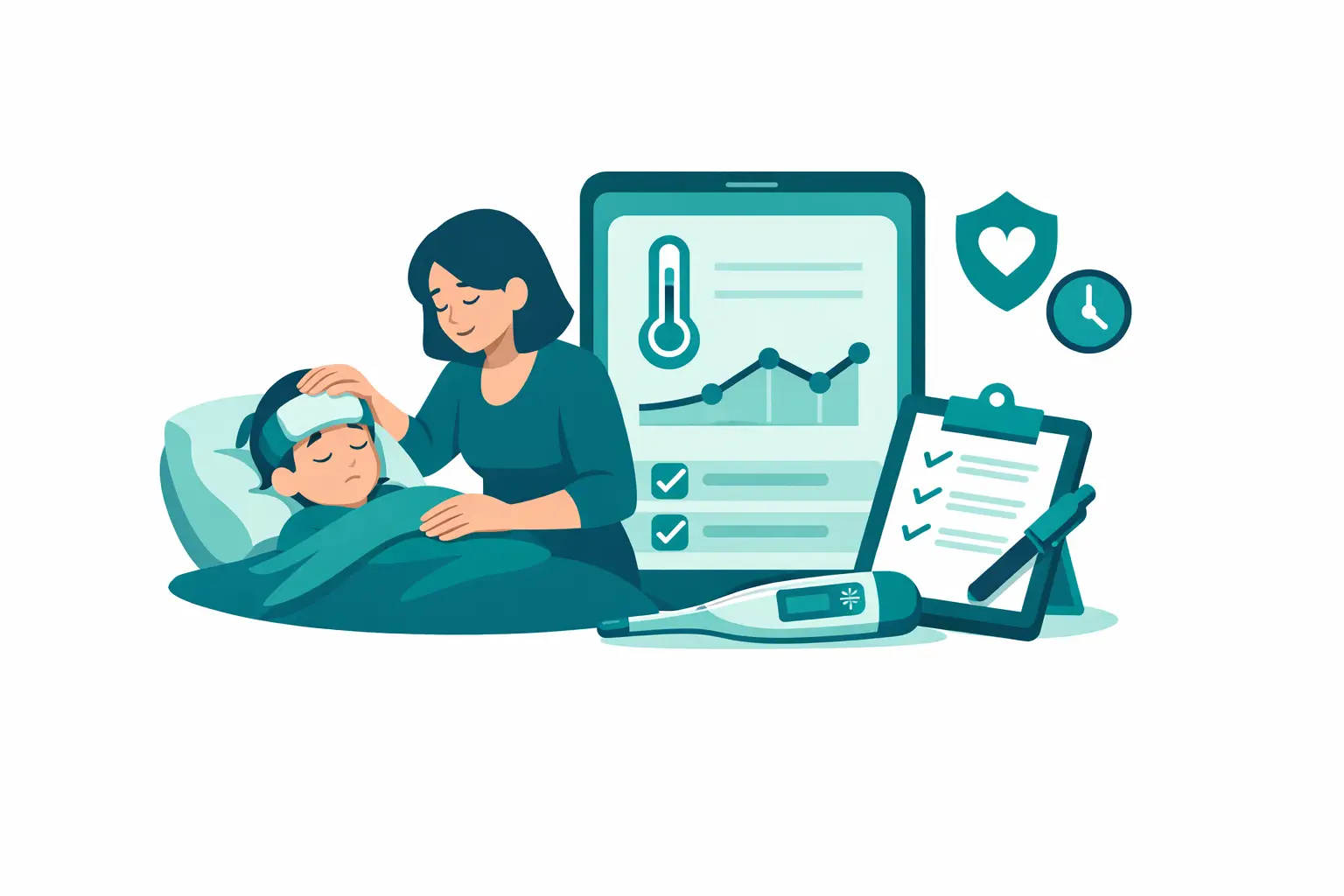
At 2:14 a.m., the question is rarely just, “What was the temperature?” It is usually, “What was it last time, when did we check, and did anyone already give something?” A temperature log for sick child care gives you those answers fast, without relying on memory when everyone is tired, stressed, and trying to do the right thing.
For families, fever tracking is less about creating perfect records and more about reducing confusion. When illness strikes, details blur quickly. One caregiver checks before bed, another checks before school, and by afternoon no one is fully sure which reading came first or how the day has changed. A simple, consistent log creates order. It helps everyone see the same information in one place and makes handoffs between caregivers much clearer.
Why a temperature log for sick child care helps
A child’s temperature can change throughout the day, and a single number rarely tells the whole story. What matters in everyday caregiving is the pattern. Are readings trending up, staying steady, or easing down? Are they changing alongside rest, appetite, or energy level? A log gives you a timeline instead of a snapshot.
That timeline is useful even when the illness seems straightforward. Parents often remember the highest number but forget the sequence around it. A temperature reading without a time can be misleading. A note without a reading can be hard to interpret later. When you log both together, the picture becomes easier to follow.
This also lowers the mental load for shared care. If one parent leaves for work, a grandparent takes over, or two households are coordinating updates, a written or digital record prevents repeat questions and crossed wires. Everyone can work from the same facts instead of secondhand recollection.
What to include in a temperature log
A good log does not need to be complicated. In most households, the most helpful record includes the time, the temperature reading, the method used for the reading, and a short note about what was happening around that moment. That note might mention sleep, fluids, behavior, or whether the child had just been active.
It also helps to record who entered the reading when multiple caregivers are involved. That sounds small, but it can save time later. If one person notices a change or has a question about context, it is easier to follow up without guesswork.
If your family is also tracking medications, keep that schedule closely connected to the same illness record. Separate notes in different places can create confusion, especially overnight. A central record is often safer and much easier to review at a glance.
Keep the format consistent
Consistency matters more than detail. If one caregiver writes “101.2 at 8,” another writes “felt warm after nap,” and a third sends updates by text, the record becomes harder to trust. Choose one format and stick with it for the duration of the illness.
That does not mean every entry must be long. Short, repeatable notes are usually best. A clean record that everyone can maintain is more useful than a detailed system that falls apart by the second day.
Paper log or digital tracker?
Paper can work well for a short illness, especially if one person is mainly in charge and stays home with the child. It is quick, familiar, and easy to keep on a counter. For some families, that simplicity is enough.
But paper has trade-offs. It can get misplaced, left in one room, or become hard to share when another caregiver steps in. It also does not help much with timing or household coordination unless everyone is physically seeing the same page.
A digital log is often better for busy families because it keeps readings, notes, and caregiving updates together. It is especially helpful when care shifts between parents, grandparents, babysitters, or separated households. Instead of retelling the day from memory, you can rely on a shared record that shows what happened and when.
That is where a family-focused tool makes a real difference. Medication Timer is built for household care coordination, so temperature tracking can live alongside other illness notes and medication timing in one trusted place. For families managing a sick child while balancing work, sleep, and multiple caregivers, that kind of clarity can bring real peace of mind.
How to use a temperature log without overcomplicating it
The best system is the one your household will actually use when people are tired. Start by deciding who will enter readings and where those readings will live. Then agree on the basic fields you want every time: temperature, time, method, and a short note.
Try to avoid scattered updates across text messages, sticky notes, and memory. That setup tends to fail right when stress rises. A single record is easier to maintain and easier to trust.
It also helps to think of the log as a support tool, not a full diary. You do not need to capture every small detail of the day. Focus on the information that helps caregivers stay coordinated and helps you understand the overall pattern of the illness.
What a useful entry looks like
A useful entry is clear enough that another caregiver can understand it immediately. For example, a time-stamped reading with a short note about whether the child was resting, eating, or waking up gives better context than a number alone.
What matters most is that entries are easy to compare over time. If the format is stable, it becomes much easier to scan the day and see what changed.
Common mistakes families run into
One common problem is recording a temperature but not the time. Another is switching between different tracking methods during the same illness. Families also often keep medication timing separate from symptom and temperature notes, which can make the overall record harder to read.
There is also a tendency to over-record in the first few hours and then stop once everyone gets busy. That creates gaps right when the timeline becomes most useful. A better approach is to use a simple system from the start and keep it sustainable.
Another trade-off is detail versus clarity. More notes are not always better. If entries become long or inconsistent, other caregivers may stop reading them closely. A short, structured log is often the safest choice.
When a log is especially helpful
A temperature log for sick child situations becomes even more valuable when more than one adult is involved in care. It helps during overnight shifts, school-day handoffs, travel between homes, and any moment when one caregiver needs to update another quickly.
It is also useful when a child is sick while the rest of family life keeps moving. If you are also managing another child’s schedule, work meetings, errands, or medications for another family member, a centralized log reduces the chance that key details get lost in the shuffle.
Some families only use tracking tools during illness spikes. Others prefer to keep all health routines in one place year-round so they are not building a system during a stressful moment. It depends on how your household operates. The important part is having a process you trust before the next rough night arrives.
Build a record that supports shared care
The strongest reason to keep a log is not data for its own sake. It is confidence. When each caregiver can open one record and understand what happened, when it happened, and what still needs attention, the whole household runs more safely.
That kind of visibility matters because family care is rarely handled by one person all the time. Even in a two-parent home, responsibilities shift. In larger family networks, shared care is the norm. A clear temperature log supports those transitions without forcing anyone to reconstruct the day from memory.
The best tracking system is the one that makes illness management calmer, clearer, and easier to share. If your record helps you reduce confusion, stay organized, and keep every caregiver on the same page, it is doing exactly what your family needs.