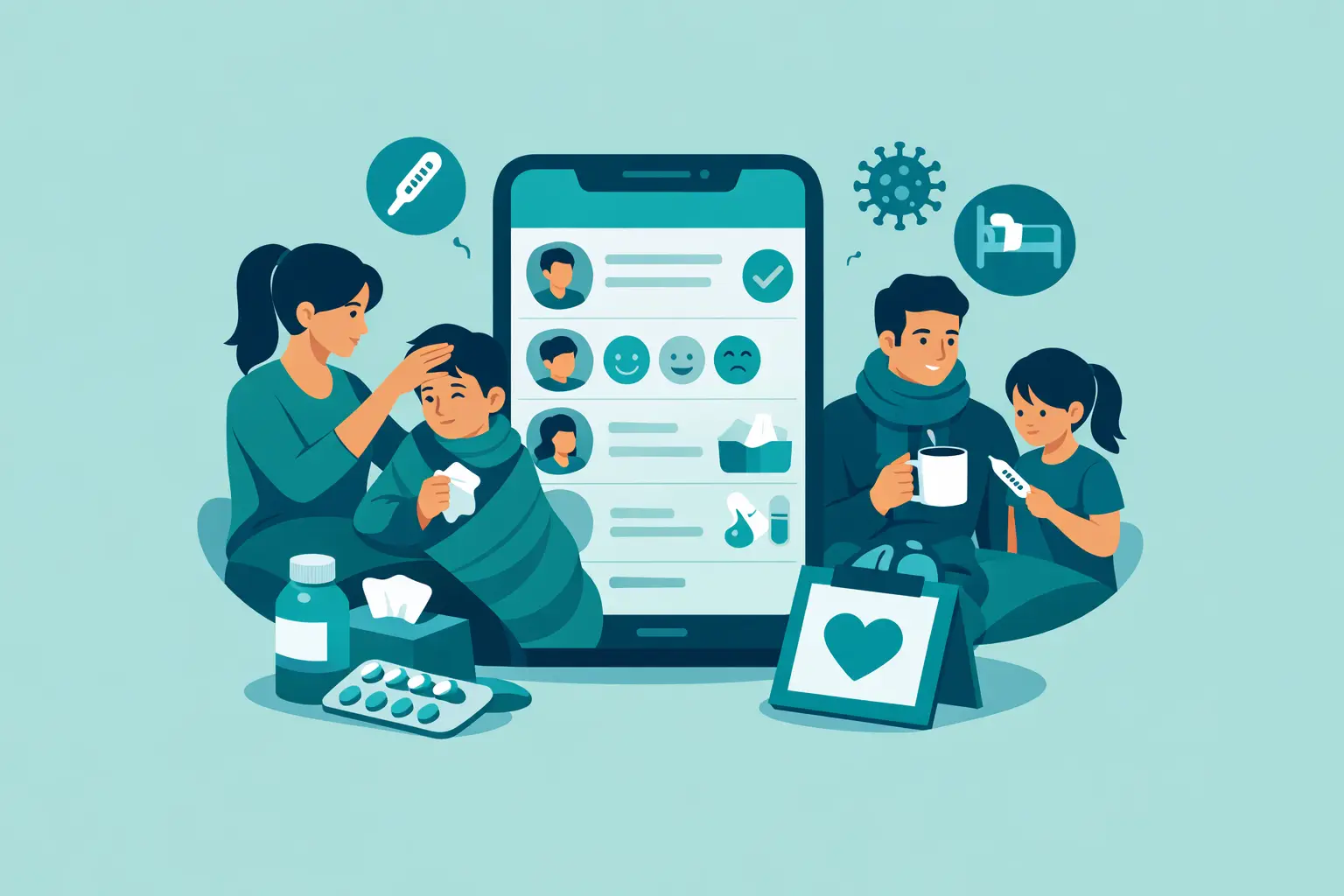
When a child wakes up uncomfortable at 2 a.m., a spouse is home sick, or an older relative needs extra attention, memory quickly becomes an unreliable system. A symptom tracker for household illness gives your family one calm, organized record of what has been noticed, logged, and shared - without relying on scattered texts, paper notes, or guesswork between caregivers.
The goal is not to turn your home into a clinic. It is to reduce the mental load when illness disrupts an already full day. A clear household record can help parents, partners, grandparents, and other caregivers stay on the same page while preserving the details that are easy to lose during a busy week.
Why household illness tracking is different
Tracking one person's health information is relatively straightforward. Tracking an illness that moves through a household, or caring for several people at once, is a coordination challenge. Similar symptoms can appear on different days. One caregiver may be at home in the morning while another takes over after work. A child may have a school absence, while an adult still needs to manage routine medications and daily responsibilities.
That is where a household-focused tracker earns its place. Instead of treating each entry as an isolated note, it connects information to the right person, the right time, and the right illness period. Everyone involved can see a more complete picture without having to reconstruct it from a conversation thread.
A useful tracker also separates routine care from an active illness. Your normal schedule should not disappear just because someone is having a difficult week. At the same time, illness-related details need a dedicated place so they do not get buried beneath everyday reminders.
What a symptom tracker for household illness should capture
The best system is detailed enough to be useful, but simple enough that a tired caregiver will actually use it. Start with the information your household is most likely to need when handing off care or looking back at the day.
A practical illness record usually includes:
- The family member's name and the date the illness tracking session began
- Symptoms observed and when they were first noticed or changed
- Health readings, such as temperature, recorded with a date and time
- Medication activity and timing, when your household is already tracking it
- Notes that give context, such as rest, missed school, or which caregiver was present
You do not need to write a long narrative every time. Short, consistent entries are often more valuable than a detailed note written hours later. "Cough noted before breakfast" is clearer than a vague reminder that someone "felt bad earlier." The point is a reliable timeline, not perfect documentation.
Keep each person's information separate
When more than one person is unwell, it is tempting to keep one shared note for the entire household. That can create confusion fast. A reading, symptom, or medication record needs to be tied to the correct family member, especially when names, routines, and schedules overlap.
Individual profiles make this easier. They let caregivers review one person's illness session without sorting through someone else's entries, while still keeping all household information in one trusted place. This is particularly helpful for families with young children, multigenerational households, or rotating caregivers.
Record time, not just the event
Timing creates the context that a note alone cannot provide. "Fever" is less useful as an organizational record than "temperature logged at 7:15 p.m." A time-stamped entry helps the next caregiver understand what has already happened during the day and prevents duplicate work.
This matters just as much for routine medication tracking. When caregivers can see that an activity has been logged, they do not have to interrupt each other for confirmation or depend on a handwritten note that may be missing from the kitchen counter. Clear timing supports calmer handoffs and fewer household mix-ups.
Build a simple illness-tracking routine
A tracker only helps if it fits into real family life. The most sustainable approach is to make logging part of the moments that already happen: a morning check-in, an after-school update, a bedtime routine, or a caregiver handoff.
Start an illness-specific tracking session when your household decides it would be helpful to keep information together. Give the session a plain name that makes sense later, such as "Sam - home sick, March" or "Household cold week." Then add entries as events occur rather than attempting to recreate the entire day at night.
For many families, two or three brief check-ins are enough. The right frequency depends on your household, who is involved in care, and how much information is changing. A parent managing care alone may prefer quick notes throughout the day. A household with shared caregivers may benefit more from a structured morning and evening handoff.
Consistency matters more than volume. If your tracker asks too much of a busy caregiver, it becomes another task to avoid. Choose fields that answer the questions your family actually asks: Who is feeling unwell? What was logged today? Has anyone already handled this? What needs to be communicated at the next handoff?
Make caregiver handoffs less stressful
The most valuable moment for a household tracker may be the moment one caregiver leaves and another steps in. Without a shared record, that handoff often becomes a rushed verbal download: what happened, what was recorded, what the child ate, whether a reading was taken, and what still needs attention.
A centralized log turns that conversation into a quick review. The incoming caregiver can see the recent timeline first, then ask only the questions that need clarification. That protects against assumptions and gives the person taking over a stronger sense of control.
Shared visibility also reduces the burden on one person to be the household memory. The caregiver who spent the day at home should not have to carry every detail in their head through dinner, work messages, and bedtime. When the information is already organized, care becomes more shared in practice, not just in intention.
Privacy belongs in this process, too. Family health information is personal. Choose a platform designed to keep household records private, without ads competing for attention or health data being treated as a commodity. Care coordination should feel secure, especially during a stressful illness episode.
Avoid the common tracking traps
The first trap is using too many places at once. A thermometer reading in a photo, a medication note in a text message, a symptom update in a family chat, and a reminder on paper may all seem manageable separately. Together, they create uncertainty. A single source of truth is easier to maintain and easier to trust.
The second trap is making notes so general that they do not support a handoff. "Doing better" may reflect a real improvement, but it does not tell another caregiver when the change was noticed or what has already been recorded. Add just enough detail to make the entry useful later.
The third trap is waiting for the day to settle down before logging anything. Families are busy, and no one wants more screen time during a hard day. Still, a brief entry at the moment something happens is usually easier than trying to remember a sequence of events after bedtime.
Finally, do not confuse a tracker with a diagnostic tool. Its role is organization and communication: a dependable place to record household information, coordinate care, and preserve a clear timeline. It is not designed to interpret symptoms or replace professional support.
One trusted place for routine and sick days
Household illness does not pause the rest of family life. Regular medication schedules, recurring routines, school calendars, work obligations, and caregiving responsibilities continue in the background. A system that brings illness tracking and routine health organization together can reduce the need to switch between tools when things feel most complicated.
Medication Timer is built around that family reality. It gives households a shared place to manage multiple family members, log health readings, track illness sessions, and coordinate medication timing with the caregivers who need visibility. The value is not more information for its own sake. It is a clearer, safer way to keep the right details available to the people caring for each other.
The next time illness changes the rhythm of your home, begin with one small habit: record the first useful detail in one shared place. That single entry can make the next handoff, the next busy morning, and the next long night feel more manageable.