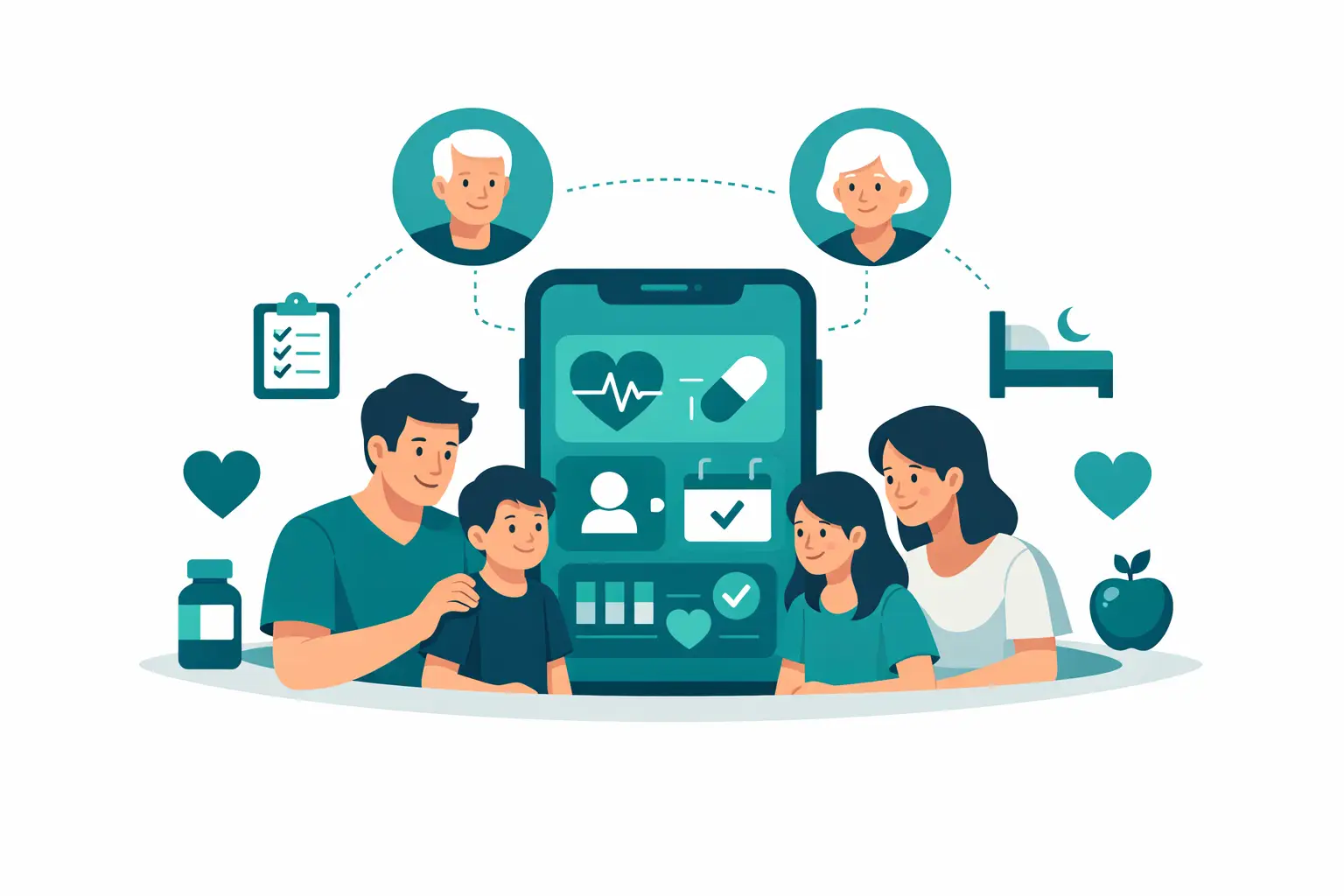
When a child wakes up uncomfortable at 2 a.m., the hardest part is often not finding a thermometer or opening the medicine cabinet. It is remembering what happened earlier, knowing whether another caregiver already handled a task, and keeping the details clear when everyone is tired. A shared health tracker for families gives the household one reliable record when memory and group texts are not enough.
For everyday routines, it reduces the small checks that pile up throughout the day. When illness strikes, it gives caregivers a calm place to record what happened, when it happened, and what still needs attention. The goal is not to make family care feel clinical. It is to make it easier for the people caring for the same household to stay aligned.
Why family health tracking needs one shared view
Most households do not struggle because they lack concern. They struggle because health information gets scattered. One person may keep details in a notes app, another may rely on a calendar reminder, and a third may send a quick text that gets buried under school updates and dinner plans.
That system can work until responsibility shifts. A parent leaves for work. A grandparent takes over for the afternoon. A partner handles bedtime. Suddenly, everyone needs the same information, but no one is sure which version is current.
A shared tracker creates a single household view of medication routines, as-needed dose timing, health readings, symptoms, and care notes. Instead of asking, “Did anyone log that?” caregivers can check the same record. That clarity can lower the mental load for everyone involved.
It also recognizes a simple reality: families rarely manage care for just one person. Parents may be tracking children with different routines. Adult children may help coordinate care for an older relative. A household may be balancing recurring medications, temporary illness tracking, and daily wellness readings at the same time. An individual-focused tool can become confusing quickly when multiple people need attention.
What a shared health tracker for families should organize
The most useful tracker does not try to replace professional care or overwhelm a family with complicated charts. It gives household caregivers a dependable structure for the information they already need to manage.
Medication routines and timing
Recurring medication routines are easier to manage when each family member has a clear schedule and a completion record. This helps caregivers see what has been logged without relying on guesswork or repeated check-ins.
For medications taken only as needed, timing matters just as much as the record itself. A safety timer can show when a dose was logged and when the next eligible time may be, based on the schedule entered for that person. This is especially useful when care changes hands or when a caregiver is managing more than one family member.
A tracker should make the status easy to read at a glance: what is due, what is complete, and what needs a follow-up. The clearer the view, the less likely a caregiver is to lose the thread during a busy day.
Health readings, symptoms, and illness notes
During an illness episode, details can change quickly. A shared record helps caregivers log temperatures, other health readings, symptoms, and notes in chronological order. Rather than reconstructing a timeline from memory, the household has a running record in one place.
This is valuable for communication within the family. It can also make it easier to accurately share a clear history with an appropriate healthcare professional when needed. The tracker is there to organize observations, not to interpret them or provide medical guidance.
Illness-specific tracking sessions are particularly helpful because they separate a short-term situation from the household’s ongoing routines. When the episode is over, the information remains organized without cluttering the next week’s care tasks.
Shared caregiver updates
A family health system only works if the right people can see the right information. Shared access lets parents, guardians, and other approved caregivers coordinate without passing a phone around or maintaining a separate spreadsheet.
The benefit is not constant notification. It is confidence. A caregiver arriving for an afternoon shift can quickly see the latest entries. A parent at work can confirm that a routine task was completed. A partner can add a note without starting another long text thread.
Good sharing controls matter here. Family health information is personal, so a tracker should let households decide who participates while keeping records private from advertisers and data brokers.
Build a household system people will actually use
The best shared tracker is the one your family can maintain on a rushed Monday morning. Start simply. Add the people in your household, then create the routines and tracking categories that are genuinely useful right now.
Avoid turning setup into a giant project. You do not need to document every health detail a family member has ever had. Begin with the current medication schedules, recurring readings, or active illness notes that create the most coordination work. You can add more later if the need arises.
Consistency matters more than perfect detail. Decide which caregivers will log completion, readings, and notes, and use the same simple language. For example, a note should capture the information the next caregiver needs to understand the situation, not a long narrative written under pressure.
It helps to make the tracker part of existing household rhythms. A caregiver might review the day’s tasks during breakfast, log routine activity after it is completed, and check the shared view before handing off care. These small habits make the system feel like support rather than another chore.
Choose clarity over more notifications
Reminders can be useful, but too many alerts become background noise. The right balance depends on the household. A family managing several time-sensitive routines may want more active notifications, while another may prefer a simple shared dashboard and only a few key reminders.
The same principle applies to caregiver access. Invite the people who actively participate in care, rather than every extended family member who may be curious. Clear roles protect privacy and reduce conflicting updates.
Look for a platform that supports unlimited family members if your household needs it. Children, partners, parents, and relatives should not have to compete for space in a system built around a single user. Family care changes over time, and the tracker should be able to change with it.
Privacy is part of family safety
Health organization is deeply personal. A convenient app is not enough if it treats family information as a marketing opportunity. Before choosing a tracker, understand how it handles your data, who can access it, and whether health information is used for advertising or sold to others.
Privacy-forward design is especially meaningful in shared care. It allows families to coordinate without sacrificing control over sensitive details. Each caregiver can have the information needed for their role while the household maintains a trusted home for its records.
Medication Timer is designed around this practical need: every dose, every family member, one trusted place. Its family-focused approach brings schedules, safety timers, readings, illness tracking, and caregiver sharing together without ads or the sale of health data.
The real benefit is a calmer handoff
A shared health tracker will not remove every stressful moment from family care. It will not make a sick night feel easy or turn a crowded household calendar into a quiet one. What it can do is remove avoidable uncertainty.
When caregivers share a current, private record, the handoff becomes clearer. The next person does not have to start from zero. The person who handled the last task does not have to remember every detail. And the family can spend less energy sorting out what happened and more energy being present for one another.
Start with the care your household is already coordinating. A few clear entries, shared consistently, can become the steady record your family reaches for when it matters most.