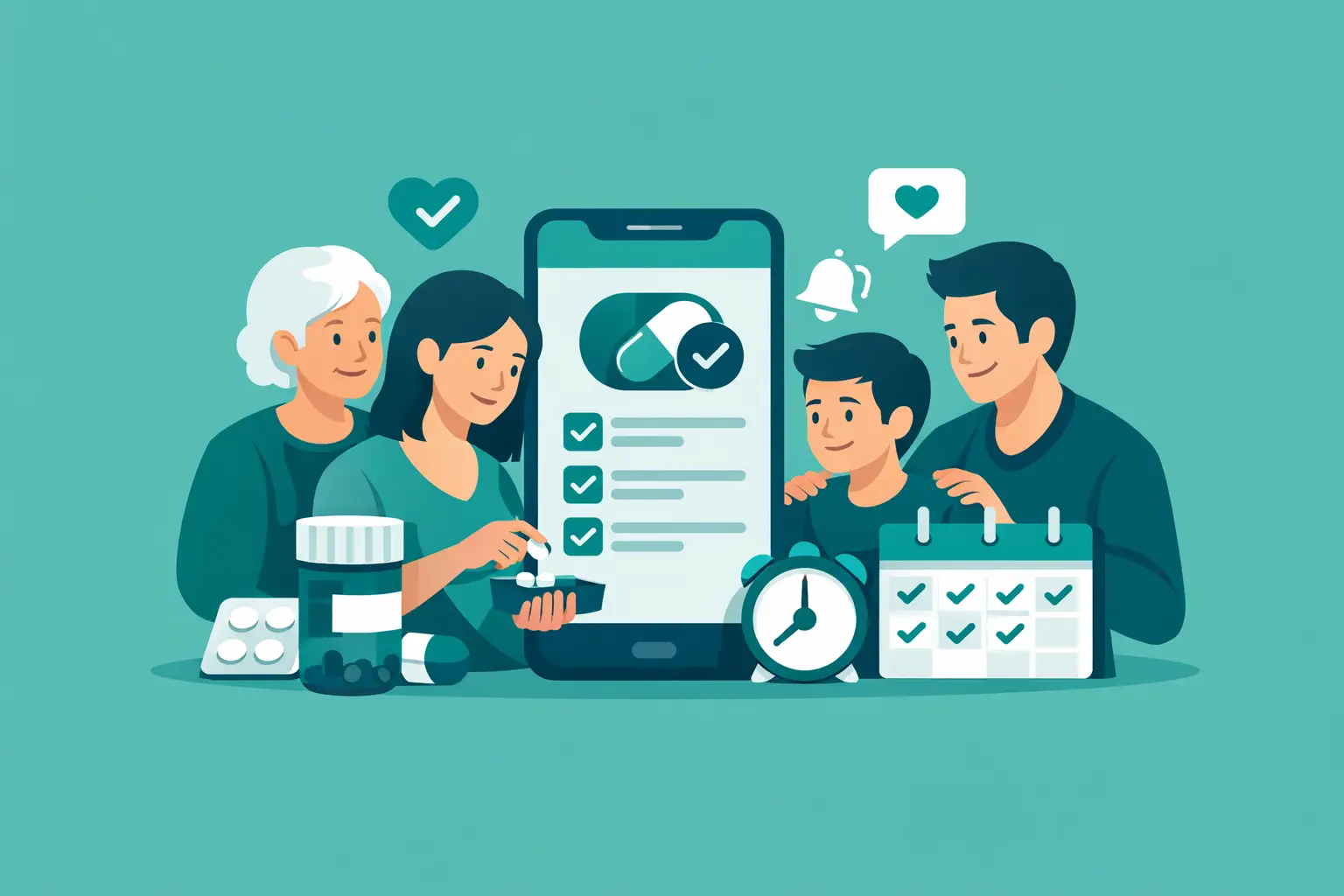
A fever at 2 a.m., a new routine for a parent, and a child’s daily medication can quickly turn one household calendar into a collection of sticky notes, text messages, and half-remembered questions. A medication tracking app gives families one trusted place to organize what happened, what is scheduled next, and who is responsible for care.
For a single person, remembering a routine can be challenging. For a household with children, aging relatives, shared custody arrangements, or more than one caregiver, the challenge is not just remembering. It is coordinating. A family-focused system can reduce the mental load by making medication schedules, as-needed safety timers, health readings, and caregiver updates easier to see and share.
Why families need more than a basic reminder
A standard alarm can tell someone that it is time to do something. It cannot tell the rest of the household whether that task was completed, whether a related reading was logged, or whether another caregiver already handled it. That missing context is where confusion often begins.
Families need an organizational tool that reflects how care actually happens at home. One adult may manage the morning routine, another may take over after work, and a grandparent or babysitter may help during the day. During an illness, responsibilities can shift even more quickly. A useful tracking system keeps the record attached to the family member, not buried in one person’s memory or phone notes.
The goal is not to make home care feel clinical. It is to create a dependable routine that is easy to follow when life is normal and easier to rely on when it is not.
What a medication tracking app should help you do
The right app should bring order without asking caregivers to build a complicated system from scratch. Features matter, but the practical outcome matters more: less second-guessing, fewer repeated questions, and clearer handoffs between the people providing care.
Keep every family member organized separately
A household record should make it clear whose schedule, log, and reminder you are viewing. This is especially helpful when family members have similar routines or when one caregiver is managing care for several people at once.
Look for support for multiple family members, rather than an app designed around one individual profile. Separate profiles help caregivers keep information organized while still viewing the household picture from one place. A parent should not have to maintain separate spreadsheets, alarm sets, or note threads for every person in the home.
Build routines that match real life
Many care tasks happen repeatedly: scheduled medications, recurring health readings, or routine check-ins. A good app makes those routines visible and repeatable, so the day does not depend on someone recreating the same reminder each morning.
Flexibility matters here. Some households need a simple daily reminder. Others need different schedules on school days, weekends, or when care responsibilities rotate. The best setup is the one that your family can maintain consistently, not the one with the most settings.
Use safety timers for as-needed tracking
As-needed medications can create a different kind of stress because the question is often not, “What is on the schedule?” but, “When was the last time this was recorded?” A safety timer gives caregivers a clear reference point and can prevent the household from relying on memory during a tired or busy moment.
The value is especially clear when more than one adult is helping. Instead of calling, texting, or searching through notes, caregivers can check the shared record. That creates a calmer handoff and a clearer timeline of household care activity.
Log readings and symptoms in context
When illness strikes, small details can blur together. A temperature reading, a symptom note, and a record of rest or hydration may be entered at different times by different people. Keeping those observations in an illness-specific tracking session creates a more useful picture than scattered messages.
This is not about turning parents into clinicians. It is about preserving the information your family has observed so it is available when you need to communicate with another caregiver or prepare for a conversation with a healthcare professional. Clear logs can also make it easier to notice how a day unfolded without trying to reconstruct it from memory.
Share updates without oversharing personal data
Care coordination depends on access, but families should not have to trade privacy for convenience. A family health tool should let invited caregivers see the information they need while keeping the household record centralized and protected.
Privacy is not a bonus feature when health information is involved. Before choosing an app, consider whether it is ad-supported, how it handles personal data, and whether its design is built around family sharing rather than advertising. A platform that does not sell health data can offer a more trustworthy foundation for sensitive household information.
Set up your family system before the next busy day
The easiest time to organize care is before everyone is tired, rushed, or dealing with an unexpected illness. Start with the routines that create the most friction in your home. For one family, that may be a child’s weekday schedule. For another, it may be coordinating care for an older relative between siblings.
Begin by creating a profile for each person who needs support. Add only the recurring items that are active and relevant, then use the original medication label or care instructions as your source when entering details. Keep names easy to recognize at a glance, especially if caregivers will be checking the app quickly.
Next, invite the people who truly need to participate. Shared care works best when roles are clear. One person may be responsible for logging completion, while another primarily checks updates during a handoff. Everyone does not need to manage every setting, but the people involved should know where the household record lives.
Finally, decide what belongs in the log. During an illness, a simple convention can help: record readings as they happen, add short factual notes, and use timers when a caregiver needs a reliable reference for an as-needed item. Consistency is more valuable than detailed entries that no one has time to maintain.
Common mistakes that make tracking harder
The first mistake is trying to track everything in too many places. If reminders are on one phone, readings are in a notebook, and caregiver updates are in a group text, no one has a complete picture. Choose one central record for the information your household needs to share.
Another common issue is failing to record completion. A reminder is useful, but a completed log is what tells the next caregiver what has already happened. If your app supports it, make logging part of the routine rather than an optional extra.
It is also easy to give every person in the household full responsibility without agreeing on a process. That can lead to duplicate entries or assumptions that someone else took care of it. A brief family conversation about who logs what can prevent frustration later.
Finally, avoid treating an app as a substitute for the original medication information, professional guidance, or urgent help when it is needed. A tracking tool supports organization and communication. It does not make care decisions for your family.
Choosing the right medication tracking app for your household
The best option depends on the size of your household and the kind of coordination you need. A person managing one simple routine may only need reminders. A family supporting several people will likely benefit from shared access, separate profiles, recurring routines, as-needed timers, and health-reading logs.
Ask a few practical questions before committing: Can every relevant family member have a profile? Can caregivers see updates without asking for screenshots? Can you use the system during a short illness as well as for ongoing routines? Does the app protect health information without relying on ads or data sales?
Medication Timer is designed around these household realities, with family member profiles, caregiver sharing, recurring routines, safety timers, and illness tracking in one organized space. The point is not to add another task to a caregiver’s day. It is to make the tasks already happening at home easier to coordinate.
A dependable family record gives caregivers something valuable during a busy week or a difficult night: a clear next step, a shared history, and the reassurance that every family member’s care is being handled in one trusted place.