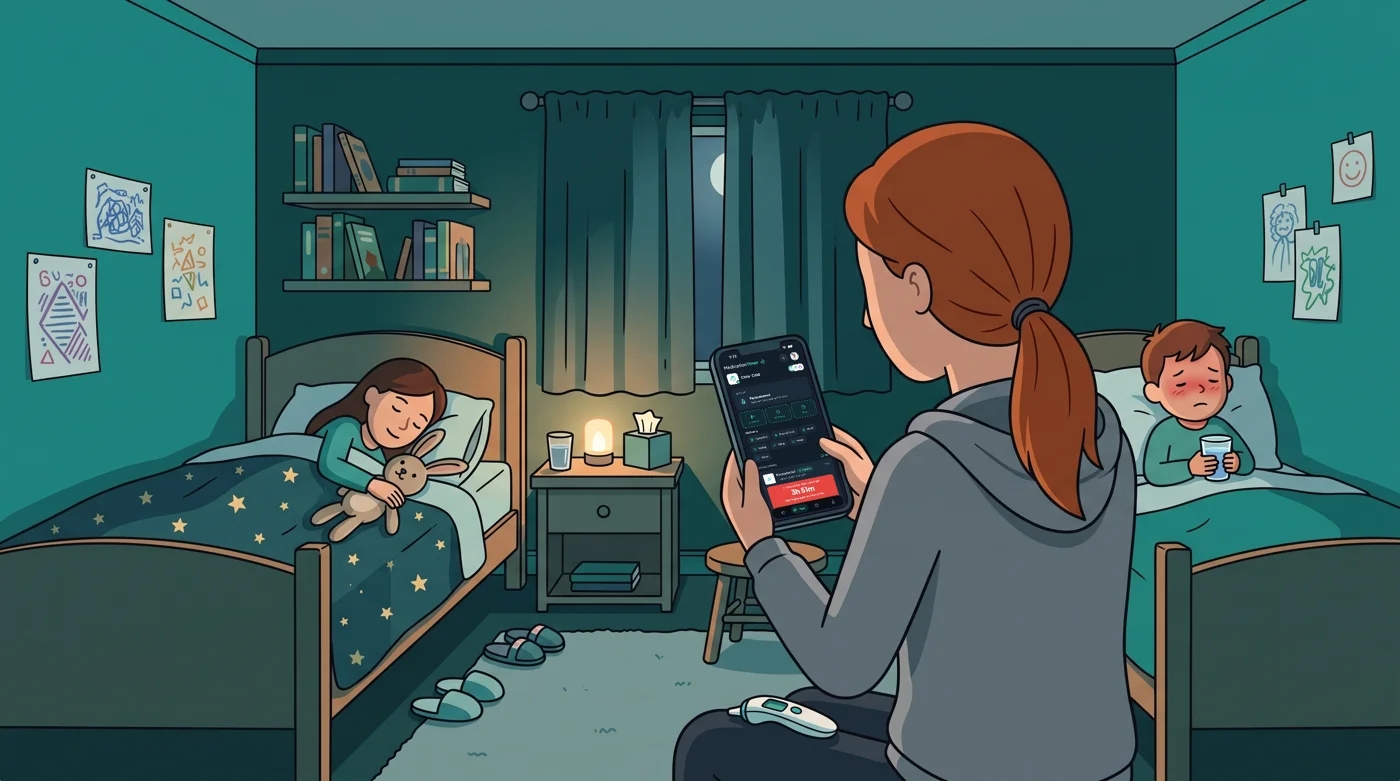
A 2:14 am temperature check is not the moment to search text messages, guess which child was last checked, or wonder whether someone already wrote the number down. When illness disrupts a household, small details can become hard to hold onto. Knowing how to log household vitals gives every caregiver one reliable record to return to, even when everyone is tired.
A household vitals log is not about turning family care into a clinical chart. It is about creating calm, clear continuity: what was recorded, for whom, when, and by which caregiver. That clarity reduces repeat work, prevents conflicting notes, and makes it easier to keep the whole household coordinated.
Start with one record for the whole household
The most common tracking problem is not a lack of effort. It is that information lands in too many places. One caregiver remembers a reading, another keeps notes in a phone app, and a third sends an update in a group chat. Each method may work briefly, but none creates a dependable household history.
Choose one central place where every approved caregiver can see and add entries. A paper notebook can be useful in a pinch, especially during a power or device outage, but it can be difficult to share, search, or keep current. A family health tool can make coordination easier because readings, medication routines, symptoms and observations can stay together by family member.
The goal is simple: every person has a clearly labelled profile, and every entry belongs to the right person. This matters in a busy home with children, adults, and older relatives, where similar routines can otherwise blur together.
How to log household vitals with useful context
A number by itself often creates more questions than answers. A helpful entry captures enough context for another caregiver to understand it without needing to ask for a full recap.
For each reading, record the family member's name, the date and exact time, the type of reading, and the result. Add the method or device used when that detail would help distinguish one entry from another. A short note can explain relevant everyday context, such as whether the person was resting, had just woken up, or seemed uncomfortable.
Keep notes factual and brief. Write what you observed rather than trying to interpret it. For example, a note such as “Child woke up and asked for water” is clearer for another caregiver than a long message that mixes observations, worries, and next steps. The purpose of the log is a trustworthy timeline, not a diagnosis or source of medical guidance.
Consistency is more valuable than perfect detail. If the household uses a standard entry format every time, reviewing the record later becomes much easier. The same structure also lowers the burden on a caregiver who is stepping in mid-routine.
Use time stamps you can trust
A reading without a time can be hard to place in the story of a day or night. Automatic time stamps remove one small but meaningful task, particularly when caregivers are recording information quickly.
If you log manually, include the full date as well as the time. This prevents confusion when an illness spans several days or a note is reviewed after midnight. Use one time format across the household, whether that is 8:30 pm or 20:30, so entries are easy to scan.
In Medication Timer, a temperature or dose is time-stamped when you log it, and you can adjust the time if you are entering a reading a little after you took it (Free).
Keep people and readings separate
Do not rely on memory to connect a reading to the right person. Create a separate space for each household member, including adults who may not need daily tracking but could need it during an illness episode.
This separation becomes especially valuable in families with siblings who are sick at the same time. A shared note titled “Fever” can quickly become unclear. Separate profiles let caregivers view each person's timeline without mixing details, while still allowing the household to see who needs attention.
Build a routine that works on ordinary days
The best system does not appear only when someone feels unwell. Set up the household structure during a calm moment, when there is time to add family members, invite the caregivers who help and agree on how entries will be named.
Then make logging part of an existing caregiving rhythm instead of a separate project. Some households record routine health readings at a consistent point in the day. Others only open a tracking session when illness begins. Either approach can work. The right choice depends on how many people you support, how often care is shared, and whether your household already follows recurring medication or care routines.
What matters is that everyone knows where the record lives and how to use it. A simple practice run is worthwhile: have one caregiver enter a sample reading and another find it. If it takes more than a few taps or a text-message search, simplify the workflow before you need it under pressure.
Create an illness-specific timeline when needed
During an illness, household information changes quickly. Readings may be taken at different times, caregivers may trade shifts, and notes can accumulate across a long evening. A dedicated tracking session keeps that period of care distinct from routine records.
Name the session clearly by the family member and the date it began. Record readings in chronological order and use short observation notes that make sense to another caregiver. If a household is managing more than one sick person, create separate timelines rather than combining everyone into one running list.
This approach protects against a common source of confusion: assuming the most recent entry applies to the person currently being discussed. A clear individual timeline lets a caregiver check the record before updating someone else, reducing duplicated checks and incomplete handovers.
It also gives families a cleaner way to look back. Instead of scrolling through weeks of unrelated notes, you can review one focused sequence of entries from a specific period of illness.
In Medication Timer, this is a Care session. Tap Start care, choose the family member and add an optional label such as “Flu” so the episode is easy to find later. Each person can have one active session at a time, so two siblings who are sick together each get their own Activity timeline of temperatures, symptoms and as-needed doses, and older unrelated readings do not mix in (Free).
Make caregiver sharing practical, not performative
Care coordination is only useful when the right people can actually act on the information. Decide who needs access: a co-parent, grandparent, adult sibling, nanny, or another trusted caregiver. Give access intentionally, and make sure everyone understands that the shared record is the source of truth.
A good handover is short. It might say that the latest reading has been logged, a routine dose has been marked as taken, and everyone can see when the next check is due. The receiving caregiver should not need to reconstruct the day from scattered messages.
In Medication Timer, each caregiver you invite signs in with their own login, and you choose which family members and medications they can see. You can revoke access when a helper no longer needs it (Family Care). Once your household is shared, everyone can see who logged the last dose and when, so nobody has to ask “did you already give it?” in the group chat.
Avoid using the log as a conversation thread. Messaging is useful for immediate coordination, but vital entries should remain structured and easy to find. When a question comes up later, the household should be able to see the recorded fact first, rather than sorting through a long exchange of updates.
Privacy belongs in this process, too. Family health information should stay in a system designed for household care, with access limited to the people you trust. Advertising-driven tools and shared devices can create unnecessary exposure. Choose a method that respects the sensitivity of family health records and makes it easy to manage caregiver access over time.
Review for gaps, not just numbers
A household log is most helpful when it shows what is missing as well as what is present. Before a caregiver change, scan the timeline for entries without a person, date, or time. Medication Timer saves the family member and time with every entry automatically (and you can edit the time), so these gaps are mostly a paper-log problem. Check whether notes are attached to the correct profile. If two people recorded the same event in different places, move the confirmed information into the central record and stop using the duplicate path.
This is where digital organisation can reduce mental load. With a centralised system such as Medication Timer, families can keep health readings, shared caregiver activity, recurring routines, and medication tracking in one trusted place. The benefit is not more data. It is less second-guessing about where the data went.
Be mindful of over-logging, too. A record packed with repeated entries and long narratives can hide the information a caregiver needs to find quickly. Keep the core fields consistent, add a concise note when it adds meaning, and let the timeline do the organising.
A household record should bring reassurance
No tracker can make a difficult night easy, and a log is not a substitute for professional support. Its role is more practical: preserve accurate household information so caregivers can communicate clearly and stay organised.
When every reading has a person, time, and place in a shared record, care feels less dependent on one exhausted person's memory. That is the quiet value of a household vitals log: a calmer handover, a clearer history, and one less thing for your family to carry alone.
Questions? Browse the help centre or contact support from Profile in the app.