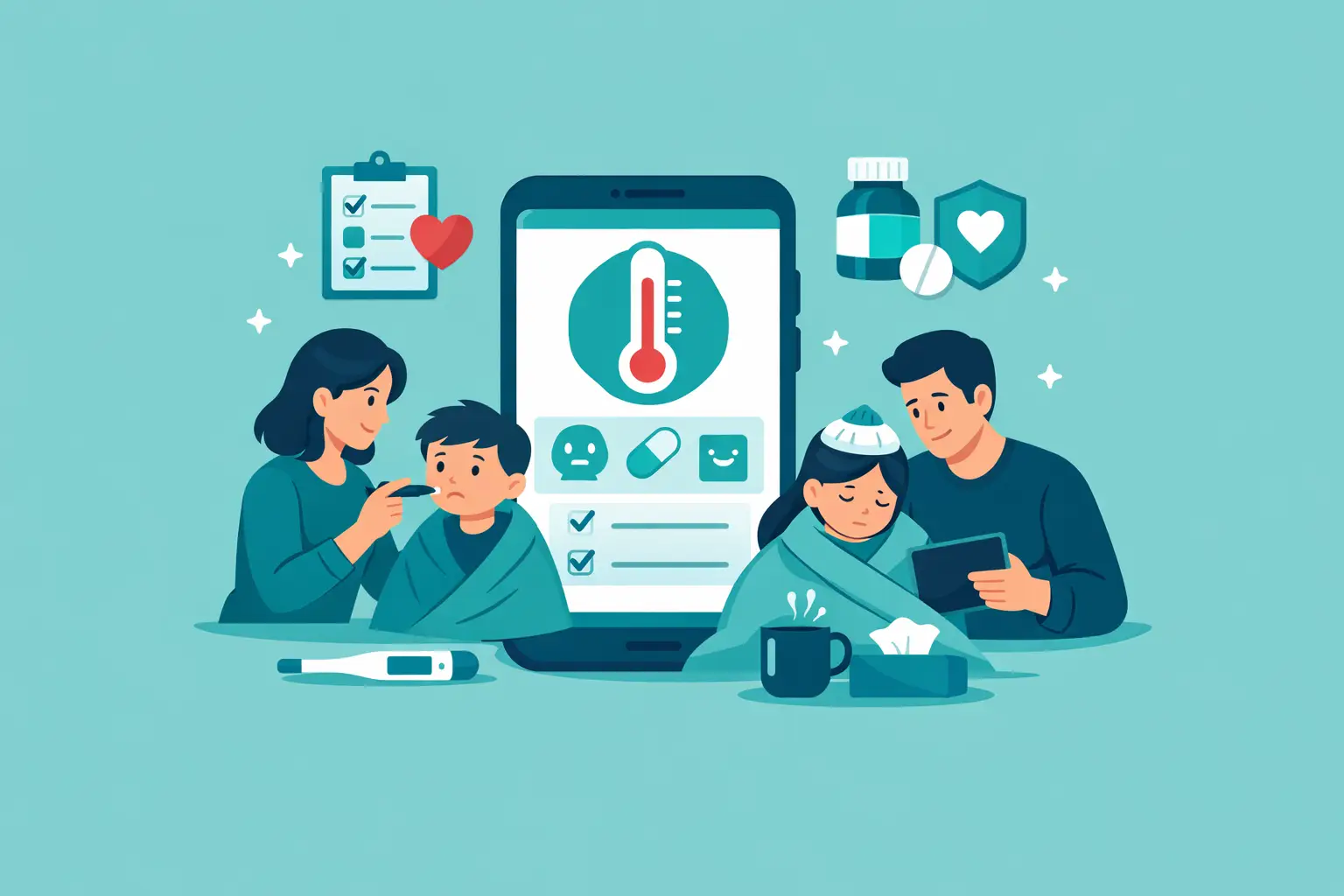
A fever can turn an ordinary evening into a blur of thermometers, comfort items, medication schedules, and messages between caregivers. The question of how to log fever symptoms is not about creating a complicated medical chart. It is about creating one calm, accurate record your household can rely on when illness interrupts the routine.
A useful fever log gives each caregiver the same picture: what was observed, when it was recorded, and what changed over time. That shared clarity can reduce repeated questions, prevent details from being lost between shifts, and make a stressful week feel more organized.
Start a Fever Log as Soon as Symptoms Appear
The most helpful record begins early, even if the first entry is brief. Waiting until several days have passed often means trying to reconstruct times, readings, and observations from memory. During a busy household illness, memory is rarely the most reliable system.
Create one dedicated illness record for the person who is unwell. Keep it separate from another family member's notes, especially when more than one person in the home is sick. Clear names and individual profiles matter. A household with two children, a parent, and a grandparent should never need to guess whose temperature or symptom note they are reading.
Your first entry can include the date, the time, the temperature reading, and a short description of what you noticed. Write what you observed rather than trying to interpret it. For example, “resting on the couch, reported chills, drinking water” is more useful than a vague note such as “seems worse.”
The goal is consistency, not perfection. A simple entry recorded at the right time is more valuable than a detailed entry added hours later from memory.
What to Include When You Log Fever Symptoms
A fever log works best when it follows the same structure each time. That makes the record easy to scan, whether you are checking it at 2 a.m. or handing off care to another adult before work.
At a minimum, record the temperature reading, the date and time, and the person’s name. If your household uses more than one thermometer or measurement method, note which one was used. Readings can be easier to understand when the method is documented alongside them.
Also add a short note about symptoms and everyday functioning. Focus on observable details that help tell the story of the day. You might note energy level, sleep disruptions, appetite changes, hydration habits, coughs, headaches, chills, or complaints of discomfort. Keep the language plain and specific.
If medication is part of your existing household care plan, log it in the same trusted place as the fever record. Include the time it was given and the caregiver who recorded it. This is not about making treatment decisions from the log. It is about preventing the common household problem of one caregiver not knowing what another caregiver has already documented.
For a clear entry, use a format like this in your notes: “8:15 p.m. - 101.2°F, oral thermometer. Tired, resting, ate a small snack. Recorded by Jordan.” The details are short, but they give the next caregiver a usable update.
Use Timestamps to Make the Record Useful
Time is one of the most valuable details in any illness log. A temperature without a timestamp leaves a gap: Was that reading taken before school, after a nap, or overnight? A complete timestamp helps your family see the sequence of events without relying on a text-message thread.
Record readings when you take them, rather than collecting them in a note to enter later. If that is not possible, mark the actual time the reading was taken, not only the time you entered it. The same rule applies to symptom notes and medication records.
It also helps to document changes as they happen. If someone wakes during the night, begins resting more comfortably, or reports a new symptom, add a brief update. You do not need to write a diary. A few factual words can preserve information that may otherwise disappear by morning.
Avoid filling the log with duplicate entries that do not add context. If several caregivers are checking in, agree that the person who takes the reading records it. Shared care works best when everyone can see what has already been entered.
Keep Symptoms Separate From Assumptions
A fever log should be an observation record, not a diagnosis. Write down what you can see, hear, measure, or confirm directly. This protects the accuracy of the record and keeps it useful for everyone in the household.
Instead of writing “getting the flu,” record “temperature reading, congestion, tiredness, and missed lunch.” Instead of “feeling much better,” add the details behind that impression, such as “awake for an hour, watched a show, asked for food.” Specific notes make trends easier to recognize later.
This approach is especially valuable when caregivers rotate. One parent may be home during the day, another may handle the evening routine, and a grandparent or sitter may help in between. A shared record gives each person context without requiring a long handoff conversation.
When you need to communicate with a healthcare professional, school, childcare provider, or another authorized caregiver, an organized record can help you accurately share the observations you have documented. The log does not replace professional guidance, but it can prevent the details of a difficult day from becoming scrambled.
Build a Household Routine Around the Log
The best tracking system is the one your family will actually use when energy is low. Choose a single place for fever readings, symptom notes, and related care records. Paper can work for one caregiver in one room, but it becomes harder to manage when multiple adults need current information.
A family health tool such as Medication Timer can keep illness tracking, scheduled routines, as-needed medication timers, and caregiver updates together for each family member. Rather than searching through photos, notes apps, and text messages, caregivers can work from one organized record designed for household coordination.
Set a simple rule: whoever observes it logs it. This prevents one person from becoming the household historian while everyone else sends fragments of information. If a caregiver cannot enter an update immediately, they can write down the time and add it as soon as practical.
Privacy matters here, too. Health information is personal, even within a close family. Use a system that lets the right caregivers access the right record without turning sensitive details into a scattered trail across group chats and unsecured notes.
Review the Record Without Overcomplicating It
At the end of the day, take a moment to scan the log. You are not looking for a perfect chart. You are checking that entries are tied to the right person, readings have timestamps, and any related medication records are complete.
A quick review also helps the next caregiver start with confidence. They can see the latest reading, the most recent observations, and who recorded them. That is a meaningful difference when someone is waking up to take over overnight care or stepping in after a long workday.
If your family is managing more than one illness at once, use separate tracking sessions or labels. Clear organization is a safety feature. It reduces the chance that one child’s symptoms, another adult’s medication timing, and a third person’s temperature reading get mixed together.
A Record That Brings Calm to Shared Care
Illness rarely arrives at a convenient time. It shows up during school mornings, work deadlines, weekends away, and nights when everyone is already tired. A well-kept fever log cannot remove the worry, but it can replace some of the confusion with reliable information.
Keep each entry factual, timely, and connected to the right family member. When every caregiver can see the same record, the household has a steadier foundation for shared care - one trusted place for the details that matter when illness strikes.