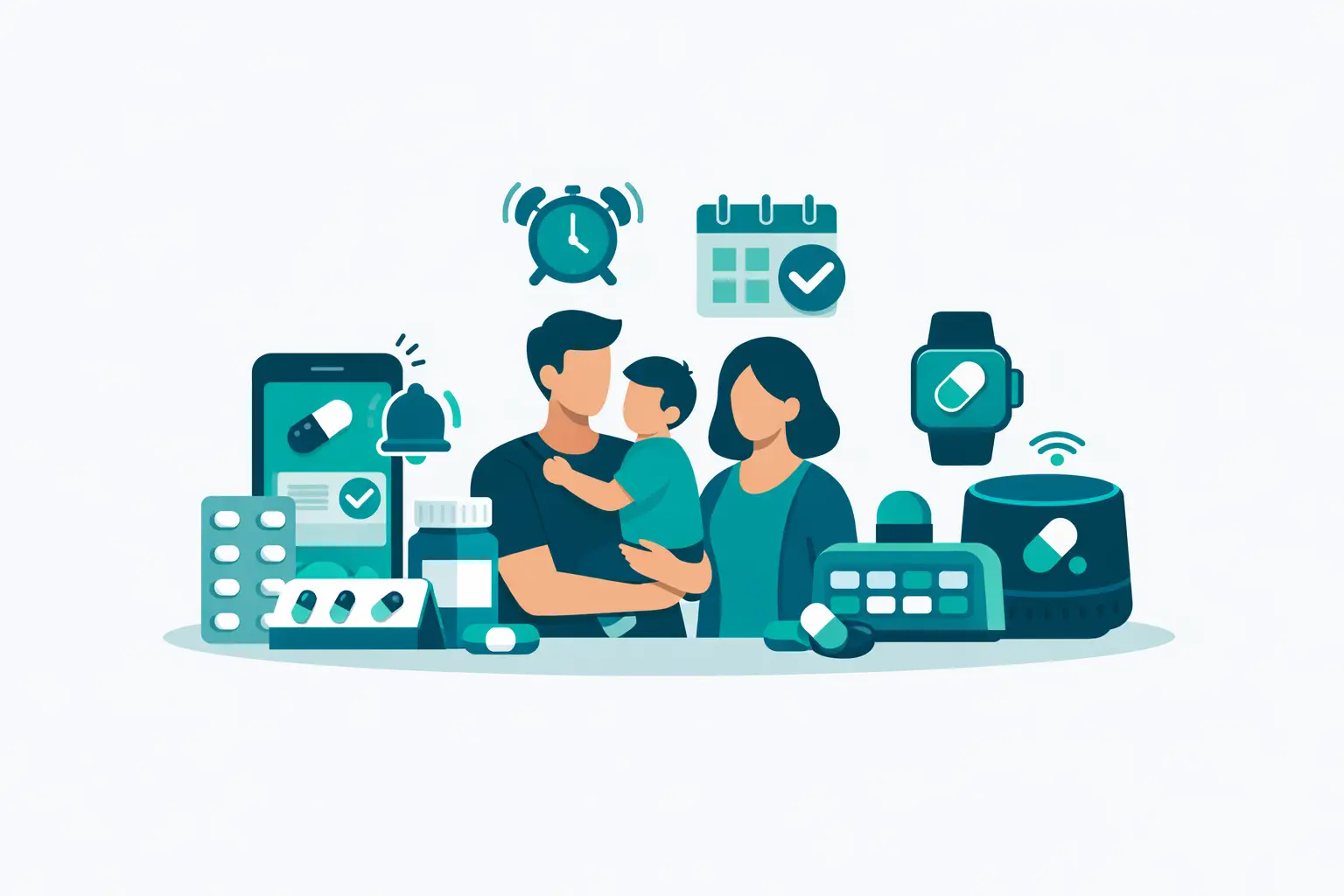
A missed reminder is rarely just a missed notification. In a busy household, it can mean one caregiver assumes another handled it, a routine gets lost in the school-day rush, or an as-needed dose is logged without a clear record of when it was last given. The best medication reminder systems reduce that uncertainty by giving families one clear, shared view of what needs attention.
For one person with a simple routine, a phone alarm may be enough. For parents, adult children supporting an older relative, or households managing care for several people, reminders need to do more than make noise. They need to support coordination, timing awareness, documentation, and calm decision-making when the day becomes complicated.
What Makes a Medication Reminder System Work for Families?
A useful system should fit the way care actually happens at home. Medications may be managed before work, during a child’s school routine, at bedtime, while traveling, or in the middle of an illness. The right tool makes those moments easier to organize without turning family care into a spreadsheet.
The strongest systems combine reminders with a reliable record. A reminder tells someone that an item is due. A record shows whether it was completed, who marked it, and when. That distinction matters when two parents, a grandparent, a babysitter, or an adult sibling may all be helping.
Look for a system that can separate each family member’s schedule. A household dashboard is helpful, but it should not blend everyone’s information into one confusing list. Clear names, profiles, and routines make it easier to see what belongs to whom at a glance.
Flexibility matters, too. Some household routines repeat every day, while others follow different weekday, weekend, or temporary illness schedules. A system should make recurring reminders simple to set up and easy to change when life changes.
Shared visibility prevents guessing
Caregiving often breaks down in the handoff. One person leaves for work, another takes over after school, and neither wants to send a stream of texts just to confirm what has already happened. Shared access gives authorized caregivers a current view of schedules and completed tasks.
The goal is not to create more notifications for everyone. It is to replace guesswork with a dependable source of truth. When a caregiver can open the same record and see the latest activity, household care becomes more coordinated and less stressful.
Timing tools should support safer routines
Not every reminder is a routine reminder. Some families also need a way to track elapsed time after an as-needed item has been logged. A safety timer can make that timing visible without forcing a caregiver to calculate from memory or search old messages.
This is an organizational feature, not a substitute for instructions from a qualified healthcare professional or the product label. Its value is clarity: the household has a timestamped record available when caregivers need to coordinate.
Types of Medication Reminder Systems
There is no single best format for every household. The best choice depends on how many people are involved, how often routines change, and whether care needs to be shared.
Basic phone alarms
A standard phone alarm is quick, familiar, and free. It can work well for a single recurring task managed by one person. The trade-off is that alarms usually provide little context. They may not identify the family member, show a history of completion, or help another caregiver know whether the task was handled.
Phone alarms also become easy to dismiss during meetings, school pickup, or a hectic evening. If the only record is a silenced notification, the family is back to relying on memory.
Smart speaker and voice reminders
Voice reminders can be helpful when hands are full. They are especially convenient in kitchens and common spaces, where household routines often happen. However, they are not always private, portable, or visible to a caregiver who is away from home.
They can complement a family system, but they are rarely enough on their own when multiple people need access to the same care record.
Physical organizers with alerts
Pill organizers and timed dispensers may provide a visible cue in the home. Some include lights, sounds, or locking features. They can be useful for a person who benefits from a tangible routine and may prefer not to use a smartphone.
Their limitation is coordination. A device at home cannot always tell an adult child across town what happened, and it may not capture related health notes, readings, or temporary routines. Families should also consider whether a physical device is practical for travel, school, or care shared across locations.
Family health management apps
For households coordinating multiple people, a family-focused app is often the most complete option. The best medication reminder systems in this category connect recurring schedules, completion records, caregiver sharing, and illness tracking in one place.
This approach is especially useful when a routine includes more than reminders. During a sick day, caregivers may also want to log temperatures, symptoms, notes, or other health readings alongside the household’s schedule. Keeping those details together can reduce the scramble of checking paper notes, text messages, calendar alerts, and separate apps.
Features Worth Prioritizing Before You Choose
Start with the problems your household is trying to solve. A reminder tool that works beautifully for one independent adult may be frustrating for a parent coordinating three children and a partner. The following features tend to matter most when care is shared.
Individual family profiles: Each person should have their own clearly labeled schedule and history. This is essential when several people have similar routines or when caregivers switch responsibilities.
Flexible recurring schedules: Look for daily, weekly, and custom timing options that can be adjusted without rebuilding everything from scratch. Household routines are not static.
Completion logging: A simple way to mark an item as completed creates a reliable record. Ideally, the log includes the time and the caregiver who made the update.
Shared caregiver access: Authorized family members should be able to view the same current information. Good sharing tools support coordination without requiring everyone to use one shared login.
As-needed timing support: A visible timer and timestamped history can reduce mental math and help caregivers communicate clearly. It should be easy to find in a stressful moment.
Illness and health-reading tracking: For families who want a central place during temporary illness, the ability to record readings, symptoms, and notes can be more useful than a reminder-only app.
Privacy protections: Health information is personal. Choose a service that explains how it handles data, avoids advertising-driven distractions, and does not treat a family’s health details as a product.
How to Set Up a System Your Household Will Actually Use
The best tool is the one that becomes part of the routine. Begin by adding only the schedules that are most important to organize. Trying to enter every possible detail in one sitting can make setup feel overwhelming.
Next, decide who needs access. Include the people who actively provide care, not every relative who is merely interested. Clear ownership helps: one caregiver may usually handle morning routines while another manages evenings, but both should be able to see the full record.
Agree on a simple household rule for completion logging. For example, caregivers can mark an item immediately after it is handled rather than planning to update it later. Consistency is what makes the history trustworthy.
It also helps to review the setup after the first week. Notice which reminders arrive at inconvenient times, which names need clearer labels, and whether everyone can find the information they need. A few small adjustments can make the system feel natural rather than demanding.
When a Reminder System Becomes a Family Care Hub
The most valuable systems do not ask families to manage routine care in one place and illness information somewhere else. They recognize that household health changes quickly. A normal week may need simple recurring reminders, while a sick weekend may call for closer tracking, caregiver notes, and a clear record of what has already been done.
Medication Timer is designed around that reality, with support for multiple family members, shared caregiver access, safety timers, recurring routines, and illness-specific tracking sessions. The purpose is practical: every dose, every family member, one trusted place.
A well-chosen reminder system will not remove every stressful moment from caregiving. What it can do is give your family a calmer starting point: a clear schedule, a shared record, and fewer decisions that depend on someone remembering what happened hours ago. When illness strikes or routine life gets busy, that clarity is a meaningful kind of peace of mind.