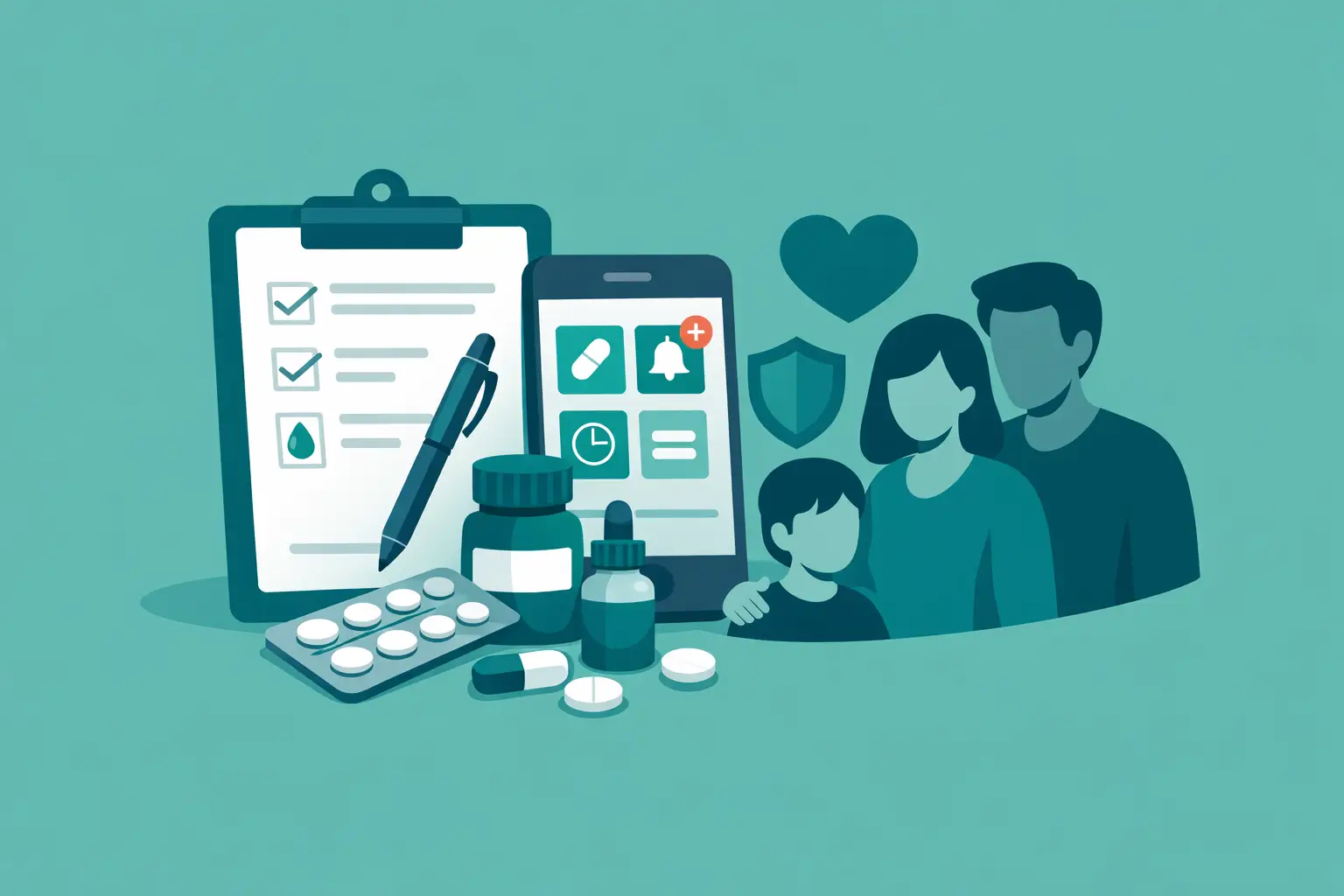
A 2 a.m. fever, a rushed school morning, a grandparent staying with the kids - these are the moments when memory is not a reliable family health system. Knowing what should a medication log include helps turn scattered notes, text messages, and guesswork into one clear record that every approved caregiver can understand.
A useful medication log is not about creating extra paperwork. It is about answering simple, high-stakes household questions quickly: What was recorded? When was it recorded? Who entered it? Is there anything another caregiver needs to know? When care is shared, those answers support calmer handoffs and more confidence.
What Should a Medication Log Include?
The best log captures the details your household needs to see at a glance without becoming so complicated that no one keeps it current. Start with the information that identifies the person, the item being tracked, the schedule or instructions provided to your family, and a time-stamped record of each entry.
For many households, these are the core fields to keep together:
- Family member name: Every entry should clearly show who it belongs to. This matters even more when multiple children, adults, or relatives have similar routines or when more than one person is ill at once.
- Medication name and form: Record the name as it appears on the package or prescription label, along with the form if that helps distinguish similar items in your home.
- Directions already provided: Keep the relevant label or care instructions available in the log. A tracking tool should reflect the information your household has been given, not replace it or create new guidance.
- Date and exact time: A clear timestamp is the heart of the record. It gives the next caregiver a factual reference point rather than a vague update such as earlier this morning.
- Amount or dose recorded: Include the amount as documented on the item label or in your family's existing instructions. Consistent units and clear entry fields reduce ambiguity during busy moments.
- Who gave or logged it: Initials, a name, or a user profile can make handoffs much easier. It also prevents the common problem of two well-meaning caregivers assuming the other person handled it.
- Status and relevant notes: Mark whether an entry was completed, skipped, delayed, or needs follow-up. A short note can add useful context, such as a schedule change, a refill reminder, or a question to bring to a pharmacist or clinician.
Not every family needs every field for every item. A simple daily routine may need only a name, schedule, timestamp, and caregiver confirmation. A short-term illness period may call for more context because care changes quickly and several people may be checking the same record.
Make Timing Easy to Read, Not Easy to Misinterpret
A medication log should show both the plan and what actually happened. Those are not always the same thing, and blending them together can create confusion. A scheduled entry tells a caregiver what the household expects to track. A completed entry documents a specific event at a specific time.
This distinction is especially helpful for as-needed items. Instead of relying on a group text or trying to remember who was awake last, caregivers can check the most recent recorded entry and see the timing in one place. Safety timers can add another layer of visibility by showing when an interval has elapsed, based on the instructions your household is following.
Use a consistent time format across the household. Whether your family prefers 8:00 AM or 08:00, consistency is more valuable than the format itself. Include the date as well, particularly when illness lasts several days or overnight care is involved.
Build the Log Around Shared Care
A medication log becomes far more valuable when it works for the whole care team, not just the person who set it up. Parents, guardians, partners, relatives, and trusted caregivers need the same current information, with clear boundaries around who can access and update it.
A shared record should make responsibility visible without making anyone feel policed. If one caregiver logs a completed task, the next caregiver should be able to see it immediately. If something is pending, the record should make that clear too. This reduces duplicate entries, missed handoffs, and the back-and-forth messages that create stress when someone is sick.
For households that coordinate care across homes, consider including a brief handoff note field. Keep it practical: a reminder to check supplies, a note that a routine was paused, or a prompt to contact the appropriate professional with a question. The goal is continuity, not a long clinical narrative.
Privacy also belongs in the design of a good log. Health information is personal, especially when it involves children or older relatives. Choose a system that gives your family appropriate sharing controls and treats household data with care. A tool built for family coordination should help everyone stay informed without turning private health details into an open document.
Add Illness Context Without Creating a Medical Chart
When illness strikes, medication tracking often sits alongside other observations. A family may be monitoring temperature readings, symptoms, hydration notes, sleep disruption, or general comfort. Keeping those records close to the medication log can reveal the timeline of a difficult day and make caregiver transitions more organized.
The key is to keep notes factual and brief. Record what was observed, when it was observed, and who entered it. Avoid turning the log into a place for interpreting symptoms or making treatment decisions. If your family has a concern, use the record to provide an accurate timeline when speaking with the appropriate healthcare professional.
An illness-specific tracking session can be useful because it separates short-term care from long-term routines. Once the illness period has passed, your regular household medication schedule remains clean and easy to review. This small organizational choice can make a major difference when several family members are managing different needs at once.
Choose a Format Your Household Will Actually Use
Paper logs can work well for one person and one straightforward routine, especially if the notebook stays in a predictable location. Their weakness is visibility: a paper record cannot easily follow a child to another caregiver's home, update a partner at work, or send a clear handoff to a relative.
A shared digital log is often a better fit for busy families because it can centralize schedules, timestamps, reminders, and health readings for multiple people. It should be quick to update with one hand and simple enough that a tired caregiver can understand it without searching through menus. Medication Timer is designed around this family reality, bringing recurring routines, as-needed safety timers, caregiver sharing, and illness tracking into one trusted place.
Whichever format you choose, set a household rule that every entry is logged as it happens. Waiting until later invites memory gaps. It also helps to review the active log during handoffs, before bedtime, and whenever a new caregiver takes over.
Keep the Record Clear Enough for the Next Person
A medication log does not need to look clinical to be dependable. It needs to be current, readable, and shared with the people responsible for care. Clear names, exact timestamps, documented entries, caregiver accountability, and concise notes give your family a steadier foundation when routines are busy or illness disrupts the day.
The most helpful log is the one that gives the next caregiver confidence to act from the same information, with every dose, every family member, and every important detail in one trusted place.