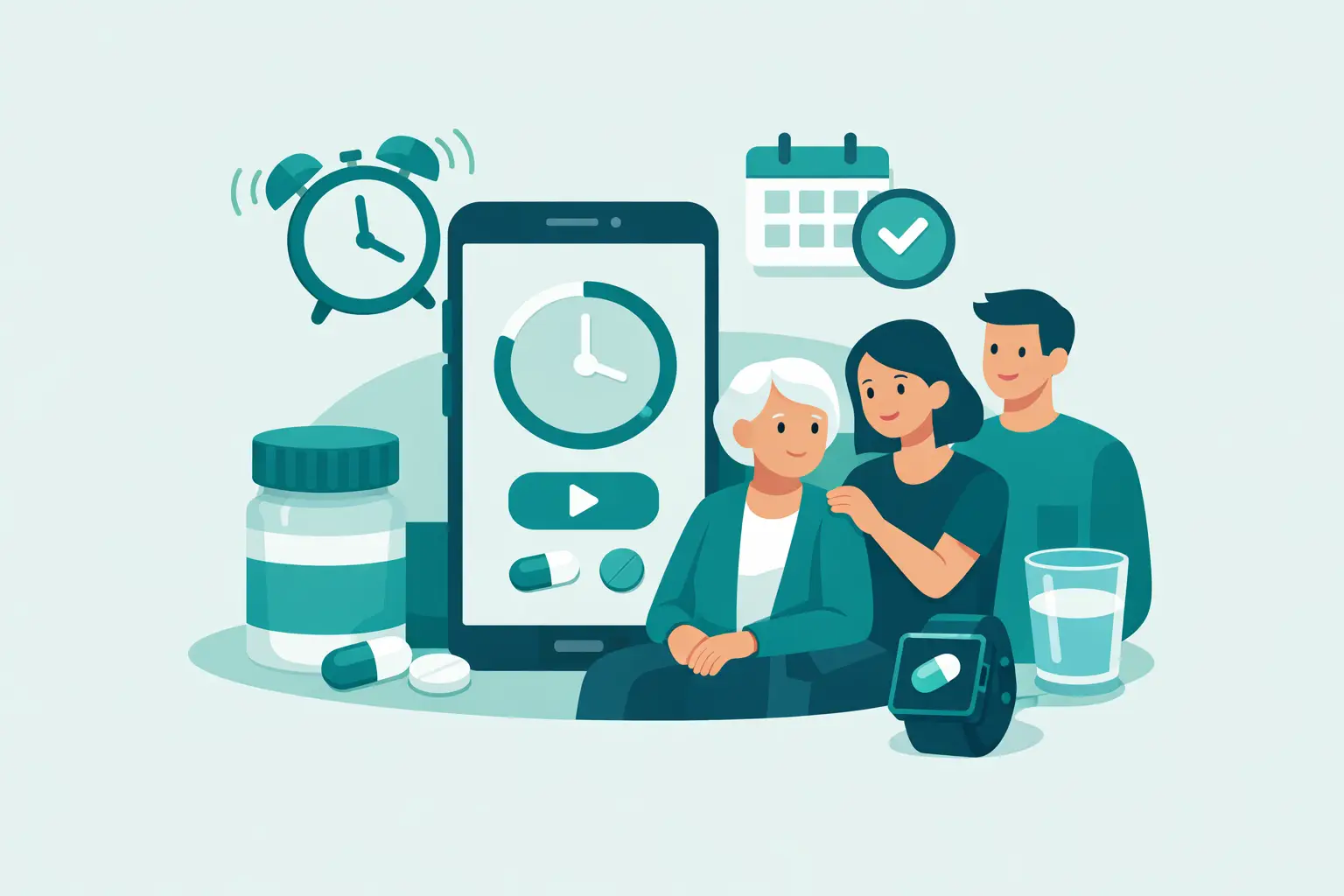
A sick child wakes up at 2 a.m. One parent has been up for hours, another is trying to help, and nobody is fully sure when the last as-needed dose was logged. That is the moment an as needed medication timer is built for: replacing guesswork with a clear, shared record when your household is tired, worried, and moving quickly.
Unlike a recurring medication schedule, as-needed medications do not follow the same predictable pattern every day. They are used when a situation calls for them, which makes accurate timing and caregiver communication especially valuable. A family-friendly timer gives everyone involved one trusted place to see what was recorded, when it was recorded, and when the next eligible time may be based on the schedule you have entered.
This is not about turning family care into a complicated clinical task. It is about creating a calmer system for the moments when memory alone is not enough.
Why as-needed doses are harder to coordinate
Routine medications can be planned around breakfast, bedtime, or another established part of the day. As-needed medication tracking is different. The timing can change from one day to the next, and it may be used only during a short illness episode or another temporary situation.
That flexibility is useful, but it creates room for confusion. A caregiver may remember giving something but not remember the exact time. A spouse may assume another adult handled it. A grandparent helping for the afternoon may not know what happened earlier in the day. When several family members are ill at once, details can blur even faster.
Paper notes, text messages, and mental reminders can work briefly, but they often split the record across several places. A timer designed for household care keeps the timing information connected to the right person and visible to the people who are actively helping.
What an as needed medication timer should do
A useful timer does more than count down. It should support the real decisions and handoffs that happen in a home.
First, it should let you record a dose when it happens. The record should be simple enough to create in the middle of a busy day, without requiring a long set of extra steps.
Next, it should calculate and display the next time based on the interval you set. This gives caregivers a clear reference point instead of forcing them to do time math when they are distracted or exhausted. The timer is an organizational aid, and the interval entered should always match the directions you have been given for that medication.
It should also identify the family member clearly. A household may include children, adults, and older relatives with entirely different routines. A record is only helpful if everyone can immediately see whose information they are viewing.
Finally, it should make sharing practical. In many homes, care is a team effort. One caregiver may be at work, another may be handling bedtime, and another may check in remotely. Shared visibility helps the household stay coordinated without passing a phone around or searching through old messages.
Build a simple process before illness strikes
The best time to set up an as needed medication timer is before you need it. During a stressful moment, even a simple app can feel like one more thing to manage if the family profiles and medication details are not already organized.
Start by creating a separate profile for each person in your household. Clear names, photos, or other easy-to-recognize identifiers can reduce mix-ups when you are switching between family members.
Then add the medications your household may need to track, using the information from the medication packaging or directions provided by the appropriate healthcare professional. Keep the entries easy to scan. The goal is not to create a medical chart. It is to make your household record understandable at a glance.
Decide who needs access. In some families, that may be two parents. In others, it may include a grandparent, co-parent, adult sibling, or other trusted caregiver. The right level of sharing depends on your family, but everyone who is actively providing care should know where the current record lives.
Medication Timer is designed around this household reality, giving families a centralized place to organize medications, health readings, illness tracking, and caregiver updates without relying on scattered notes.
Use the timer as part of an illness record
A timer becomes even more useful when it sits alongside the rest of the information a family is trying to keep straight. During an illness, caregivers may be monitoring symptoms, temperature readings, hydration notes, rest, or changes throughout the day. The practical need is not more data for its own sake. It is a clearer picture of what has happened and when.
Keeping dose records and other household observations in one place can make a long day feel more manageable. Instead of reconstructing events from memory, a caregiver can review the timeline before handing off care to someone else. That can be especially reassuring overnight, when one adult may take over while another gets rest.
It also helps when the person managing care changes during the day. A clear timeline reduces the need for repeated questions such as, “Did anyone log that?” or “What time was the last one?” Those questions are normal, but they do not need to slow down every handoff.
Avoid the common timer mistakes
A timer supports clarity only when it is used consistently. The most common issue is waiting to log the dose until later. It is understandable - caregiving is busy - but a delayed entry can create uncertainty about the actual time. When possible, record the event right away.
Another issue is using a general phone alarm without a corresponding record. An alarm may tell you that time has passed, but it may not show what happened earlier, who recorded it, or which family member it applies to. For a household with multiple caregivers, context matters as much as the countdown.
It is also easy to assume that everyone is looking at the same information. If one caregiver uses a notebook and another uses a text thread, the household does not truly have a shared system. Choose one trusted place for active records and make that the default during an illness episode.
Finally, do not treat a timer as a substitute for the medication directions or professional guidance you rely on. Its role is to help your family organize and communicate the information you are already following.
Choose a system your whole household will actually use
The right tool is not the one with the longest feature list. It is the one that feels clear enough for every caregiver to use under pressure. A parent should be able to open the record at midnight and understand it quickly. A partner should be able to check the latest entry without calling for an update. A trusted caregiver should know where to document what happened.
Look for a system that keeps recurring routines and as-needed timing separate but connected. Your family may need both at the same time: regular daily reminders for one person and temporary illness tracking for another. Keeping those needs in one place reduces app switching and lowers the chance that a record gets lost.
Privacy matters, too. Health information is personal, even within a family. A household care tool should make it easy to share with the people you choose while respecting the trust behind that information.
A calm, consistent record will not make every sick day easy. It can, however, give your family one less detail to carry in your head. When care is shared and the day feels unpredictable, that small bit of structure can create meaningful peace of mind.