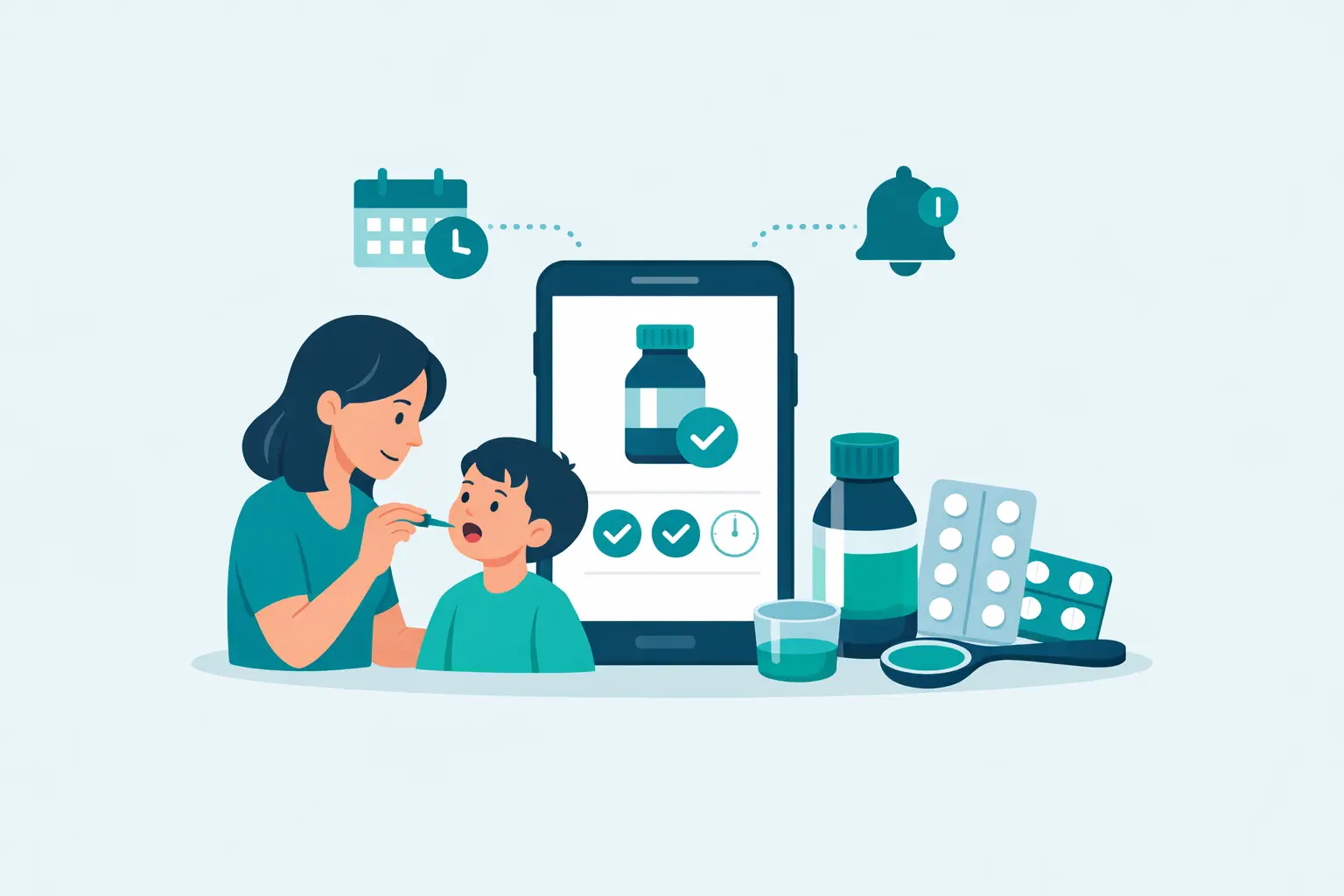
A sick child at 2:13 a.m. is not the moment anyone wants to rely on memory. One caregiver gave a dose before bed, another checks in overnight, and suddenly the question is the same in every household: did that already happen? If you need to track child medicine doses without second-guessing yourself, the goal is not perfection. It is clarity you can trust when everyone is tired, busy, or worried.
For most families, dose tracking breaks down for ordinary reasons. A bottle gets left on the kitchen counter. A grandparent helps for the afternoon. A fever wakes your child up early. Someone sends a text, someone else forgets to read it, and the record is gone by morning. The safest system is one that makes the next step obvious and gives every caregiver the same view of what has already been logged.
Why families need a real system to track child medicine doses
Many parents start with good intentions and a loose method. They keep notes in their phone, use a kitchen timer, or try to remember the last time they gave something. That can work for a day or two, especially with one child and one caregiver. It gets harder when illness stretches over several days or more than one adult is involved.
The problem is rarely effort. It is fragmentation. Timing lives in one place, symptoms in another, temperature checks on a sticky note, and caregiver updates in a text thread. When information is scattered, the mental load stays high. You are still piecing together the story each time you need to act.
A better approach is simple: keep the child, the medication event, the time, and any related notes together in one trusted place. That creates a clear record for the next caregiver and lowers the chance of accidental duplication, missed logging, or confusion during a stressful stretch.
What to record each time
To track child medicine doses well, consistency matters more than complexity. Families usually do best when they record the same few details every time. The essentials are the child’s name, the medication name exactly as the household recognizes it, the date and time it was given, and which caregiver logged it.
For some households, a short note also helps. That might mean adding whether the dose was taken easily, whether it was associated with a symptom spike, or whether a reading such as temperature was logged around the same time. The note does not need to become a journal. It only needs to help the next person understand what happened.
This is where many systems either become too thin or too complicated. If you track almost nothing, the record is not useful. If you try to capture every possible detail, people stop using it. The right system is the one your household can actually maintain when sleep is short and attention is divided.
Build a routine before illness gets hectic
The best time to organize tracking is before your household is under pressure. If you wait until a child is uncomfortable and caregivers are already rotating in and out, even a good tool can feel like one more task. A routine set up ahead of time creates calm later.
Start by deciding where all medication logging will happen. That decision alone removes a lot of friction. Next, agree on who can record doses and who needs visibility. In some homes, one parent handles most entries and the other checks status. In others, childcare providers, grandparents, or co-parents need active access. There is no single right model, but everyone should know where the record lives.
It also helps to standardize names and habits. If one person logs a medication one way and another uses a nickname, confusion grows quickly. Households benefit from a shared format and a shared rule: if a dose happens, it gets logged right away. Not later, not after cleanup, not when there is a free minute.
Timing tools matter more than memory
Memory feels reliable until the day gets crowded. That is especially true with as-needed medications, overnight checks, or overlapping care between adults. A timer-based system gives families something memory cannot: a visible reference point.
This matters because timing questions are often the source of stress, not just whether a dose occurred. Knowing a medication was given is useful. Knowing exactly when it was given is what helps the next caregiver make a confident decision about what to do next. A system with clear timestamps and active tracking can replace a lot of anxious guesswork.
Shared caregiving only works with shared visibility
One of the biggest risks in family care is partial information. One person knows what happened, but the household does not. That is why a private, shared record is so valuable. It turns care from individual memory into household coordination.
When everyone involved can see the same log, handoffs become easier. The parent taking over after work does not need a verbal recap from memory. The grandparent helping for the afternoon does not have to sort through old text messages. Shared visibility supports consistency, and consistency protects families when routines are disrupted.
Common dose-tracking mistakes at home
Most tracking problems are predictable. Logging after the fact is one of the biggest ones. Families often assume they will remember, especially when the task feels small. But illness days are full of interruptions, and details fade fast.
Another common issue is splitting records across too many tools. A timer on one device, a note in another app, and symptom details on paper might seem manageable at first. In practice, it creates work. Every new place to check increases the chance that someone misses part of the picture.
There is also the problem of caregiver assumptions. One adult thinks the other already handled it. One person gives a dose but forgets to mention it because the child finally fell asleep. These are not signs of carelessness. They are what happens when a family is operating under stress without one clear system.
A practical way to track child medicine doses during illness
When illness strikes, families need a setup that holds together for several days, not just a single event. The most useful method is to keep doses, timers, and symptom-related notes connected to the same child profile. That way, the household can see not only what happened, but the sequence in which it happened.
For example, a caregiver may log a dose, note the time, and later add a temperature reading or a brief symptom update in the same ongoing record. This creates continuity. It does not turn parents into clinicians. It simply reduces the scramble of checking multiple places when a child is uncomfortable and the family needs a calm, accurate view of the day.
A family-focused platform can help here because it is built around the real shape of home care. Instead of treating medication tracking as an individual task, it supports multiple family members, caregiver sharing, and one organized place for recurring routines and illness periods. Medication Timer is designed for exactly that kind of household coordination, with privacy and simplicity at the center.
Choosing a tracking method that your family will actually use
The best system is not the one with the most features. It is the one your household trusts enough to use every time. For some families, that means a minimal setup with only dose logging and timers. For others, it means keeping fever readings and symptom notes alongside medication records so the full picture stays in one place.
Trade-offs matter. A paper notebook is easy to start, but it is hard to share in real time. Text messages are familiar, but they get buried and can be misread. A basic phone alarm is quick, but it does not create a household record. Digital family tracking tools ask for a little setup, but they can reduce ongoing confusion because they centralize the information.
What matters most is fit. If your family has multiple caregivers, shifting schedules, or more than one child to manage, shared visibility becomes much more valuable. If your household prefers low complexity, the right tool should still feel straightforward, not clinical.
Make peace of mind part of the routine
Families do not track doses because they want more admin work. They do it because uncertainty is exhausting. A reliable record lowers stress, supports smoother handoffs, and helps the household stay organized when care needs change quickly.
That is the real benefit of a strong system to track child medicine doses. It gives you fewer open questions at the exact moments when clear answers matter most. And when the house is quiet again, that kind of order feels less like paperwork and more like care.