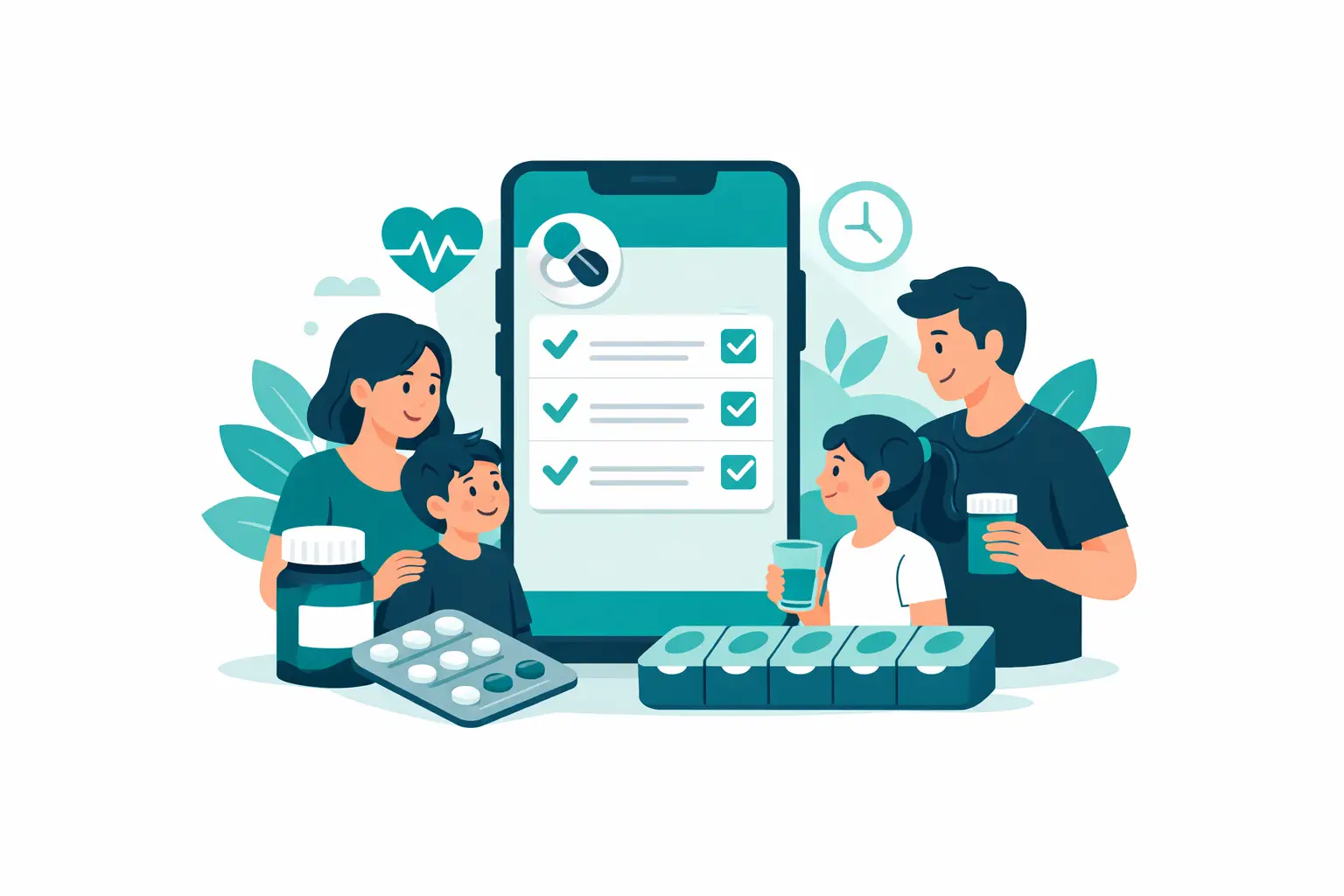
If you have ever stood in the kitchen wondering whether a dose already happened, you already know the real problem is not just remembering. It is coordinating. A medication routine checklist app gives families one clear place to track what is due, what was completed, and what still needs attention without relying on memory, sticky notes, or scattered text messages.
That matters even more in a household where care is shared. One parent handles the morning routine, another takes over after work, and a grandparent may step in on weekends. During an illness, the pace gets faster and the margin for confusion gets smaller. A checklist is not just about staying organized. It is about reducing preventable mistakes and giving everyone the same, current picture.
What a medication routine checklist app should actually solve
Many apps can set a reminder. That is useful, but it is only one part of the job. Families usually need more than a timer that goes off and disappears. They need a system that shows who the routine belongs to, what happened last, and whether another caregiver already handled it.
A strong medication routine checklist app should bring structure to recurring care. That includes daily routines, occasional as-needed tracking, and moments when illness changes the normal flow of the day. If the app only reminds but does not help the household confirm, record, and share, it leaves the hardest part unfinished.
The best tools also reduce mental load. Parents and caregivers are often juggling school schedules, work, meals, sleep, and household logistics alongside health routines. In that environment, clarity matters more than extra features. A clean checklist, visible status updates, and simple logging often do more for safety than a complicated interface ever could.
Why families outgrow basic reminders
A single-person reminder app can work when one adult is managing one routine for themselves. Family care is different. The moment you are tracking multiple people, multiple schedules, or multiple caregivers, the old system starts to break down.
A handwritten chart on the fridge may feel simple at first, but it depends on everyone seeing it, updating it, and interpreting it the same way. Text threads move too fast and are easy to miss. Notes apps are not built for timing, dose spacing, or household accountability. Even a standard calendar can become cluttered when health routines overlap with normal family life.
This is where a checklist app becomes more valuable than a reminder app. A reminder says, something should happen now. A checklist says, here is what was planned, here is what was done, and here is what the next caregiver needs to know. That difference is what helps families stay steady when routines get busy or stressful.
The features that make a medication routine checklist app useful
The most useful app is not the one with the longest feature list. It is the one that supports real family behavior. That usually starts with separate profiles for each family member. Without that, details can blur together quickly.
Shared caregiver visibility is just as important. If one adult logs a task, the others should be able to see it clearly without sending follow-up messages. This reduces duplicate dosing concerns and helps everyone work from the same record.
Recurring schedules are another practical necessity. Many households are not managing a one-time event. They are handling daily, weekly, or repeated routines that need to stay consistent over time. An app should make those routines easy to set up and easy to review.
For families, there is also real value in having symptom notes or health readings alongside the routine checklist. When illness strikes, medication timing rarely exists in isolation. Caregivers are also paying attention to temperatures, how someone is feeling, and when symptoms changed. Keeping those observations close to the routine creates a more complete household record.
Privacy deserves attention too. Health information is personal. Families should feel confident that the tool they use is built around trust, not around advertising or data resale. That is not just a preference. For many caregivers, it is part of what makes an app feel safe enough to rely on.
How to tell if an app fits your household
The right fit depends on how care happens in your home. If one person manages everything alone, your needs may be simpler. If care is shared across parents, relatives, babysitters, or adult children supporting older family members, coordination features matter much more.
It helps to ask a few practical questions. Can each family member have their own routine? Can another caregiver quickly confirm what happened without calling or texting? Can you log health readings and notes in the same place? Can the app support both everyday routines and short-term illness tracking?
Ease of use matters more than people often expect. In stressful moments, nobody wants to dig through menus or learn a complicated workflow. A medication routine checklist app should feel calm and direct. You should be able to open it, see what matters, and take action in a few seconds.
It is also worth thinking about whether the app is designed for individuals or households. That distinction shapes everything. A family-centered tool typically handles shared responsibility better because it assumes care is collaborative from the start.
Medication routine checklist app benefits during illness
Routine management is valuable every day, but its importance becomes much clearer when someone in the house gets sick. At that point, schedules may shift, sleep is interrupted, and several caregivers may be helping at different times. Memory becomes less reliable exactly when accuracy matters most.
A medication routine checklist app helps create order during those high-stress stretches. It can show what was logged overnight, what still needs to be monitored, and whether a reading or symptom note changed across the day. That kind of visibility helps families stay organized without depending on verbal handoffs alone.
There is also a practical emotional benefit. When people are worried, uncertainty adds pressure. A clear record can lower that pressure by replacing guesswork with a shared, current view. You may still be tired and concerned, but you are less likely to ask, Did anyone already handle this?
That peace of mind is one reason family-focused platforms stand out. Medication Timer, for example, is built around shared household care rather than solo tracking. That means routines, timers, readings, and caregiver coordination can live in one trusted place instead of being split across different tools.
A checklist is only helpful if it gets used
The best system is the one your household will actually keep up with. That usually means keeping setup realistic. Start with the routines that create the most confusion or carry the most coordination risk. Once those are working well, you can expand.
Consistency also depends on visibility. If the app becomes the agreed source of truth for the household, people are more likely to check it before acting. That habit is what turns a checklist into a safety tool rather than just another app on a phone.
There are trade-offs, of course. More detailed tracking can provide better context, but it can also feel like extra work if the interface is clumsy. Some families want extensive notes; others want a simple yes-or-no completion record. The right balance depends on your routines, your caregivers, and how much information helps without creating friction.
A good app respects that balance. It should bring structure without turning everyday care into a project. For most families, that is the real goal: less chaos, fewer handoff mistakes, and more confidence that the right information is available when someone needs it.
Choosing a system you can trust
When you evaluate a medication routine checklist app, look past the reminder feature and focus on the bigger question. Will this help your household stay coordinated when life is normal and when life is not?
The strongest option is usually the one that supports multiple family members, shared caregivers, recurring routines, and basic health tracking in a way that feels clear from day one. If it also protects privacy and keeps everything in one place, it becomes more than convenient. It becomes part of how your family stays organized and safe.
Care at home runs on clear information, especially when responsibilities overlap. The right checklist app will not remove the stress of caregiving, but it can remove a lot of the confusion that makes that stress heavier.