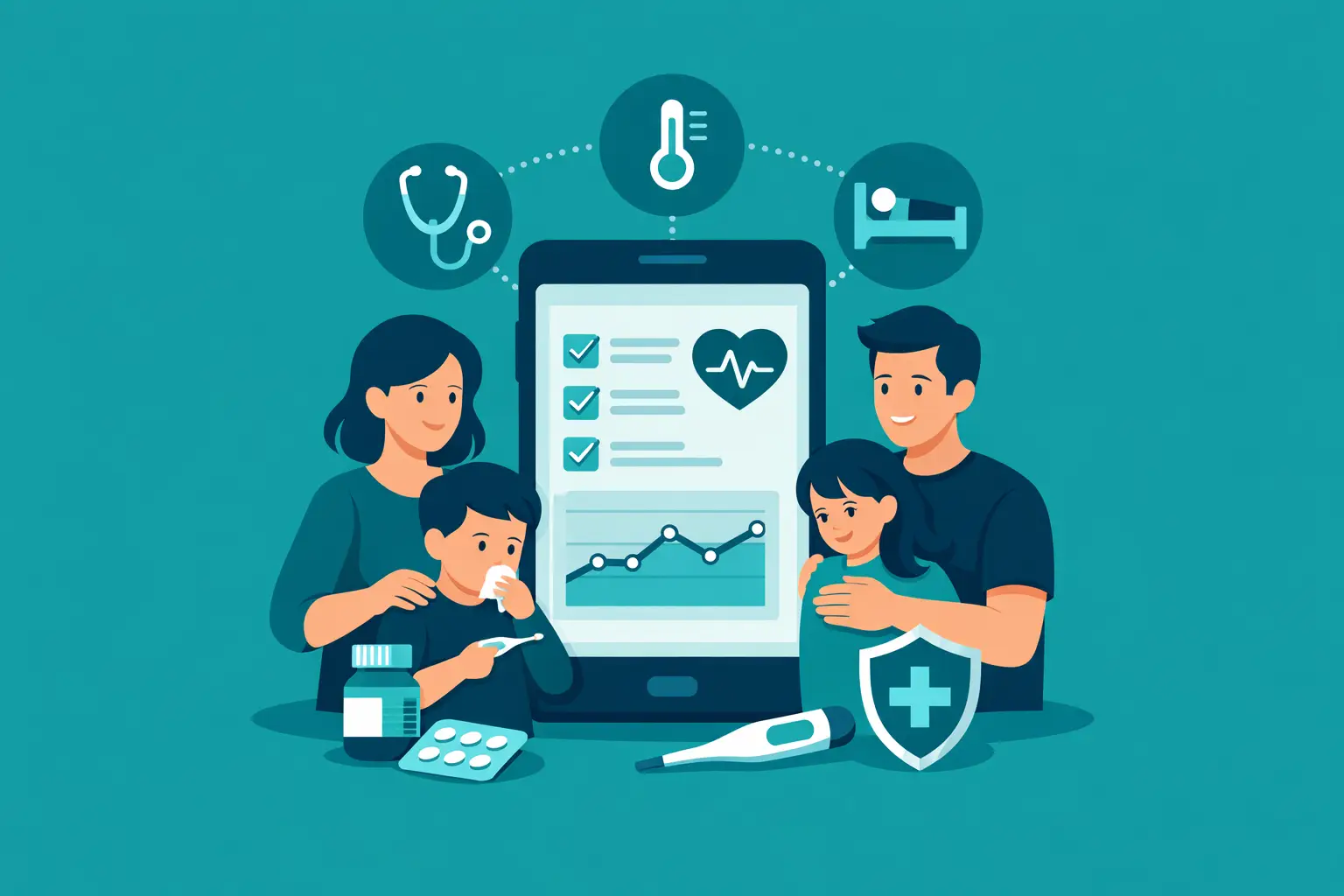
When one person in the house gets sick, the whole routine can start to wobble. By the time a second caregiver steps in, details get fuzzy - who had a fever, when it started, what changed overnight, and whether someone already gave the last dose. A symptom tracker for family illness gives households one clear record when memory is under pressure.
This is not about turning your home into a clinic. It is about keeping everyday illness management organized enough that parents, partners, and caregivers can act with more confidence and less guesswork. In a busy household, that alone can lower stress.
Why a symptom tracker for family illness matters at home
Most families do not struggle because they do not care. They struggle because illness creates overlap. One child has a temperature, another family member starts coughing, a grandparent needs regular medication, and two adults are trading off care between work, school pickup, and a rough night of sleep.
In that setting, information often lives in too many places. A temperature might be written on scrap paper. Symptoms get mentioned in a text. Medication timing sits in someone’s memory. By the next morning, no one feels fully sure what happened.
A family-focused tracker creates a shared timeline. It helps answer simple but important questions: when did symptoms begin, have they changed, how often are readings being logged, and are multiple caregivers seeing the same information? That kind of clarity supports safer household coordination.
It also helps with pattern recognition. Not diagnosis, and not treatment advice, but practical observation. If a symptom appears at a certain time of day, if a fever is trending up or down, or if one family member’s illness timeline differs from another’s, a good tracker helps you notice it sooner.
What to record in a family illness tracker
The best tracker is not the one with the most fields. It is the one your household will actually keep using when people are tired.
For most families, a useful symptom tracker for family illness should make room for the basics: symptom notes, temperature or other readings, medication timing, and timestamped updates for each person. Separate profiles matter because confusion grows fast when multiple people are sick at once.
Context matters too. A short note like "worse after nap" or "appetite lower tonight" is often more useful than a long paragraph no one will reread. The goal is to create a record that is fast to update and easy to scan later.
If more than one caregiver is involved, shared visibility is just as important as the entries themselves. A tracker should reduce the need to ask, "Did anyone log this?" or "Was that already given?" Every extra handoff is a chance for details to get lost.
Keep entries simple enough to maintain
Many tracking systems fail because they ask too much of people at the wrong moment. During family illness, attention is already stretched. If logging takes several screens, too many custom steps, or a lot of manual rewriting, it usually fades after the first day.
A better approach is consistency over detail. Short, repeatable entries create a more dependable timeline than occasional perfect notes. A household tool should feel like support, not homework.
What makes a tracker work for families, not just individuals
A lot of health apps are built around one person managing their own information. That can work well for solo routines, but family illness is different. Parents and caregivers often need to track several people, switch responsibility during the day, and keep everyone aligned without standing in the same room.
That changes what "useful" looks like. A strong household tracker needs multi-person organization, caregiver sharing, and a layout that makes it obvious whose record you are viewing. This sounds basic until you are trying to remember whether the 8:30 note belonged to your child or your spouse.
Family use also raises privacy questions. Health information is personal, even inside a home. A trusted tool should treat that information with care and avoid the feeling that family data is being turned into a product.
This is where a platform built for households has an advantage. Medication Timer, for example, is designed around family coordination, with illness tracking, medication timing, and shared caregiving in one place. That matters because symptoms rarely exist in isolation from the rest of care.
How a symptom tracker reduces caregiver confusion
Confusion during illness usually comes from three pressure points: memory, handoffs, and duplication. A parent thinks they remember when symptoms started but is not certain. A grandparent helps for a few hours but does not know what happened earlier. One caregiver logs a temperature while another sends updates by text. By evening, the family has fragments instead of a timeline.
A tracker reduces that friction by creating one source of truth. It does not make illness easy, but it makes communication cleaner. If everyone can see the same sequence of symptoms, readings, and logged events, decisions around routine care become less chaotic.
It can also help prevent repeated questions that wear people down. When someone is sick, even simple check-ins can become mentally expensive. Having a shared record means fewer interruptions and fewer moments of uncertainty.
It works best when medication timing and symptoms live together
Symptoms and medication schedules often affect the same caregiving workflow. If those records live in separate apps or separate notebooks, it becomes harder to understand what happened and when. Families may find themselves comparing screenshots, text threads, and notes just to reconstruct the day.
Bringing those records together can lower mental load. A caregiver should be able to check timing, review logged symptoms, and confirm recent updates without moving between tools. That kind of structure is especially helpful during overnight care or when adults are taking turns.
Choosing the right symptom tracker for family illness
Not every family needs the same setup. A household caring for one child during a short illness may want pure simplicity. A family juggling recurring medications, multiple children, or shared caregiving may need more structure. The right choice depends on how much coordination your home actually requires.
Look first for ease of use. If it is not fast to log an update, people will stop using it. Then look at family-specific support: multiple profiles, caregiver sharing, and clear activity history. After that, think about whether the tool fits into your broader routine. If your household already tracks medication timing or other readings, an all-in-one setup may save time and reduce mistakes.
Privacy should not be an afterthought. Families are right to care where their information goes and how it is handled. A trustworthy platform should make that feel clear and intentional.
There is also a practical trade-off between flexibility and structure. A basic notes app is flexible, but it puts more burden on the caregiver to organize everything. A dedicated family health tracker adds structure, but only if the interface stays simple enough for real life. The sweet spot is a system that guides the record without slowing the caregiver down.
Building a habit your household can keep using
The best time to choose a tracking system is before a rough week hits. When illness strikes, people rarely want to compare tools or build a process from scratch. Even a few minutes spent setting up family profiles and deciding what to log can make the next illness episode feel far more manageable.
Keep the habit light. Log changes when they happen, use brief notes, and make sure all caregivers know where updates belong. If your household uses one trusted place for symptoms, readings, and medication timing, coordination gets easier because no one is hunting for the latest answer.
A symptom tracker for family illness will not eliminate the stress of caregiving. What it can do is replace scattered memory with a reliable record, and that kind of clarity is often what helps a family stay steady when someone needs care.
When the house feels off and everyone is trying to help, a calm system is not a small thing. It is peace of mind you can come back to, one entry at a time.