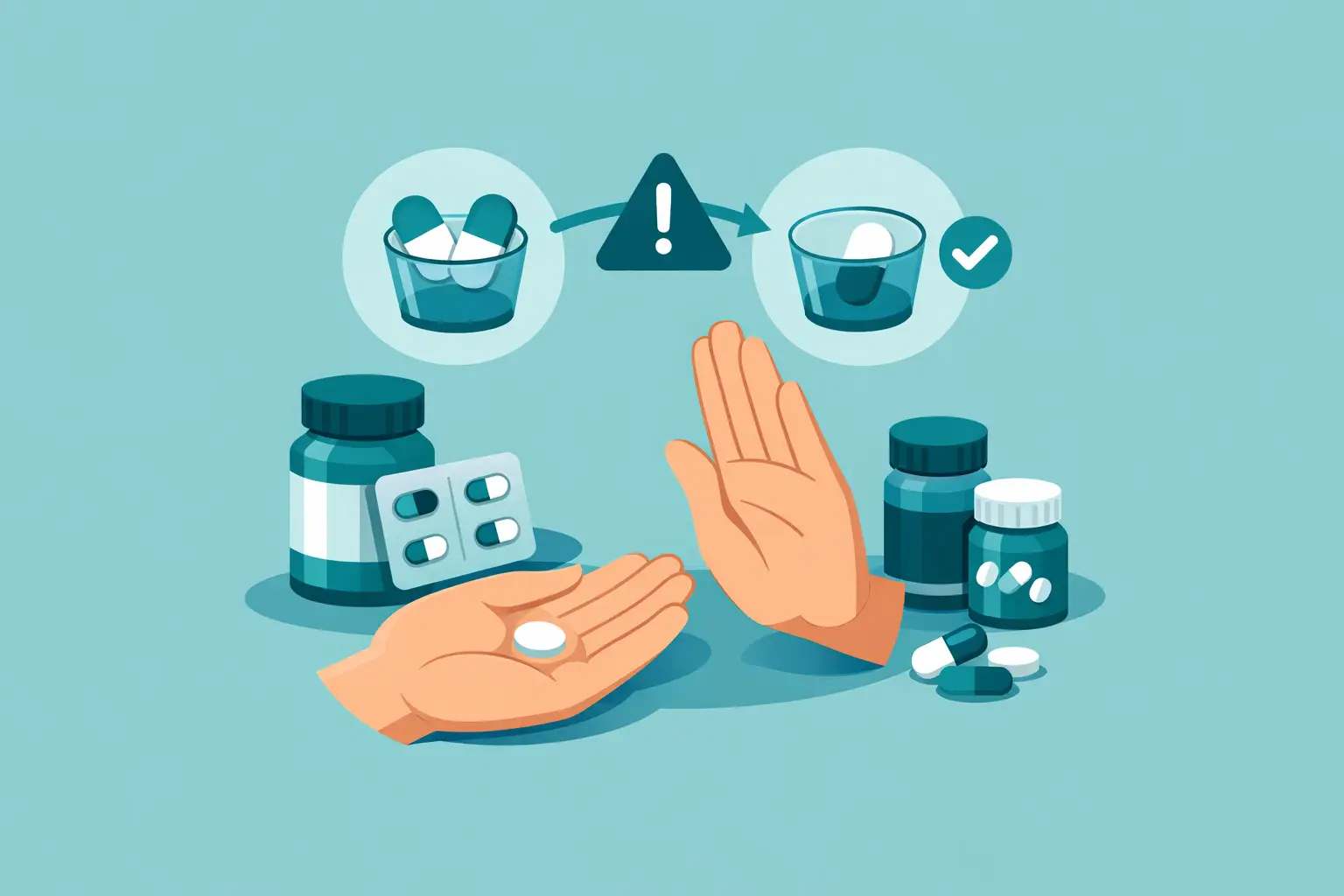
The riskiest medication moments at home usually are not dramatic. They look ordinary. A child has a fever at 2 a.m., one parent gives a dose, everyone goes back to sleep, and by morning nobody is fully sure what happened. Or an older parent takes something early, then takes it again because the day feels long and the pill organizer looks untouched. That is exactly why families ask how to avoid double dosing medicine - not because they are careless, but because real life is busy, interrupted, and shared.
For most households, the problem is not a lack of concern. It is a lack of one clear system. When medications are managed through memory, scattered texts, sticky notes, and half-finished conversations, confusion builds fast. The safer path is to reduce guesswork and make every dose visible to everyone involved.
Why double dosing happens so easily at home
Double dosing often starts with good intentions. One caregiver is trying to help quickly. Another is stepping in to share the load. A family member is sick, tired, uncomfortable, or distracted. In that environment, memory is not a reliable safety tool.
The challenge gets bigger when more than one person is receiving care. A household may be managing daily routines for one person, occasional medications for another, and symptom tracking for someone else. The details blur. Which family member took what? Was that dose already given, or was it only discussed? Did someone log it, or just mean to?
As-needed medications can create even more uncertainty because they are not always tied to a fixed routine. If the timing depends on symptoms, the household needs a way to know not just what was given, but when. Without a clear timestamp, people end up estimating. That is where mistakes can happen.
How to avoid double dosing medicine with a home system
The safest households usually do one thing well: they make medication tracking external. Instead of relying on memory, they use a visible, repeatable process. That process does not need to feel clinical. It just needs to be consistent.
Start by deciding where medication information lives. If one person keeps notes in their phone, another uses paper, and a third sends updates by text, the family is already working from three different versions of the truth. Choose one trusted place for schedules, timing, and dose logs so everyone checks the same source before giving anything.
That single source matters most during stressful moments. When illness strikes, people move fast. A simple record that shows who received a dose and when it was logged can lower the mental load right away. Instead of asking around or replaying the last few hours, a caregiver can confirm the latest entry and act with more confidence.
Use timing, not memory
A common mistake is assuming someone will remember the last dose because it happened recently. But fatigue changes that. Interruptions change that. Even routine changes that.
A better approach is to pair every dose with a time-based record. That could be a medication log, a timer, or a shared tracker that marks exactly when something was given. The key is immediacy. Logging later is better than not logging at all, but logging in the moment is what prevents the next person from stepping in and repeating a dose by accident.
For as-needed medications, timers are especially helpful because they remove the pressure to do mental math. If a caregiver can see that the last dose was recorded at a specific time and that the safety window is still active, there is less room for assumption. Clear timing supports safer decisions at home without turning caregiving into a complicated process.
Caregiver coordination matters more than most families expect
Many dosing mistakes are not individual errors. They are coordination errors. One adult assumes the other has not handled it yet. A grandparent helps for the afternoon but does not know what happened in the morning. A babysitter gets partial instructions. Everyone is trying to be useful, but nobody has the full picture.
That is why shared care needs shared visibility. If multiple adults are involved, they should all be able to see the same medication status for the same family member. A household system works best when it answers three questions quickly: what was given, when it was given, and who logged it.
This is where family-focused medication tracking can make daily life much calmer. A platform such as Medication Timer is built around the reality that care is often shared, not solo. That matters because households do not need more scattered messages. They need one trusted place where each caregiver can check status before acting.
Build routines for regular medications
Families often think double dosing is mainly an issue during illness, but routine medications can be just as vulnerable to confusion. In fact, routine can create a false sense of certainty. People start assuming the usual dose has already happened because it usually does.
The fix is not more worry. It is a better routine. Tie each recurring medication to a clear event and a clear record. That could mean using scheduled reminders and marking completion right away. If the medication was not marked, it should be treated as unconfirmed, not assumed.
Some households also benefit from separating preparation from confirmation. In other words, setting something out is not the same as recording that it was taken. That distinction sounds small, but it matters. A pill cup on the counter or a bottle left open can be misread by the next caregiver. A logged record is much clearer.
Create a plan for sick days and overnight care
When people are tired, feverish, or getting up in the middle of the night, organization slips. That is normal. It is also why sick-day tracking deserves its own plan.
During short-term illness, keep information together. Medications, temperatures, symptoms, and timing should live in the same system whenever possible. When these details are split between different places, caregivers spend energy piecing together the story instead of simply checking the record. In a stressful moment, convenience is a safety feature.
Overnight care is another weak point for many families. The handoff from night to morning can leave gaps. If one caregiver gave a dose at 3 a.m. but only mentioned it verbally, that update may disappear by breakfast. A shared log protects against that kind of memory fade and helps the daytime caregiver continue care with more confidence.
Small habits that reduce risk every day
If you want to know how to avoid double dosing medicine consistently, focus on habits that lower ambiguity. Check the record before giving anything. Log it immediately after. Keep each family member's medications clearly separated. Use one naming convention and one tracking method across the household so nobody has to decode someone else's system.
It also helps to slow down at transition points. Before school, after work, bedtime, and caregiver handoffs are all moments when assumptions creep in. A quick pause to verify the latest record can prevent a stressful mistake later.
There is a trade-off here worth acknowledging. More tracking can feel like one more thing on an already full day. But the goal is not to create extra work. The goal is to replace repeated uncertainty with a simple process you can trust. The right system should make care feel lighter, not heavier.
When your system is too fragile
If your household medication process only works when one highly organized person is fully in charge, it is probably too fragile. Real family life includes sick days, schedule changes, travel, and handoffs. A safe system has to work even when the usual caregiver is unavailable or distracted.
That is a useful standard to test. Could another adult step in today and know exactly what is happening? Could they see recent doses without searching messages or asking for a recap? If not, the issue is not effort. It is structure.
Families do not need perfection. They need clarity that holds up under pressure. One trusted place, clear timestamps, shared visibility, and a habit of confirming before giving can go a long way toward preventing duplicate doses at home.
Peace of mind rarely comes from trying harder to remember. It comes from building a system your whole household can rely on when memory is the first thing to fail.