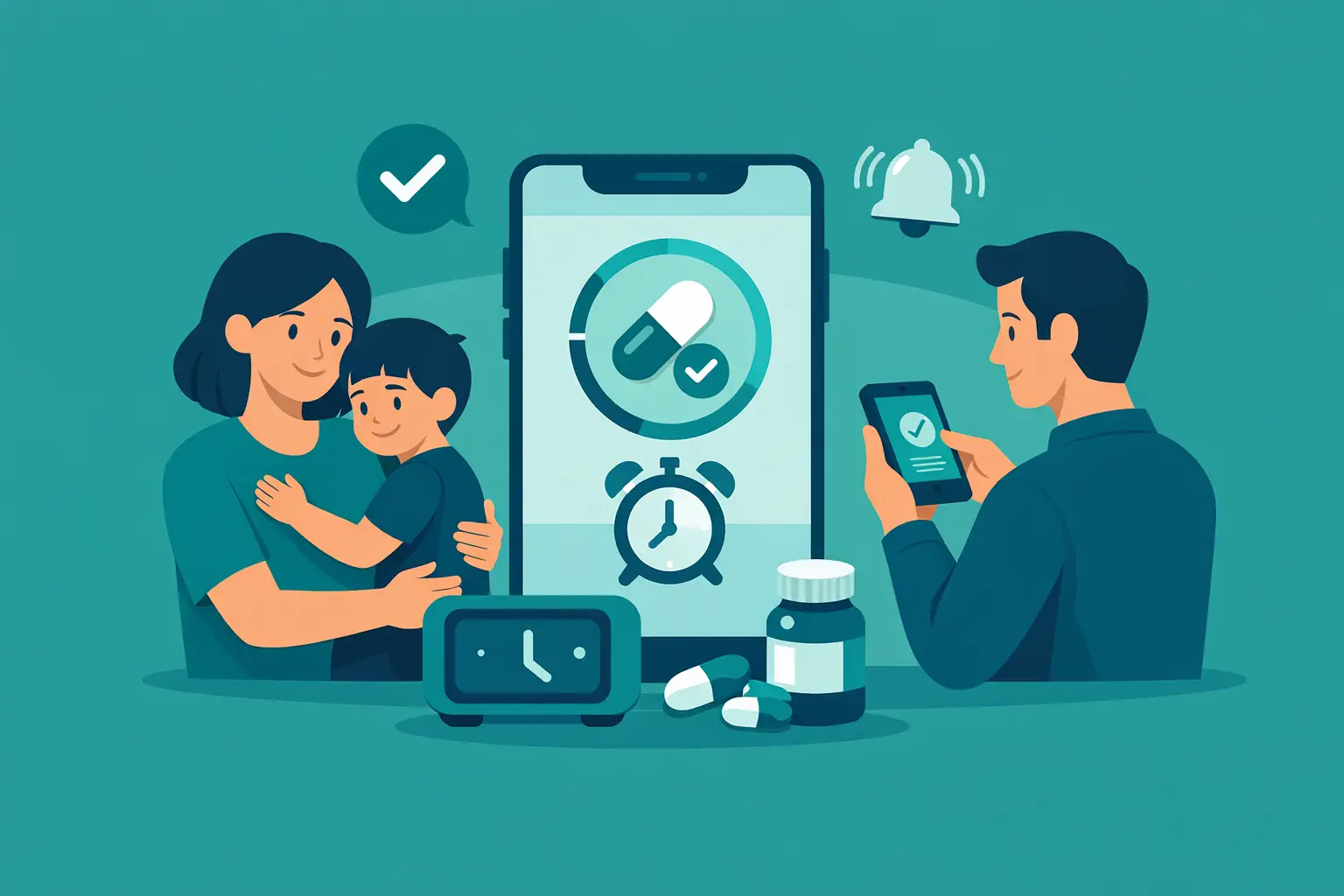
A fever spikes at 2:10 a.m. One caregiver gives a dose. By 4:00 a.m., someone else is awake, worried, and trying to remember exactly when that last dose happened. That is where a prn medication timer app stops being a convenience and starts feeling like a safety tool.
For families, as-needed medication tracking is rarely just about one reminder. It is about timing, shared visibility, and reducing the chance of confusion when multiple adults are helping care for the same child, spouse, parent, or relative. The right system creates clarity in the middle of stress, when memory is least reliable and quick decisions depend on accurate records.
What a prn medication timer app actually needs to do
A basic timer can count down hours. That part is easy. The harder part is managing real household care, where several people may be involved, routines change quickly, and illness creates a lot of moving pieces.
A useful prn medication timer app should show when a medication was last logged, when the next eligible time arrives, and which family member that record belongs to. It should also make it easy for another caregiver to open the app and understand the situation right away. If one person logs a dose from the bedroom and another checks the status from the kitchen, both should see the same information without needing a text thread to fill in the gaps.
That matters because most dose confusion is not caused by carelessness. It is caused by overload. Families are often managing poor sleep, school schedules, work interruptions, elevated temperatures, symptoms, and more than one household member getting sick at once. In that setting, a timer by itself is not enough. You need context.
Why families need more than a simple alarm
Many people start with phone alarms, handwritten notes, or a message chain. Those methods can work for a while, but they tend to break down when care becomes more complicated.
A standard alarm does not tell you who gave the last dose. It does not show a history of what happened overnight. It does not separate one child's records from another family member's routine. It also does not help much if grandparents, partners, babysitters, or other caregivers are sharing responsibility.
That is why families often outgrow one-device reminders. A true prn medication timer app supports coordination, not just alerts. It helps everyone work from the same record so the household is less dependent on memory and less vulnerable to miscommunication.
There is also a practical difference between routine medications and as-needed medications. Routine schedules follow a pattern. PRN timing is event-based. You log when something happens, then track the timing window from that moment. That means the system has to respond to real life, not just repeat the same reminder every day.
The features that make the biggest difference
The most valuable feature is a clear safety timer tied to a specific person and medication log. That sounds simple, but it changes everything. Instead of trying to remember the last dose time or calculate the next window mentally, caregivers can see the countdown and act with more confidence.
Shared caregiver access matters just as much. In many homes, care is handed off throughout the day. One parent handles the morning, another covers the afternoon, and a grandparent helps in the evening. During illness, these transitions happen fast. If updates do not carry across those handoffs, mistakes become more likely.
A strong app also keeps routine and illness tracking together. Families do not experience health events in separate boxes. A child with a fever may also have recurring medications, symptom notes, temperature checks, and sleep disruptions happening at the same time. Having those records in one place reduces the need to piece together the story from scattered apps and paper notes.
Privacy deserves attention too. Health tracking is personal, especially when it involves children or multiple members of a household. Families want confidence that the tool they use is designed to support care, not to turn sensitive information into ad targeting. A privacy-forward approach builds trust, and trust is essential for something families rely on during stressful moments.
When illness strikes, one record helps everyone
The value of a family-centered app becomes most obvious during a short-term illness. One person starts showing symptoms. Then another household member gets sick. Suddenly there are temperature readings, symptom changes, timing windows, and care notes to keep straight for more than one person.
This is where a centralized system helps restore order. Instead of asking, "Did anyone write that down?" caregivers can open one record and see what has already happened. They can track how the day is going, confirm when a PRN timer started, and avoid duplicate logging across different devices or notebooks.
It also lightens the mental load. Caregivers are often expected to remember everything while also comforting a sick family member, answering questions, adjusting plans, and trying to keep the rest of the home running. A good app turns memory into documentation. That shift may seem small, but it creates real peace of mind.
Choosing a prn medication timer app for real household use
Not every medication app is built for families. Some are designed mainly for individual adherence. Others lean toward clinical workflows that feel too heavy for daily household use. The best fit depends on how your family actually manages care.
If one person handles everything for one family member, a basic tool may be enough. But if your household regularly shares care, manages several people, or wants one place for medication timing and illness tracking, a more family-specific platform is usually the better choice.
Look for an app that feels clear under pressure. Can you log quickly at night? Can another caregiver understand the record without needing an explanation? Can you keep multiple family members organized without mixing up profiles or entries? Those are practical questions, and they matter more than a long feature list.
It is also worth thinking about growth. A tool that works for one short illness may not work as well when your family begins using it for recurring routines, school-year sicknesses, aging-parent support, or coordinated household care. Choosing a platform that can expand with your needs often saves time later.
Why one trusted place works better than scattered tools
Families do not need more apps just to manage one illness. They need fewer gaps. When medication timing, recurring routines, temperature logs, and caregiver visibility live in separate places, the burden falls back on the caregiver to connect everything manually.
One trusted place changes that experience. It creates a single source of truth for the household, so everyone involved can see what has happened and what needs attention next. That structure can be especially helpful when routines are interrupted, sleep is limited, or different adults are stepping in throughout the day.
Medication Timer is built around that household reality. Rather than treating health tracking as an individual task, it supports shared family care with medication timers, recurring routines, caregiver access, and illness tracking in one organized system.
That kind of structure does not remove the stress of a sick day. But it can remove a lot of the uncertainty. And for families, uncertainty is often the hardest part.
The real benefit is confidence, not just convenience
People often search for a PRN timer because they want a practical fix for one problem: remembering when the next dose window opens. That is a real need, but the bigger benefit is confidence across the whole care process.
When records are clear, handoffs get easier. When handoffs get easier, caregivers spend less time second-guessing and more time focusing on the person who needs support. That is the difference between a simple reminder and a system that actually helps a family function well under pressure.
Every household has its own rhythm. Some need occasional illness support. Others are coordinating care every day. A well-designed PRN medication timer app meets families where they are and helps them stay organized without adding complexity.
When care depends on timing, shared visibility, and calm coordination, the best tool is the one that helps your whole household feel sure of what happened, what is next, and who can step in with confidence.