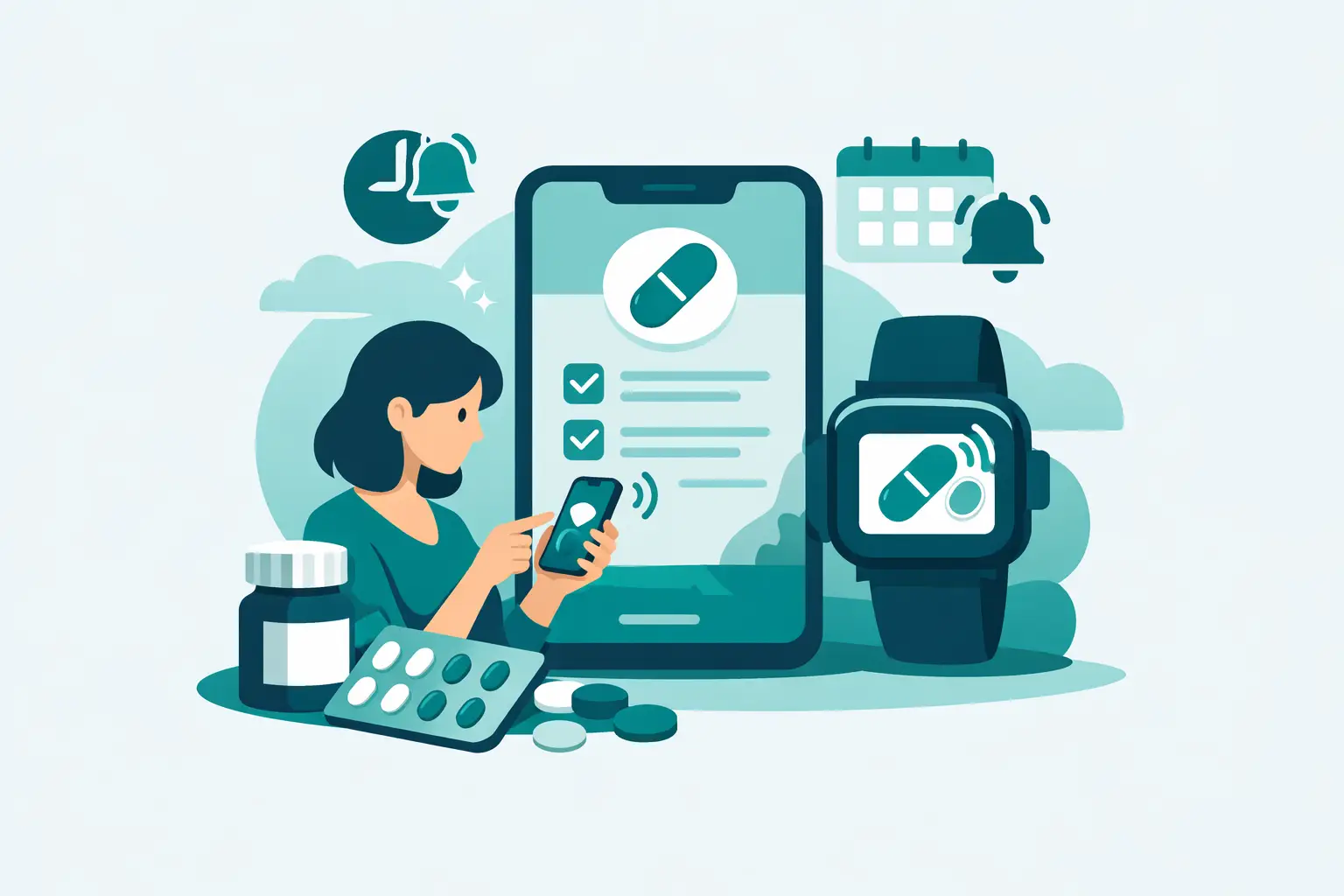
If you've ever stood in the kitchen wondering whether your child already got a fever reducer, or texted a partner to ask when Grandma last took her pills, you already know why the search for the best app for medication reminders matters. For families, this is not just about alarms. It's about avoiding confusion, reducing stress, and keeping every dose tied to the right person at the right time.
A lot of reminder apps look fine at first glance. They can ping your phone, repeat a schedule, and maybe log a checkmark when something is done. But household care is rarely that simple. Real life includes multiple family members, as-needed medications, changing symptoms, overnight fevers, school-day schedules, and more than one caregiver trying to stay in sync.
That is why the best choice usually is not the app with the most features on paper. It is the one that helps your household stay organized when routines are normal and when illness throws everything off.
What makes the best app for medication reminders?
The short answer is clarity. A good medication reminder app tells you when something is due. The best app for medication reminders helps you answer the questions families ask all day: Who needs what? When was it last given? Who logged it? Is it safe to give another dose yet?
For single-person use, a basic reminder tool may be enough. If you only manage one daily prescription for yourself, almost any clean, reliable app can do the job. But if you are coordinating care for children, aging parents, or a whole household, the standard gets higher fast.
The app should support recurring schedules without feeling hard to set up. It should also handle as-needed medications with timing safeguards, because many household medication mistakes happen around pain relievers, allergy medicine, cough syrup, or fever reducers given under stress. If multiple adults help with care, shared visibility matters just as much as reminders. An alert is only useful if everyone involved can trust the same record.
Privacy deserves a place in this conversation too. Health routines are personal. Families should not have to trade sensitive information for convenience. If an app is built around advertising or vague data practices, that is a real trade-off to consider.
The difference between personal reminders and family medication management
Many apps are designed for one user and one schedule. That works well enough until care becomes shared. Then the cracks show.
A parent may give medicine before leaving for work, while a grandparent handles the next dose at home. A spouse may track blood pressure readings, while another caregiver manages prescriptions. During a stomach bug or flu, medication timing, temperature checks, and symptom notes all start to matter at once. In those moments, switching between a reminders app, a notes app, a text thread, and a thermometer log creates more room for mistakes.
That is why families often need more than reminders. They need one trusted place for medication schedules, dose history, health readings, and caregiver coordination. The app should lower mental load, not create another system to maintain.
Features that actually matter in daily life
A polished interface is nice. Reliability is better. The most helpful apps tend to share a few practical strengths.
First, they make it easy to separate one family member's routine from another's. This sounds obvious, but it is essential in busy households. Confusing one person's medication list with someone else's can turn a simple task into a safety issue.
Second, they support both routine and flexible care. Daily prescriptions, weekly medications, and short-term antibiotics need one kind of structure. As-needed medications need another. If an app only handles repeating reminders and cannot help you track the last administered dose, it may fall short when illness strikes.
Third, they support caregiver sharing in a way that feels active, not passive. Families should be able to see updates without chasing each other for screenshots or memory-based answers. When care is shared clearly, everyone gets more peace of mind.
Fourth, they help you track context. Medication timing is often only one part of the picture. Temperature readings, symptoms, and illness notes can make day-to-day decisions easier and reduce confusion when symptoms change.
And finally, the app should be simple enough to use while tired, distracted, or caring for a sick child at 2 a.m. The best system is the one your household will actually keep using.
Where many medication reminder apps fall short
Some apps are too clinical for everyday family life. Others are too basic to handle real caregiving complexity. That middle ground is where many households struggle.
A very medical-looking platform may feel built for institutions rather than homes. It can be thorough, but hard to use quickly. On the other hand, a lightweight reminder app may look friendly but offer no meaningful coordination, no medication timer for as-needed doses, and no way to keep health tracking in the same place.
This is where it helps to think beyond feature checklists. Ask what happens when your routine changes. Can the app handle a new illness without becoming messy? Can another caregiver step in without retraining? Can you look back and know exactly what happened today?
If the answer is no, it may not be the right fit for a household, even if it works for a single user.
How to choose the right app for your family
Start with your real use case, not the app store description. A family caring for one child with occasional antibiotics has different needs than a household managing several long-term prescriptions, rotating caregivers, and ongoing health readings.
If your biggest problem is missed daily doses, prioritize dependable recurring reminders and easy logging. If your biggest problem is caregiver confusion, shared access and real-time visibility matter more. If your household deals with frequent fevers, pain relievers, or symptom monitoring, choose an app that can track illness sessions and readings alongside medication timing.
It also helps to think about scale. The app that works for one family member should still work when you need to add another. Households change. Kids get sick, parents start new prescriptions, and older relatives may need support unexpectedly. A good system should grow with your family's needs rather than forcing you to start over.
During evaluation, keep the setup test simple. Add a few real medications, create one as-needed dose schedule, and imagine handing the app to another caregiver. If it feels confusing in a calm moment, it will feel worse during a stressful one.
A family-focused standard is often the safer standard
For many households, the best app is not the one with the longest list of features. It is the one designed around family coordination from the start.
That means unlimited or flexible support for multiple people, shared caregiver visibility, clear dose histories, and tools that keep medication tracking connected to illness management. It also means respecting privacy and keeping sensitive health information out of ad-driven workflows.
This is the gap many families run into with general reminder tools. They were built to remind one person to do one thing. Family care requires more structure than that. Every dose, every family member, one trusted place is not just a nice message. It reflects how households actually stay safe.
A platform like Medication Timer stands out when your needs go beyond simple alerts, because it is built for shared care rather than solo task management. That difference matters most when routines overlap, symptoms change, and several people need accurate information fast.
So, what is the best app for medication reminders?
It depends on who you are caring for and how much coordination your household needs. For one adult managing one straightforward prescription, a basic reminder app may be enough. For families, especially those juggling children, aging relatives, recurring medications, and illness tracking, the best app for medication reminders is usually the one that combines reminders, safety timing, shared caregiving, and health logging in one place.
That kind of app does more than send notifications. It reduces second-guessing. It helps caregivers stay aligned. It gives families a calmer way to handle both everyday routines and sick-day disruptions.
When you choose, look for the tool that makes care clearer, not just louder. The right app should help your household feel more confident every time someone asks, "Did they already get it?"