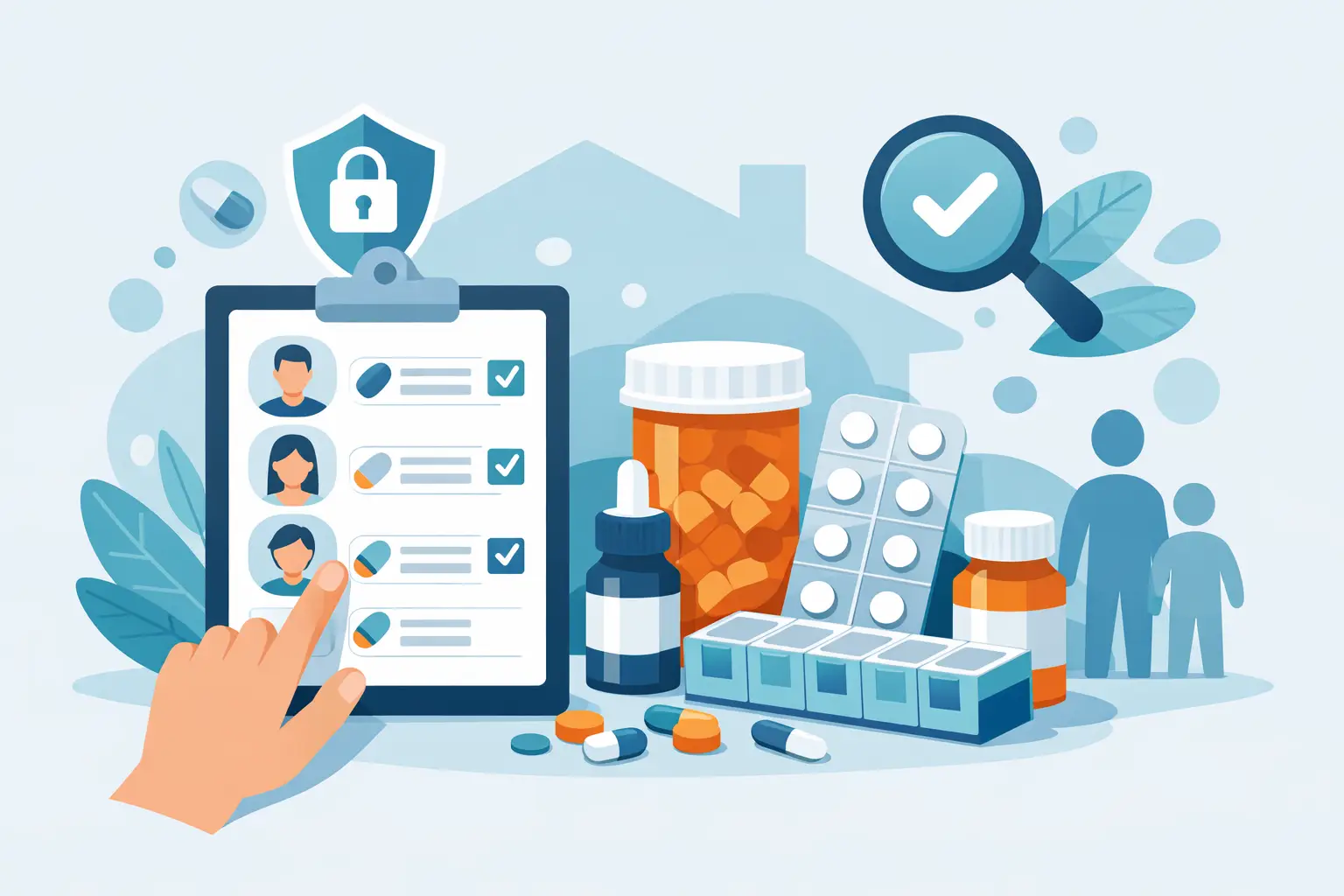
You do not usually realize how fragile a medication routine is until two adults think the other one gave the dose, a fever spikes at 2 a.m., or one child is on antibiotics while another needs allergy medicine. That is when knowing how to track family medications stops being a nice organizational habit and becomes a safety system for your household.
For most families, the challenge is not just remembering one pill at one time. It is keeping up with different people, different schedules, as-needed medications, refill timing, and shared caregiving without relying on memory. A good tracking system lowers stress because it replaces guesswork with a clear record of what was given, when it was given, and what needs attention next.
Why family medication tracking gets complicated fast
Medication management becomes harder the moment it involves more than one person. A parent may have a daily prescription, a child may need a short-term antibiotic, and a grandparent may have a rotating schedule with several doses a day. Add school pickup, work calls, sports practice, and nighttime wakeups, and it becomes easy to lose track.
The biggest risk is not just forgetting a dose. It is confusion. Confusion leads to accidental double dosing, missed spacing between as-needed medicines, and incomplete information when one caregiver hands off to another. Paper notes on the counter can help for a day or two, but they often break down during busy weeks or illness.
That is why the best tracking method is one the whole household can actually use. It should be easy enough for everyday routines and reliable enough for high-stress moments.
How to track family medications without relying on memory
Start by treating medication tracking like a shared household system, not a personal reminder. The goal is to create one trusted place for each family member's medication details, schedule, and dose history.
First, separate medications by person. This sounds obvious, but many mistakes happen because information gets mixed together. Each family member should have a clearly labeled profile or record with their own medications, dose timing, and any relevant notes. When a home has several people taking medicine, person-first organization matters more than medication-first organization.
Next, record the complete basics for every medication. That includes the medication name, who it is for, how much is given, when it should be taken, and whether it is routine or as-needed. If a medication is only used during illness, that should be clear too. You do not need to turn your home into a clinic, but you do need enough detail that another caregiver can step in confidently.
Then add timing controls. Recurring reminders are useful for daily or weekly medications, while safety timers are especially helpful for as-needed doses like pain relievers or fever reducers. A reminder tells you something is due. A safety timer helps prevent a dose from being given too soon. Families often need both.
Finally, log what actually happened. A plan is not the same as a record. The most useful systems show whether a dose was given, skipped, delayed, or still pending. That real-time history is what protects families during handoffs.
Build a system that works during routine care and sick days
Routine medication tracking and illness tracking are related, but they are not the same. Daily medications usually depend on consistency. Illness care depends on fast updates and close coordination.
During everyday routines, simplicity matters most. If a system feels like extra work, people stop using it. A dependable process might be as simple as one shared app where caregivers can see scheduled doses, mark medications as taken, and check whether anything is due later that day.
When illness strikes, families usually need more than a medication list. They need to track fever readings, symptoms, sleep disruptions, hydration, and as-needed medicine intervals in one place. That is where many households run into trouble, because medication notes end up in text messages, temperature readings go into a phone note, and no one can see the full picture.
A better approach is to keep illness-related tracking connected to the medication record for that person. If a child has a fever and is alternating care between parents or grandparents, everyone should be able to see the last dose time, the latest temperature, and any symptom changes without piecing it together from memory.
What to include in a family medication tracker
A strong system does not need to be complicated, but it does need the right information. At minimum, track each family member's medications, the last dose time, the next scheduled or safe dose time, and who gave it. If a medication is temporary, include the start date and expected duration so it does not quietly continue longer than intended.
For illness periods, add symptom notes and readings such as temperature when helpful for your household. This gives context to the medication record and helps caregivers understand why something was given. If one child is sleeping after a fever reducer or a parent skipped a non-urgent dose because of nausea, that context can reduce confusion later.
Refill awareness also matters, especially for households managing long-term medications. Running out creates preventable stress. Some families do well with a simple refill reminder a few days before the bottle is low. Others need a more structured monthly review.
Shared caregivers need shared visibility
One of the most common weak points in family medication management is the handoff between caregivers. One adult starts the morning, another handles the afternoon, and someone else covers bedtime. Without shared visibility, each handoff creates room for mistakes.
If more than one person helps with care, choose a tracking method that everyone can access and understand. That does not mean everyone needs the same level of involvement. It means the people giving medications should all be working from the same current information.
This is especially important for divorced or blended families, multigenerational households, and situations where grandparents, babysitters, or other trusted helpers step in. A system that supports active sharing can reduce the back-and-forth of "Did you already give this?" and replace it with certainty.
Medication Timer fits this family reality well because it is built around household coordination rather than solo medication reminders. That distinction matters when more than one person is responsible for care.
How to track family medications more safely
The safest system is usually the one that makes the right action easy in the moment. Color coding, family member profiles, recurring schedules, and visible dose logs all help because they reduce decision fatigue. During a calm week, these features feel convenient. During a stressful night, they become protective.
It also helps to decide in advance how your household will handle special cases. For example, who updates the tracker after an as-needed dose? Who checks refill status? Who gets notified if a daily medication is missed? Families do better when these small responsibilities are clear before they become urgent.
There is also a trade-off to keep in mind. A very detailed system can be accurate, but if it is too cumbersome, it may not get used consistently. On the other hand, a very loose system is easy to maintain but may leave dangerous gaps. The best setup is one that balances clarity with speed.
Common mistakes that make tracking harder
Many families start with good intentions and still end up with patchy records. Usually the issue is not carelessness. It is that the system depends too much on memory or too many separate tools.
A common mistake is using text threads as the primary medication log. Texts are easy in the moment, but they are hard to scan later, easy to miss, and rarely tied to repeat schedules or safety intervals. Another is keeping medication records for the whole family in one generic note without separating people clearly.
Some families also forget to track temporary medications with the same care as long-term ones. But short-term medicines often create the most confusion because they involve changing instructions, illness symptoms, and multiple caregivers over a few intense days.
Choose a system you will still trust next month
The right medication tracker should make your household feel calmer, not more burdened. It should help you check what happened quickly, see what is next, and share responsibility without losing clarity. If it cannot support both routine schedules and sudden sick-day needs, it may not hold up when your family needs it most.
A dependable system gives you something every caregiver wants more of: confidence. Not perfect control, because family life rarely works that way, but a clear, trusted record that helps you care for each person with less second-guessing.
When every dose, every timer, and every family member can be managed in one place, home care gets a little safer and a lot easier.